Kumar Bahukhandi
US President Donald Trump. (PTI Photo)
Author
From Venezuela to Nigeria, Trump’s foreign policy blurs the line between business and war
For a man who is desperately seeking the Nobel Peace Prize, US President Donald Trump has not wasted time in preparing for war. Revealing an intrinsic temptation among US Presidents to send troops out to distant lands, Mr Trump has threatened to invade Venezuela and bomb Nigeria — which are both oil-exporting countries. He has been eyeing Greenland and wants to take back control of the Panama Canal.
Every major war in the post-Second World War era has the imprint of what former US President Dwight D. Eisenhower termed the interests of a “military-industrial complex”. The most active part of America’s shrinking industrial base has been devoted to the manufacture of armaments. Every war has been a money-spinner both for US corporations and for American politicians living off the fat of those corporations. Every major war of the past three quarters of a century, from the Korean and Vietnam wars to Afghanistan and Iraq, has sustained the market for the US defence industry.
The obituaries to former US vice-president Dick Cheney, who passed away last week, have pointed to the millions he and his buddies at Haliburton Inc had made from what eventually proved to be a completely illegitimate invasion of Iraq. West Asia has always been a lucrative market for US arms and ammunition. The arms race spurred in Asia by China’s rise has created a new market for the American armaments industry. When India and Pakistan fight, both buy something or other from the US. Now the US is eyeing the Latin American market for arms.
Latin America has already experienced the full force of “Yankee imperialism” on more than one occasion and in more than one country. From Cuba to Panama, from Nicaragua to Uruguay, US forces have, often without congressional approval, launched military action in pursuit of American business interests. Each of these attempts at regime change was cloaked in the rhetoric of democracy but had an eye on access to markets and resources.
Sending warships into the Caribbean in the name of dealing with the challenge of what he calls “narco-terrorism”, President Trump has put Colombia and Venezuela on notice. The irony is that the regimes in both countries have done business with Mr Trump and his camp followers earlier. It is not as if the Venezuelan leadership of Nicolas Maduro is a popular, pro-people regime. On the contrary, there is every reason for Mr Maduro to go. But, getting foreign troops in, as the Nobel Peace Prize-winning Venezuelan Opposition leader, Maria Corina Machado, has demanded, does not serve the interests of the people of Venezuela or, indeed, of Latin America as a whole.
While the menace of drug peddling and its links with violence — dubbed “narco-terrorism” — is a matter of genuine concern, it would appear altogether unfair to charge Latin American governments of sponsoring this. At any rate, adequate proof must be offered so that an organisation like the United Nations Security Council can take an informed view on the matter. The United States will have none of it. Just as it invaded Iraq on false pretences, it may well invade Venezuela. Latin America has seen this face of American imperialism for a long time.
Latin American scholars and political leaders have endured it, theorised on it and fought against it. The continent’s liberal, radical and progressive political leaders, writers, artists and scholars have had to fight on two fronts — on the one hand opposing dictatorial or authoritarian regimes at home and on the other hand battling US imperialism and military intervention. It is a continent endowed with the richness of nature but blighted by the poverty of human imagination.
For the past couple of decades, US interests were focused on West Asia and East Asia. The focus of US power has returned to a region that the US has long regarded as its “backyard” for two separate reasons. On the one hand, the growing influence of China across the continent and, on the other, the geo-economics of oil, other natural resources and securing the dominance of the US dollar. China has been able to systematically grow its influence within the region as a trading partner and is today the biggest trade partner of most Latin American countries. It is no coincidence that Venezuela, Nigeria and Greenland, like the Gulf region, are all rich in oil and other natural resources.
The problem in Latin America is that there are in fact few angels in the region’s power play. With the exception of leaders like Brazil’s President Lula da Silva, few other Latin American countries have leaders of any distinction. Mr Maduro, for example, was hobnobbing with Mr Trump’s acolytes trying to strike deals with them. Clearly, those deals fell through.
Mr Trump’s brazen policy of promoting his business interests while talking of peace or pursuing war has made US policy even more suspect. From Pakistan and Qatar to Panama and Nigeria, Mr Trump has mixed business with diplomacy to personally benefit from the US role as either a peacemaker or a warmonger.
What is worrying for the rest of the world is the fact that while the wars of the Cold War era — Korea, Vietnam, Afghanistan — were mainly motivated by ideological considerations, the wars of the post-Cold War era — Iraq, Iran, Libya, Syria and now potentially in Latin America — seem to be triggered largely by business interests: access to markets and resources — oil and gas, rare earths, copper and so on.
The more Mr Trump becomes unpopular at home, as he indeed is becoming, and the more he has to appease his MAGA political base, the more he would be tempted to wage wars in distant lands. The US is the only power that has ensured that no war touches its soil but is always waged afar. Russia’s invasion of Ukraine and China’s war preparedness in the South China Sea are both motivated by immediate territorial concerns about national security and border management.
The US has had no such concerns and has waged wars in distant lands only to sustain its military industrial complex and its global power and reach. Moving away from East Asia, where it is now seeking a G-2 détente with China, and from West Asia, where it has achieved recent objectives, the US seems focused on Latin America and Africa as the next markets for its armaments industry.
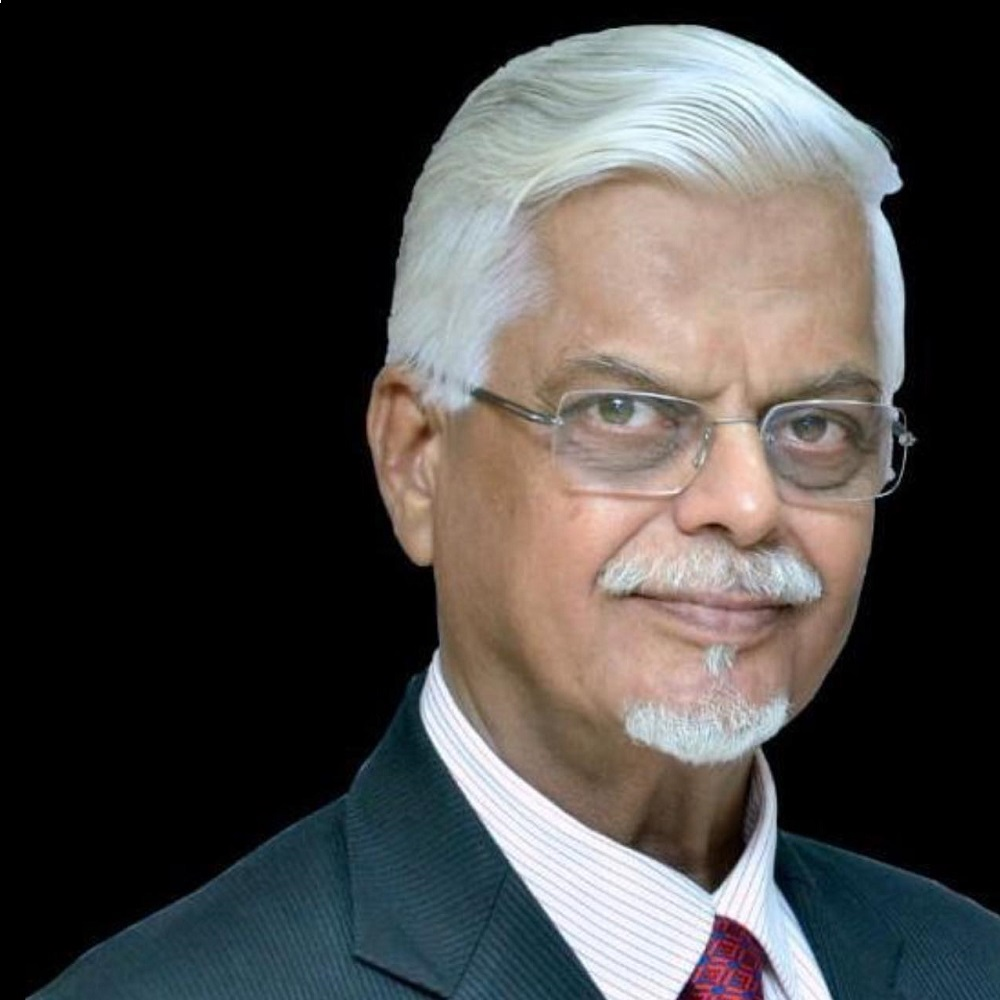
Sanjaya Baru is a writer and an economist. His most recent book is Secession of the Successful: The Flight Out of New India