Kumar Bahukhandi
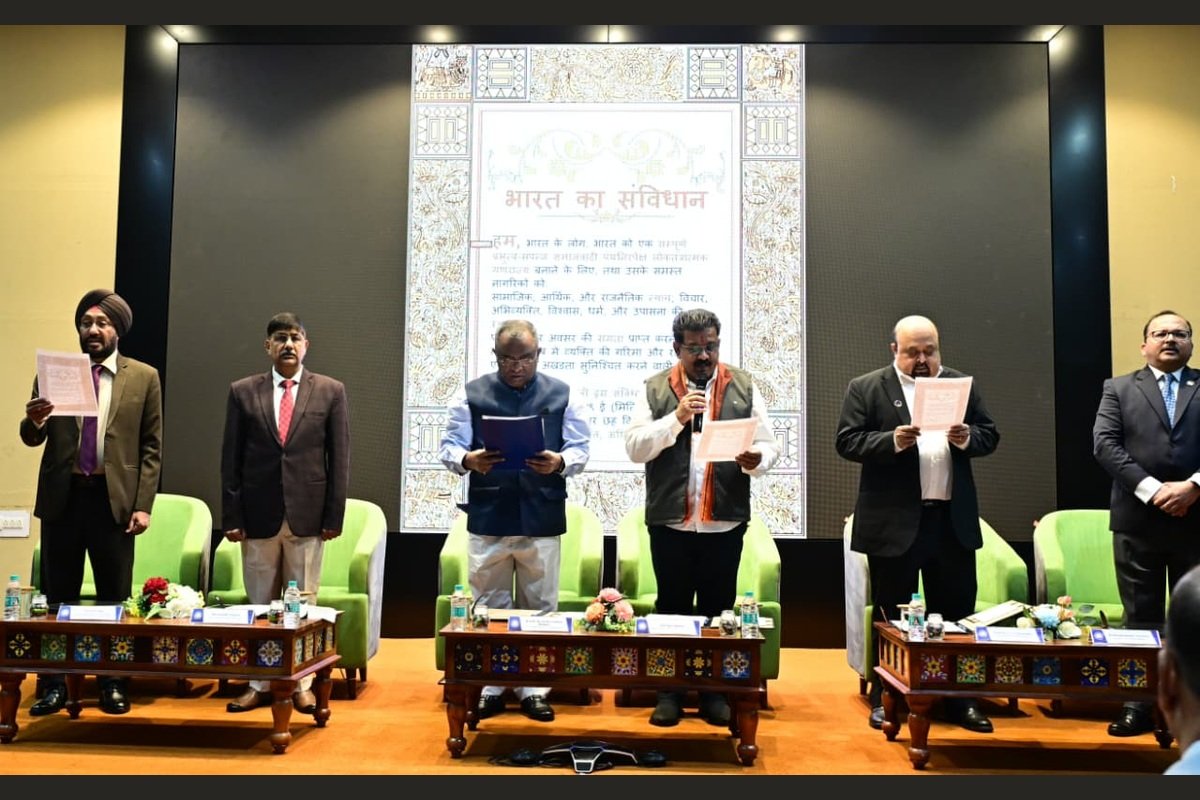
Deputy Chief Minister Vijay Sharma, holding the microphone, leads a collective reading of the Preamble at the Constitution Day summit jointly organised by Chhattisgarh Police and Hidayatullah National Law University on 26 November 2026. Photo: channel24india.com via CG/PR
The proposed Swavalambi Bastar campaign aims to raise household incomes across seven districts. At a separate Constitution Day summit, police officers and legal experts examined how the new criminal laws are working in practice.
Key Highlights
- The five-year Bastar plan aims to reach around five lakh families in 3,964 villages, with a monthly household income target of ₹20,000–₹30,000.
- Pilot activities have begun in Geedam and Kanker, including household surveys, workshops and livelihood planning with self-help groups.
- Sharma said Chhattisgarh Police had moved from 26th to ninth nationally in three months on e-Sakshya and the Crime and Criminal Tracking Network and Systems (CCTNS).
- More than 35,000 police officers and staff have received training in the new criminal laws through a partnership with Hidayatullah National Law University.
Raipur: A family that gathers tamarind or raises dairy cattle needs somewhere to sell what it produces and a way to earn from it regularly. That question is central to the proposed Swavalambi Bastar campaign, whose preparations Deputy Chief Minister Vijay Sharma reviewed at Mahanadi Bhawan in Nava Raipur on 26 November 2026. At a separate Constitution Day summit the same day, Sharma turned to a different challenge for the state: improving the way police investigate cases and handle evidence under the new criminal laws.
Bastar plan starts with what families can produce
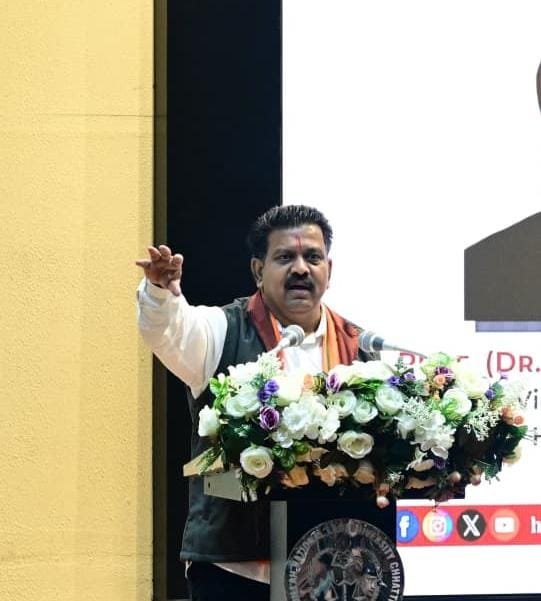
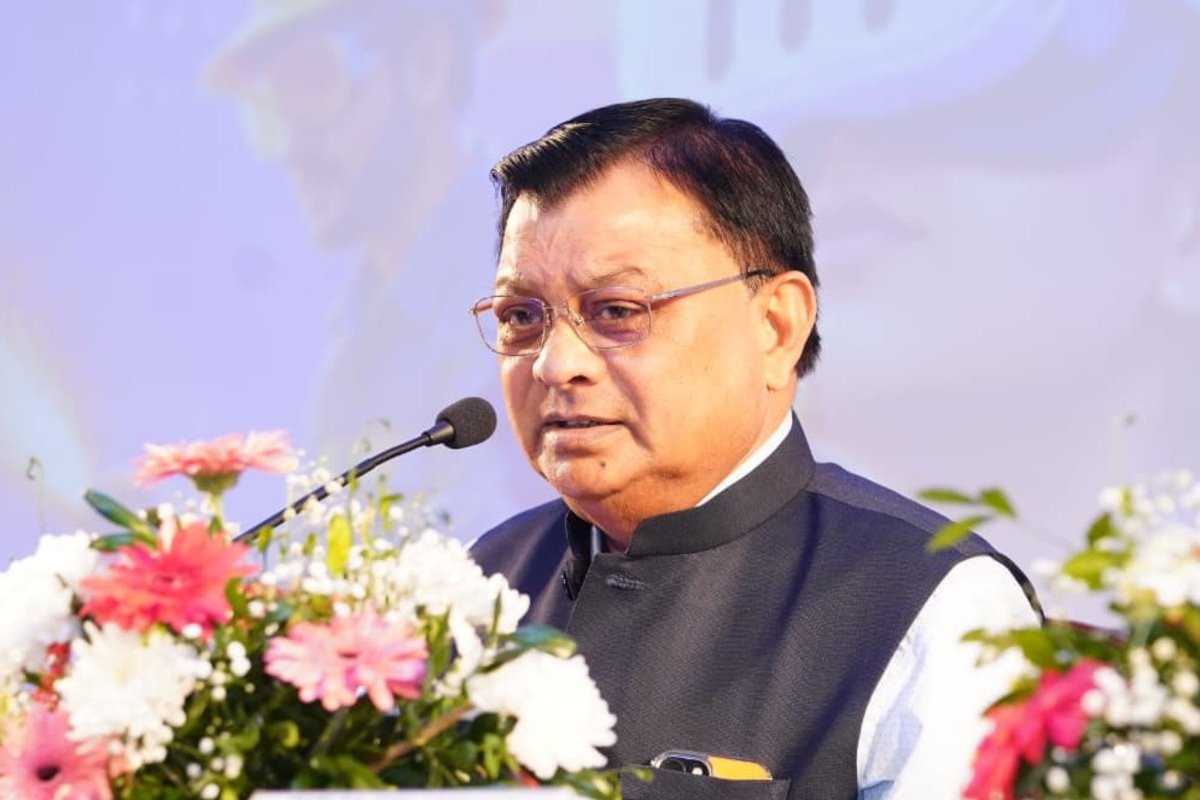
Deputy Chief Minister and Home Minister Vijay Sharma addresses the Constitution Day summit on the implementation of the new criminal laws in Chhattisgarh on 26 November 2026. Photo: channel24india.com via CG/PR
The state government is drawing up a five-year investment plan for 1,885 gram panchayats across Bastar, Kanker, Kondagaon, Narayanpur, Dantewada, Bijapur and Sukma. Sharma asked departments to match livelihood activities to each family’s interests, skills and local resources, and to make sure eligible households can participate.
The plan identifies around 52 products and activities across 23 subsectors. They include organic rice, millets, fruits and vegetables, tamarind, mahua, cashew, bamboo, kosa silk, lac, honey and coffee. Dairy, fisheries, poultry, Dhokra craft and tourism are also among the activities under consideration.
The proposed support runs from supplies and technical training to collection, storage, processing, packaging and marketing. Collection centres, processing units and cold-chain facilities would be developed where needed. Officials also discussed selling an initial five products through seven stores using digital marketplaces, including Mystore on the Open Network for Digital Commerce. Transform Rural India is providing technical support for the preparations.
A dairy plan being developed with the National Dairy Development Board would help families obtain milch cows and establish arrangements to collect, process and sell their milk. For participating households, a regular buyer would help turn milk production into a steadier source of income.
Pilots in Geedam and Kanker test the approach
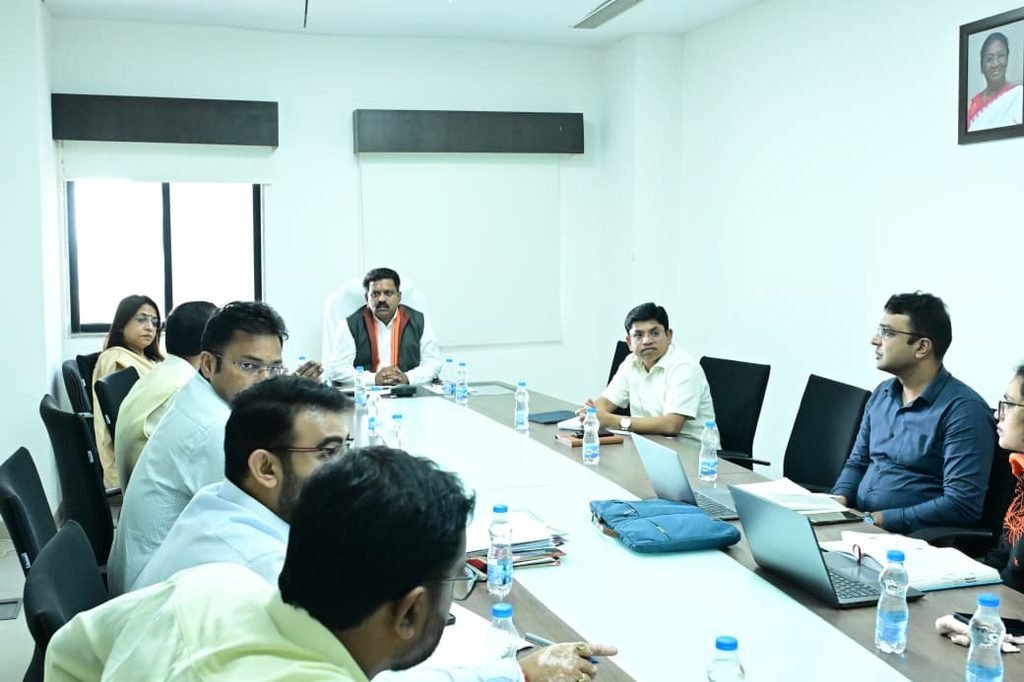
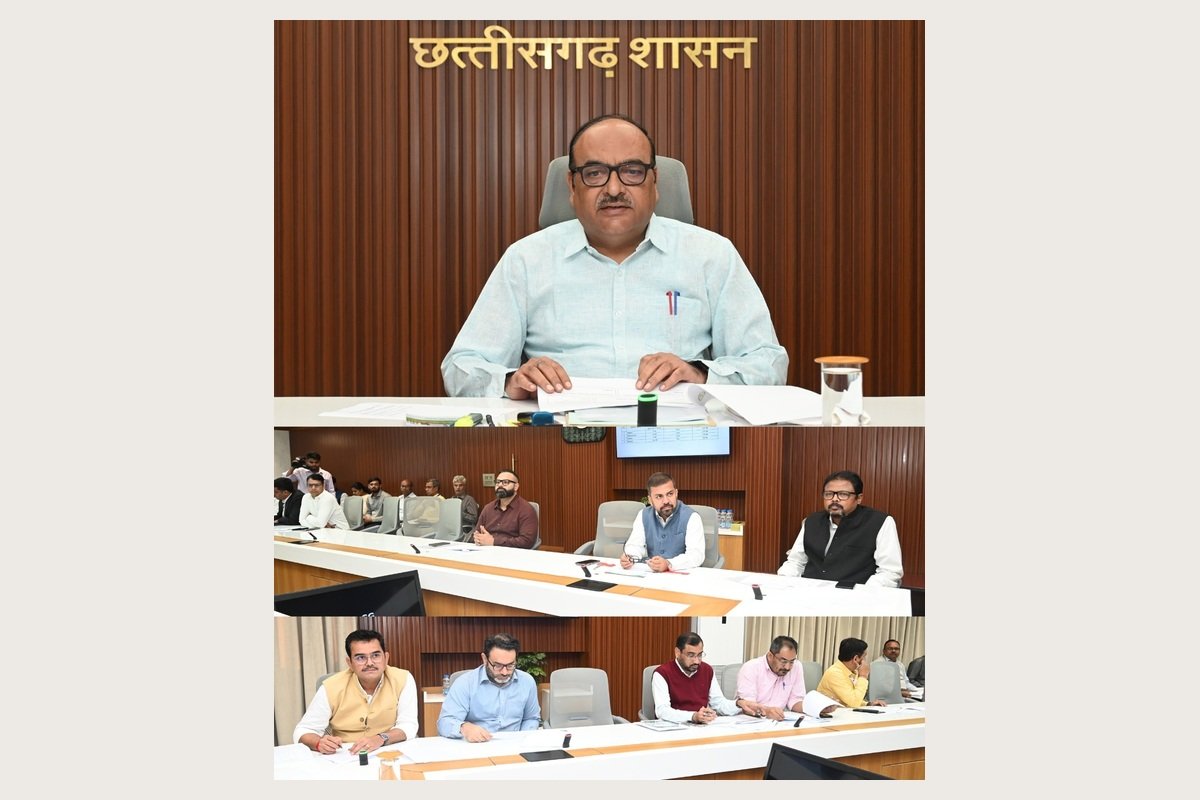
Deputy Chief Minister Vijay Sharma reviews preparations for the Swavalambi Bastar livelihood campaign with senior officials at Mahanadi Bhawan in Nava Raipur on 26 November 2026. Photo: channel24india.com via CG/PR
Before the formal launch, teams in Geedam and Kanker have begun surveying households, holding workshops and drawing up family-level livelihood plans. The wider campaign would bring together 60 Union and state schemes across 10 departments and connect families with Bihan self-help groups, cooperatives, farmer producer organisations and Van Dhan Vikas Kendras.
The government has also proposed using former security camp sites for Shaheed Gundadhur Seva Deras. Linked to the Seva Setu portal, the centres would give people in remote areas a place closer to home to access government services.
Sharma asked officials to appoint a dedicated administrator, designate nodal officers in participating departments and prepare an annual work plan so implementation can begin after project approval. Additional Chief Secretary Richa Sharma, State Rural Livelihood Mission Director Ashwani Dewangan and Chief Engineer K.K. Katare attended the review.
Constitution Day summit examines how the new laws work on the ground
At the summit jointly organised by Chhattisgarh Police and Hidayatullah National Law University (HNLU), Sharma called for wider use of digital evidence and scientific investigation, backed by closer coordination among police, prosecutors, the judiciary and legal educators. He said the goal was a fully digital criminal justice system in the state under the new laws. He also cited the President’s Colour awarded to Chhattisgarh Police within 24 years of its establishment.
Sharma led participants in reading the Constitution’s Preamble on the 77th anniversary of its adoption. Former Chhattisgarh High Court judge Justice Gautam Bhaduri stressed the responsibility of officers in the field to act fairly. Director General of Police Arun Dev Gautam called for stronger digital evidence management and modern investigative practices.
HNLU Vice-Chancellor Prof. V.C. Vivekanandan highlighted Zero FIR and e-FIR as measures that could make it easier for people to report offences. G.P. Singh, Director General of Police (Training) and Director of the Netaji Subhas Chandra Bose State Police Academy, said the training partnership had reached officers and personnel at several levels. The programme grew out of a 2024 agreement between the police and the university and includes specialised and refresher courses.
Experts focus on gaps that can weaken a case
Three technical sessions examined problems investigators and prosecutors encounter in court. Former High Court judge Justice Arvind Kumar Verma discussed evidence collection, seizures and procedural errors in narcotics cases. Former judge Justice Deepak Kumar Tiwari stressed the quality and integrity of investigations. Chhattisgarh State Industrial Court President Rajesh Kumar Srivastava explained how incomplete investigations, missing links in circumstantial evidence and delayed forensic reports can affect judicial decisions.
Around 300 police officers attended in person. The YouTube livestream reached about 35,000 police officers and personnel across the state, along with officials from prosecution and forensic departments.