Kumar Bahukhandi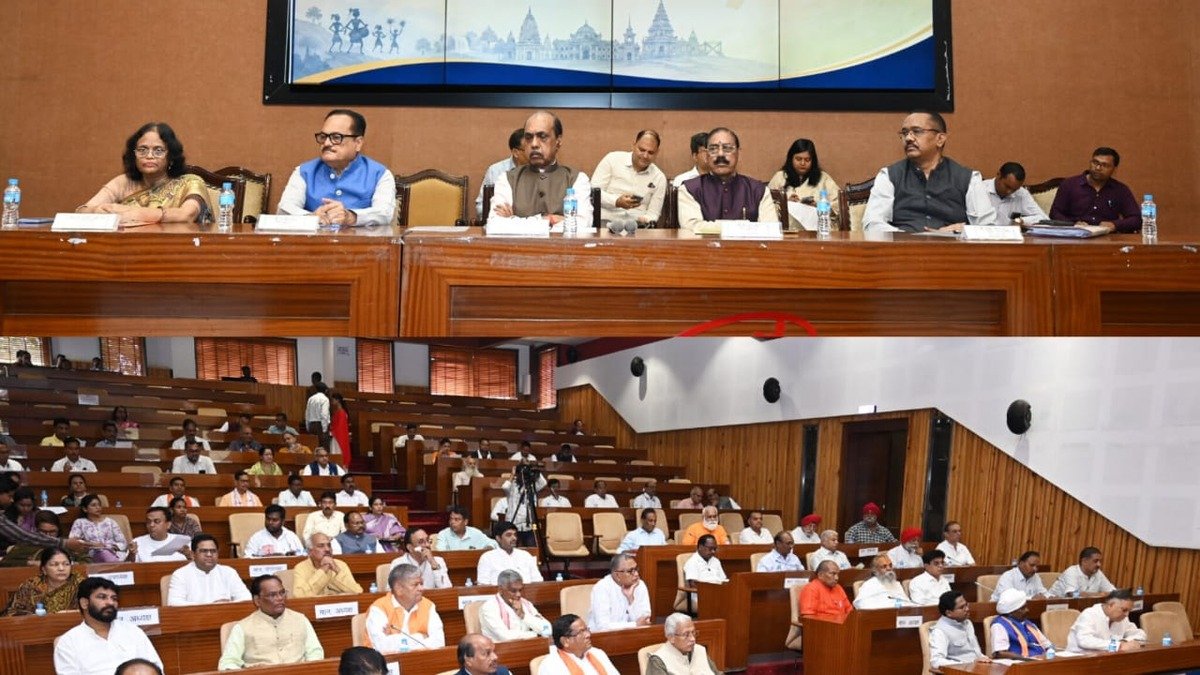
Members of the state-appointed Uniform Civil Code committee hold consultations with representatives of religious and social organisations, commissions, corporations, boards and other stakeholders at New Circuit House in Raipur on Thursday, August 27, 2026-Photo Credit:channel24india.com via CG/DPR
Religious and social organisations, statutory bodies and community representatives place their views before the state-appointed UCC committee
Key Factors
- UCC committee holds extensive consultations at New Circuit House in Raipur
- Hindu, Muslim, Christian, Sikh and other community representatives participate
- Discussions cover marriage, divorce, maintenance, inheritance, adoption and live-in relationships
- Equal rights for women and daughters emerge as an important area of deliberation
- Committee says Chhattisgarh’s tribal and customary traditions will require sensitive assessment
- Public feedback is being gathered through district visits, dialogue and an online mechanism
Raipur : Chhattisgarh has widened its consultation process on a proposed Uniform Civil Code (UCC), bringing religious and social organisations, representatives of different communities, public bodies and other stakeholders to the table to place their views before the state-appointed committee.
The consultation held at New Circuit House in Raipur on Thursday, August 27, brought together representatives from a broad cross-section of society as the committee examines how a common civil framework could operate in a state with significant social, religious and tribal diversity.
The committee members present included retired IAS officers Shatrughna Singh and M.K. Raut, senior advocate Mohan Pawar, retired official Jyoti Rani Singh, and Member Secretary Shyam Dhawade.
The exercise is being undertaken in the context of Article 44 of the Constitution, a Directive Principle of State Policy which says that the State shall endeavour to secure a Uniform Civil Code for citizens throughout India.
The discussions focused on personal and family-law matters including marriage, divorce, maintenance, inheritance, adoption and live-in relationships. Participants offered views on whether and how a more uniform legal framework could ensure equality while addressing the social and cultural realities of different communities.
Representatives participating in the consultation included Pranav Kumar Marpachchi, Vice-Chairman of the Central Region Tribal Development Authority; Lalit Makhija of the Vishva Hindu Parishad; John Rajesh Paul from the Christian community; Salam Rizvi representing the Muslim community; Inderjit Chhabra of the Gurudwara Committee; and Lalit Chandrakar, Vice-Chairman of the Other Backward Classes Authority.
Among others participating were State Policy Commission Chairman Ganesh Shankar Mishra, State Food Commission Chairman Sandeep Sharma, Women’s Commission Chairperson Dr Mamta Sahu, members Sarla Kosaria and Deepika Sori, Gau Seva Commission Chairman Visheshar Patel, State Minorities Commission Chairman Amarjeet Chhabra, State Civil Supplies Corporation Chairman Sanjay Srivastava, Scheduled Tribes Commission Chairman Roop Singh Mandavi, Fishermen Welfare Board Vice-Chairman Lakhan Lal Dhivar, and Jaitu Sao Math Mahant Ram Sundar Das.
Representatives of the Agarwal and Maheshwari communities and several other social organisations also took part.
Equality Before Law, But Tribal Traditions Remain a Key Question
A central theme of the deliberations was the possibility of establishing a clearer and more consistent legal framework for personal matters while strengthening equal rights.
The consultation examined proposals concerning equal inheritance and marital rights for women and the removal of provisions that create unequal treatment. Participants also discussed whether bringing different personal-law provisions under a more coherent framework could reduce legal complexities.
At the same time, the implications for Chhattisgarh’s distinctive tribal and customary traditions are expected to be among the most sensitive questions before the committee.
The committee’s consultation process envisages assessing the practical consequences of proposed reforms on such traditions rather than treating the state’s diverse social practices as identical.
The state-level exercise is not confined to meetings in Raipur. The committee is gathering opinions through field studies across districts, public interaction and an online mechanism, with citizens, legal experts, religious organisations and social groups being encouraged to contribute.
The government says the broader consultation is intended to help the committee develop an inclusive framework reflecting both the principle of equality and Chhattisgarh’s social realities.