Kumar Bahukhandi
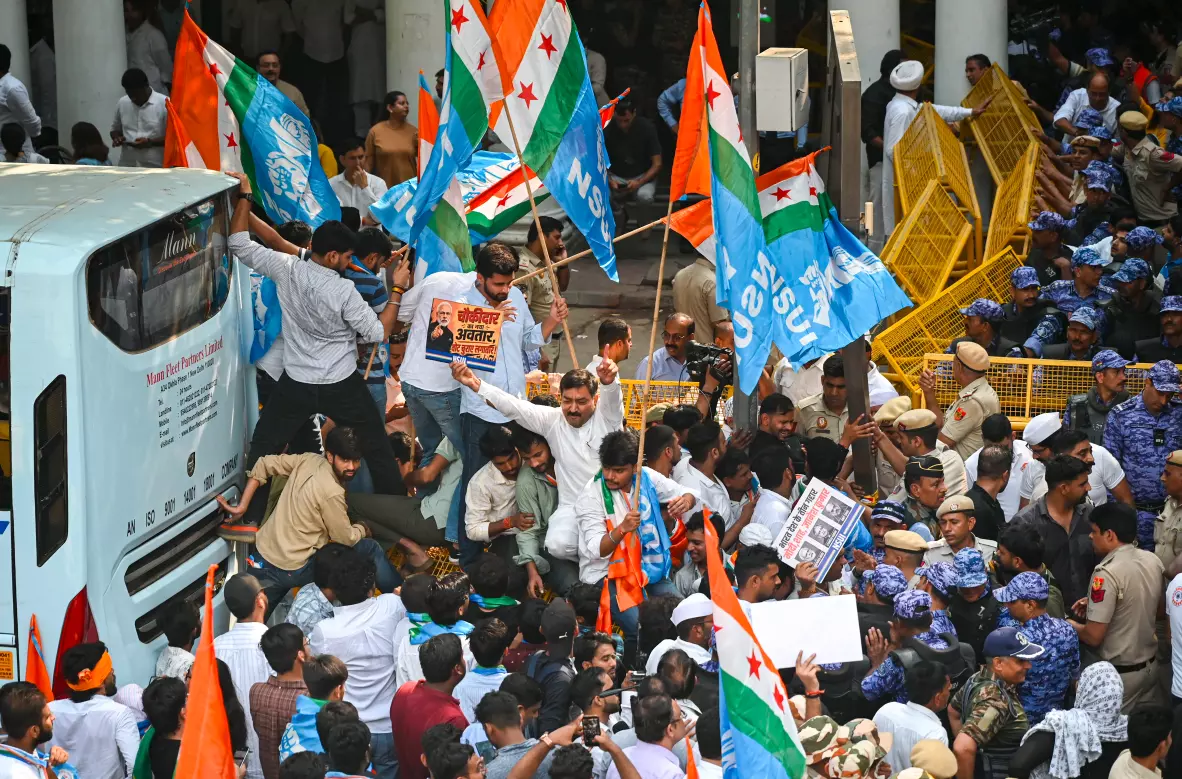
CJP leader Abhijeet Dipke waves the Tricolour amid supporters during an earlier protest in New Delhi. The CJP has announced a September 5 march from India Gate to Delhi Police Headquarters, as police assess the expected mobilisation and security arrangements. (Photo: File/Agency)
Police assess expected turnout and possible additional deployment as Abhijeet Dipke-led CJP plans march from India Gate to Delhi Police Headquarters
In Short
- CJP plans a September 5 march from India Gate to Delhi Police Headquarters
- Delhi Police says no formal permission request had been received as of Tuesday
- Police assessing likely turnout and movement of supporters from other states
- India Gate route could face objections because it is not a designated protest site
- Special Branch and other units involved in assessing mobilisation
- Additional paramilitary deployment may be considered depending on crowd size
- CJP says families of deceased NEET aspirants and alleged victims of police action will participate
- Organisers maintain that the proposed march will be peaceful
New Delhi: Delhi Police has stepped up preparations ahead of the Cockroach Janta Party’s proposed September 5 protest march, with security agencies assessing the likely turnout, tracking mobilisation and examining whether additional forces may be required if supporters arrive in large numbers.
The Abhijeet Dipke-led CJP has announced plans for a peaceful march of about 2.5 km from India Gate to Delhi Police Headquarters on Jai Singh Road, saying commitments made when its earlier agitation was withdrawn in July remain unfulfilled. The proposed demonstration is scheduled for Teachers’ Day.
A significant uncertainty, however, surrounds official permission for the march.
Delhi Police said the organisation had not submitted a request for permission as of Tuesday. CJP representatives have indicated that the police will be formally informed about the programme.
The proposed starting point could itself become contentious. India Gate is not a designated protest venue, and police officials have cited both security and traffic considerations surrounding large gatherings and marches in the New Delhi district. Authorities could consequently ask organisers to move the demonstration to another venue depending on the anticipated turnout.
Security Agencies Assess Mobilisation and Crowd Size
Police preparations have extended to assessing the CJP’s organisational network and the possibility of supporters travelling to the capital from other states.
According to a report published on Wednesday, officers from the New Delhi district and other security units are assessing the likely size and composition of the gathering, while senior police officers have discussed arrangements for maintaining security around the proposed protest.
The CJP says the march will include families of deceased NEET aspirants, people who allege they were subjected to police excesses during the earlier agitation, students, youth organisations and other supporters.
The group has accused the Centre of failing to fulfil commitments associated with the withdrawal of its previous agitation, particularly concerning FIRs against student protesters. On Wednesday, the CJP reiterated that three of its four demands remained pending, including compensation for affected families, withdrawal of FIRs and an apology over the earlier police action.
Security agencies are also examining whether additional personnel may be needed if mobilisation is substantial. The reported contingency planning includes retaining Central Reserve Police Force personnel and potentially seeking additional deployment, depending on the crowd assessment closer to the event.
The preparations do not mean that the September 5 gathering has already been prohibited. At this stage, the central issues are whether permission is sought and granted, whether police accept the proposed India Gate-to-Police Headquarters route, and how many participants eventually travel to New Delhi.
For the CJP, September 5 is intended to revive pressure over demands it says remain unresolved. For Delhi Police, the immediate challenge is different: balancing the right to peaceful protest with security, traffic management and restrictions governing demonstrations in the high-security New Delhi district.
The final shape of the march may therefore depend as much on negotiations over permission and venue as on the mobilisation planned by the CJP.