Kumar Bahukhandi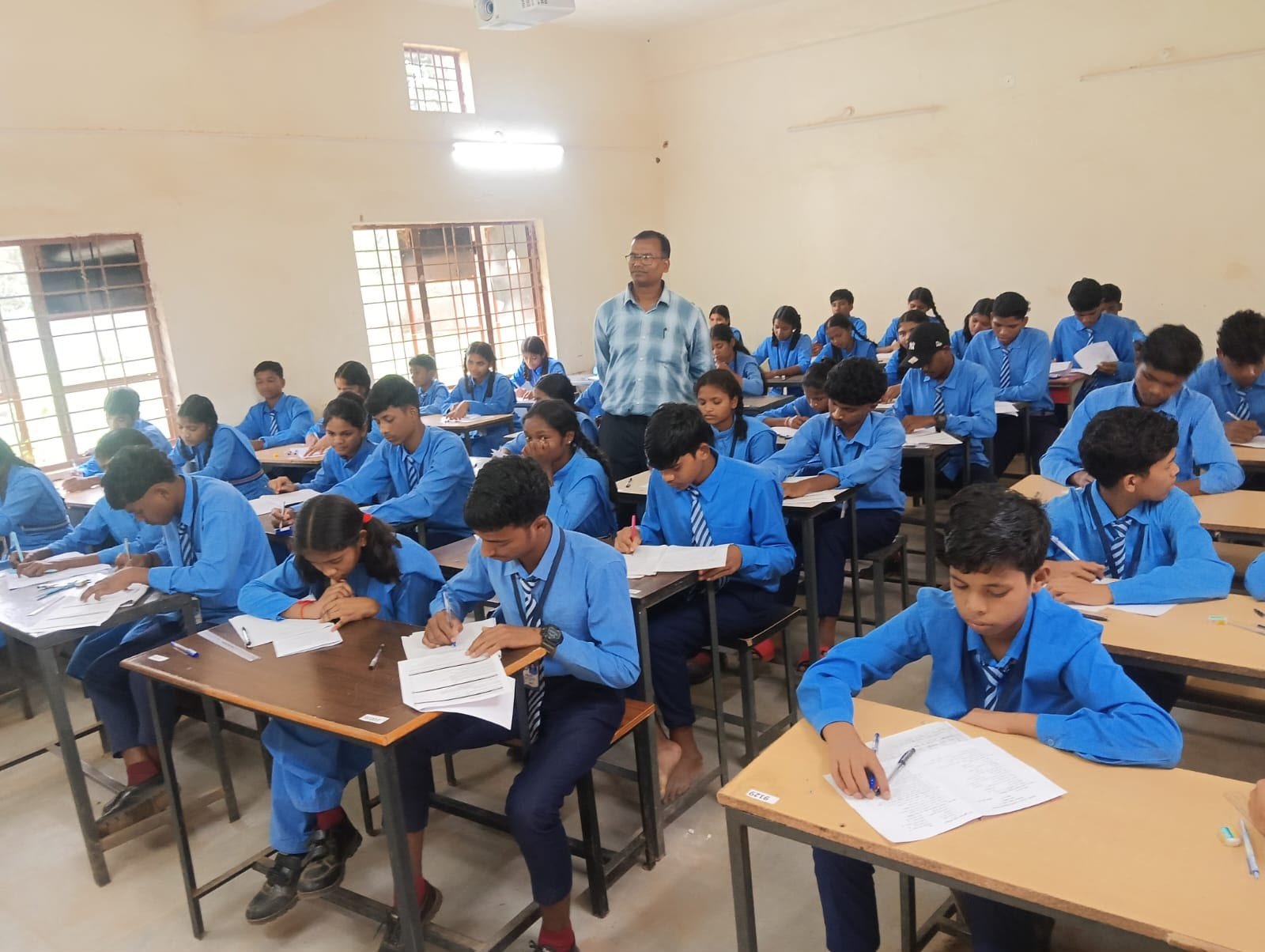
Tribal students concentrate on their studies inside the newly operational hostel at Bhatpal. The former security camp has been converted into residential educational facilities for students from remote villages of Abujhmad. Photo: channel24india.com via CG/DPR
First-of-its-kind initiative in Bastar division transforms a former security camp into residential educational facilities, giving students from remote villages safer accommodation and easier access to school
Key Highlights
- Former security camp at Bhatpal in Narayanpur, operational for nearly 15 years, converted into a students’ hostel.
- Initiative provides residential facilities for tribal children from remote and difficult-to-reach villages of Abujhmad.
- Two Scheduled Tribe boys’ hostels are functioning on the campus for students from Classes 6 to 12.
- Pre-Matric hostel has 100 sanctioned seats and currently accommodates 114 students.
- Post-Matric hostel has 50 sanctioned seats, with 39 students currently residing there.
- Government Higher Secondary School is located barely 50 metres from the hostel.
- Residential facilities became operational on August 11, 2026.
- Collector Namrata Jain reviews accommodation, food, sanitation and other facilities during surprise inspection.
RAIPUR: A place associated for nearly 15 years with security operations has acquired an entirely different identity in Narayanpur district. The former security camp at Bhatpal is now filled with schoolbooks, classrooms, uniforms and the aspirations of tribal children from some of Abujhmad’s most remote villages.
In what is described as the first initiative of its kind in the Bastar division, the vacated security facility has been converted into residential accommodation for Scheduled Tribe students, helping children who previously faced long journeys, difficult terrain and the additional burden of arranging accommodation simply to continue their education.
Located around 25 km from Narayanpur district headquarters, the Bhatpal campus became available for an alternative use following changes in the local security situation. Instead of allowing the existing infrastructure to remain unused, the district administration decided to adapt it to meet an educational requirement.
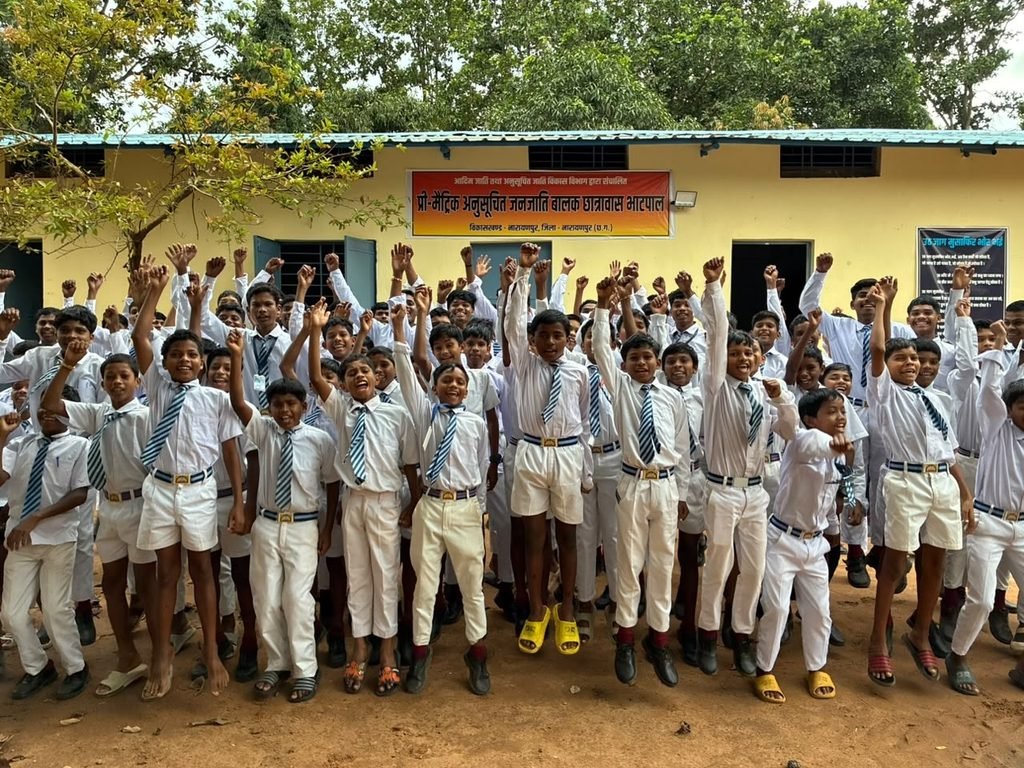
Students outside the Pre-Matric Scheduled Tribe Boys’ Hostel at Bhatpal, where a former security camp is now providing accommodation to tribal children pursuing their education. Photo: channel24india.com via CG/DPR
On the initiative of Collector Namrata Jain, the premises were converted into hostel facilities for tribal students. The residential arrangement became operational on August 11 this year.
Two Hostels Support Education From Class 6 to 12
Two Scheduled Tribe boys’ hostels are currently functioning from the campus.
The Pre-Matric Scheduled Tribe Boys’ Hostel, intended for students of Classes 6 to 10, has a sanctioned capacity of 100 seats. At present, 114 students are staying there.
The Post-Matric Scheduled Tribe Boys’ Hostel has 50 sanctioned seats for students of Classes 11 and 12 and currently accommodates 39 students. The facility also addresses accommodation requirements of students associated with Education City, Kutul.
The arrangement is particularly important for students entering higher secondary classes. After Class 10, some students from distant villages previously had to arrange private accommodation closer to their schools. Besides creating practical difficulties for young students living away from their villages, such arrangements placed an additional financial burden on their families.
The Bhatpal hostel now provides accommodation in an organised residential environment where students can remain close to their educational institution and concentrate on their studies.
School Only 50 Metres Away
Geography remains one of the major practical challenges for schoolchildren living in remote areas. A school may technically be available, but distance and transportation can determine whether a child is actually able to attend it regularly.
At Bhatpal, this difficulty has been substantially reduced. The Government Higher Secondary School is situated only about 50 metres from the hostel.
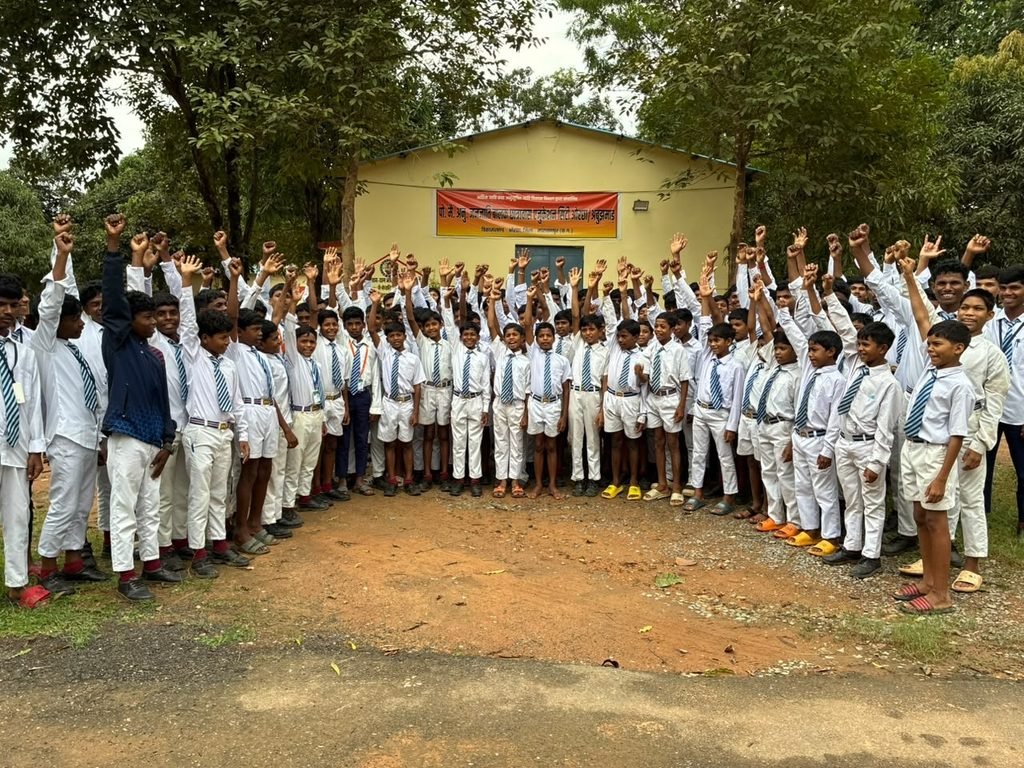
Students celebrate outside the hostel campus at Bhatpal. The initiative marks a striking transition for a site that served as a security camp for nearly 15 years and is now being used for education. Photo: channel24india.com via CG/DPR
Students can therefore reach school without spending hours travelling every day. The time saved can instead be used for classes, self-study and other activities.
The availability of accommodation covering the pre-matric and post-matric stages also provides greater continuity for students seeking to remain in education through Classes 11 and 12.
Students Speak of a More Convenient Study Environment
For students staying at Bhatpal, the transformation is less about the history of the building and more about what it now makes possible.
Class 9 student Ritesh Soni of Halamimunjmeta said students were happy with the new campus. Staying close to school, studying alongside other children and having residential facilities available have made their daily routine more convenient.
For Class 12 student Komendra of Rajbeda, the hostel has addressed another significant difficulty. His school is around 22 km from his village, and he earlier had to make separate arrangements to stay near the school. That meant additional expenditure for his family.
With accommodation now available at Bhatpal, he has a place to stay while completing his higher secondary education.
Such individual experiences underline an important aspect of educational access in remote areas: opening schools alone may not always be sufficient. For children living far from educational centres, hostels, transport and other supporting infrastructure can determine whether schooling remains practically accessible.
Collector Namrata Jain Reviews Facilities
Collector Namrata Jain also conducted a surprise inspection of the hostel to assess the arrangements available to students.
She inspected the residential rooms, sanitation, food arrangements and other basic facilities and interacted directly with students about their requirements and concerns.
During the visit, she assured the children that genuine requirements would be addressed and encouraged them to maintain cleanliness in their rooms and across the hostel premises.
The Collector also inspected the kitchen and checked the food being prepared for the students. She examined the quality of rice and vegetables and instructed the staff to maintain hygiene and ensure that breakfast and meals are served according to the prescribed menu.
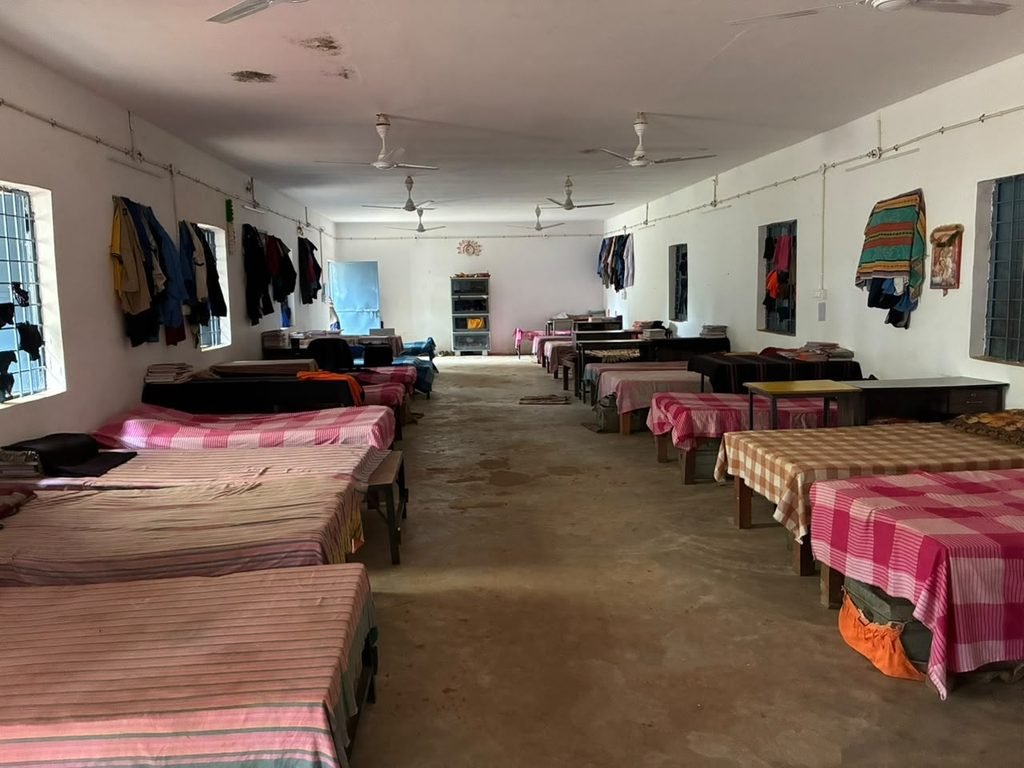
Residential arrangements inside the Bhatpal hostel, where existing infrastructure of the former security camp has been repurposed to accommodate tribal students from remote areas. Photo: channel24india.com via CG/DPR
Regular supervision will be important as the facility accommodates a substantial number of children and serves students from geographically dispersed communities.
Education Becomes the New Identity of the Campus
The change at Bhatpal is striking.
A campus created for security requirements now has rows of beds for students. Children gather outside in their school uniforms, while inside, students sit together with notebooks and examination papers.
The transformation also demonstrates how existing government infrastructure can be repurposed when circumstances change and local requirements evolve.
For Abujhmad, where distance and difficult terrain have historically complicated access to public services, residential educational infrastructure can have an impact far beyond the walls of a hostel. It can help children remain in school, reduce expenditure for families and make higher secondary education more accessible to students from remote settlements.
The wider effort in the region is aimed at expanding access to education alongside healthcare, roads, livelihoods and other opportunities for communities in areas that remained difficult to reach for years.
Bhatpal offers a visible example of that transition. A facility that once served a security purpose is now providing tribal children with a place to live, learn and prepare for their future.