Kumar Bahukhandi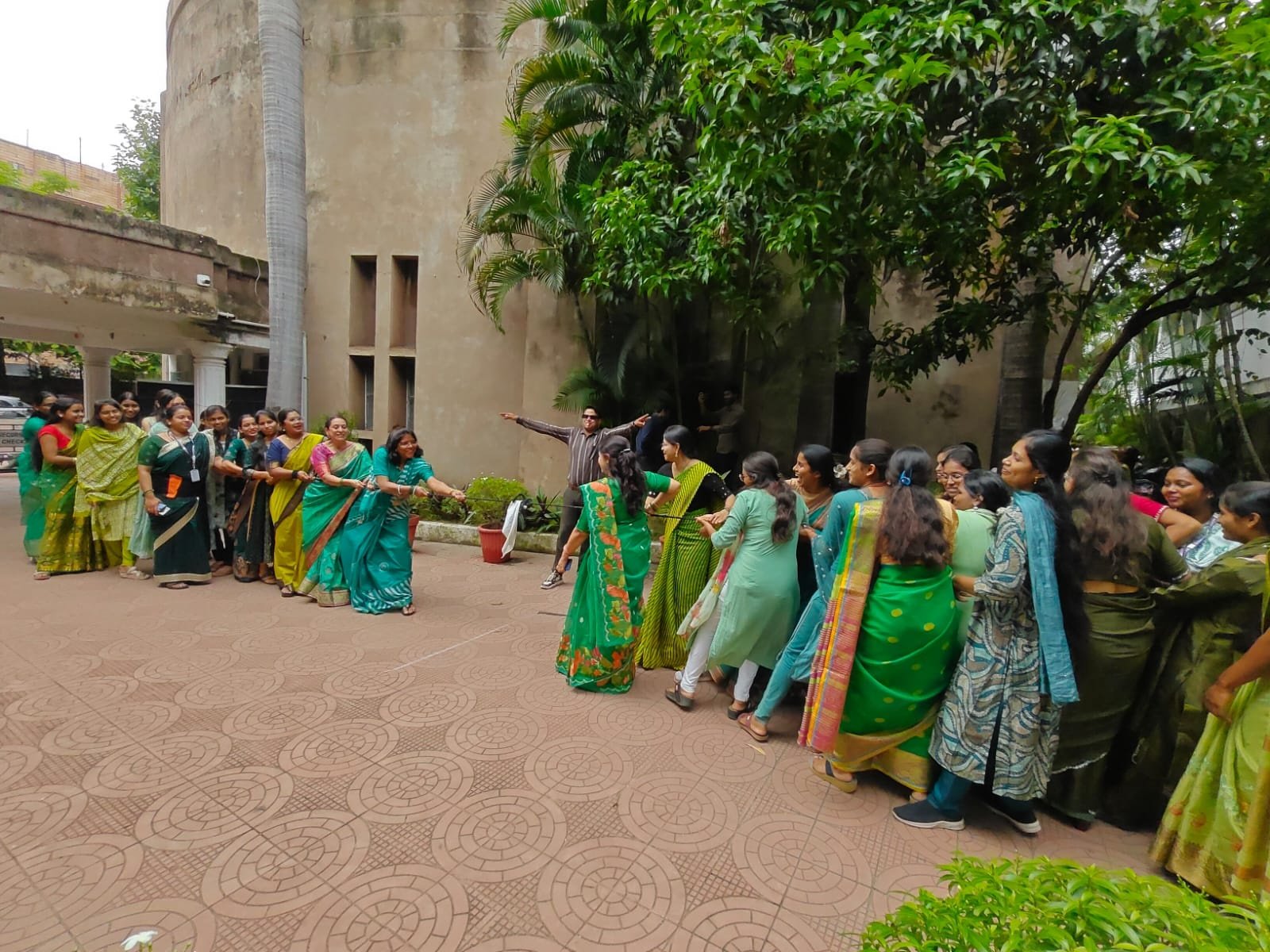
Teachers and students participate enthusiastically in a tug-of-war during Hareli Tihar celebrations at Pragati College, Raipur, on Thursday, August 13, 2026. Dressed predominantly in green, participants turned the traditional festival into a lively celebration of Chhattisgarh’s culture on the college campus-Photo Credit: channel24india.com via Pragati College .
Teachers and students turn out in green as Education Department celebrates State’s first folk festival; speakers urge budding teachers to preserve cultural traditions
Raipur: The colours and traditions of Chhattisgarh came alive at Pragati College, Raipur, on Thursday, August 13, 2026, as teachers and students celebrated Hareli Tihar with enthusiasm, traditional activities and a message to preserve the State’s cultural heritage.
Organised by the Department of Education, the celebration saw teachers and students turn out predominantly in shades of green, reflecting the greenery associated with Hareli. Traditional games and cultural activities added a festive character to the college campus, with tug of war emerging as one of the major attractions.
“Opening the programme, Principal Dr Soumya Nayyar greeted the gathering with the traditional Chhattisgarhi expression, “Hareli Tihar ke gada-gada badhai.”
Addressing the students, Dr Nayyar particularly underlined the responsibility of budding teachers in keeping local traditions alive. She said future teachers would have an important role in introducing younger generations to Chhattisgarh’s culture and helping students understand the significance of festivals rooted in the State’s social and rural life.
“Dr K N Gajpal, Head of the Department of Education, extended Hareli greetings to the students and faculty and drew attention to the gradual erosion of traditional practices”. He urged the gathering to value and protect cultural traditions rather than allowing them to disappear amid changing lifestyles.
Addressing the programme in Chhattisgarhi, Sanjiv Varma, Assistant Professor of Journalism and Mass Communication, explained the agricultural and cultural significance of Hareli.
“Varma said Hareli is regarded as the first major folk festival of Chhattisgarh and has traditionally been celebrated by farming communities through the worship of cattle and agricultural implements used in cultivation. He stressed that preserving Chhattisgarhi culture required younger generations not merely to know about such traditions but also to understand why they had remained important to rural society for generations“.
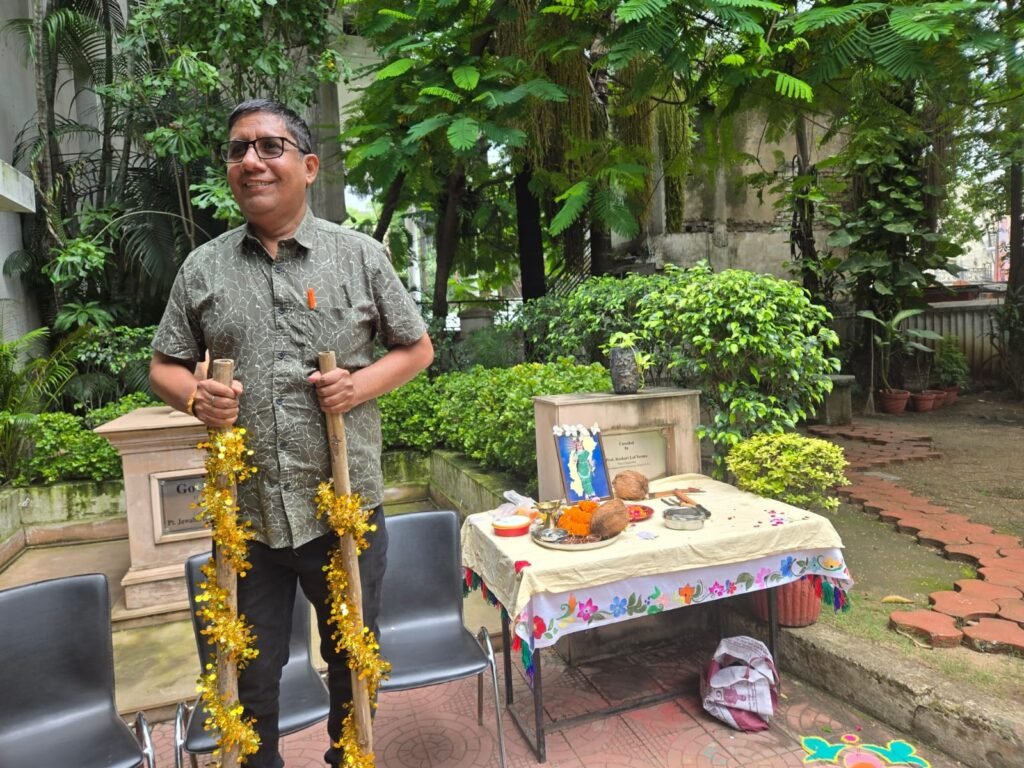
Sanjiv Varma, Assistant Professor of Journalism and Mass Communication, takes to the traditional gedi during Hareli Tihar celebrations at Pragati College, Raipur, on Thursday, August 13, 2026, highlighting one of the folk traditions closely associated with the festival-Photo Credit;channel24india.com
The celebration went beyond speeches, with students and teachers participating in games and recreational activities associated with the festive occasion. The tug-of-war competition generated particular excitement, drawing enthusiastic participation and turning the courtyard into the focal point of the celebrations.
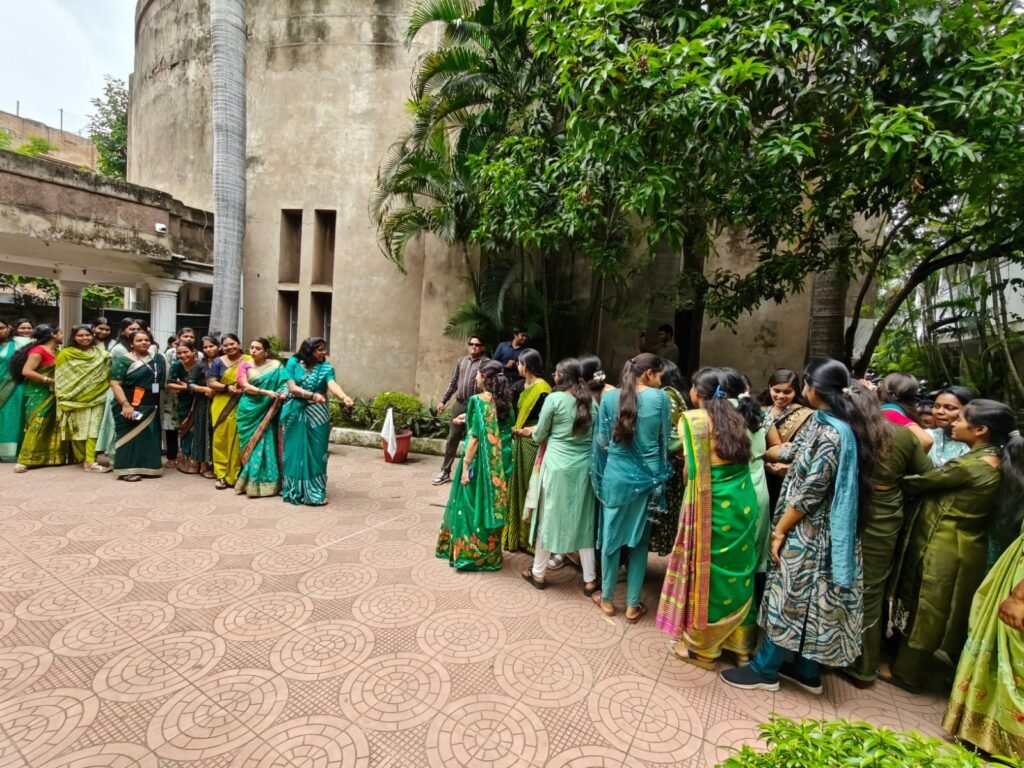
Students and faculty members join the tug-of-war during Hareli Tihar celebrations organised by the Department of Education at Pragati College, Raipur, on Thursday, August 13, 2026, with traditional games adding enthusiasm to the festivities-Photo Credit:channel24india.com via Pragati College
Pragati College Principal Dr Soumya Nayyar, Administrator Jyoti Thakur along with other faculty members and Education Department students, enthusiastically participate in the Hareli Tihar celebrations at Pragati College, Raipur, on Thursday, August 13, 2026, bringing alive the festive spirit and cultural traditions of Chhattisgarh-Video Credit:channel24india.com via Pragati College .
The predominance of green attire across the campus added to the Hareli atmosphere, symbolising the festival’s association with agriculture, greenery and the monsoon season.
Students and faculty celebrate Hareli Tihar with traditional games and festive enthusiasm at Pragati College, Raipur, on Thursday, August 13, 2026, as the Department of Education highlights Chhattisgarh’s cultural traditions-Video Credit:channel24india.com via Pragati College
For the Education Department, the celebration also carried an educational message. With many of its students preparing to become teachers, the programme sought to reinforce the idea that education is not confined to classrooms and textbooks, but can also play an important role in transmitting language, customs and cultural memory from one generation to another.
An M.Ed student participates enthusiastically alongside fellow students during the Hareli Tihar celebrations at Pragati College, Raipur, on Thursday, August 13, 2026, as traditional activities bring Chhattisgarh’s cultural heritage alive on the campus: Video Credit: channel24india.com via Pragati College