Kumar Bahukhandi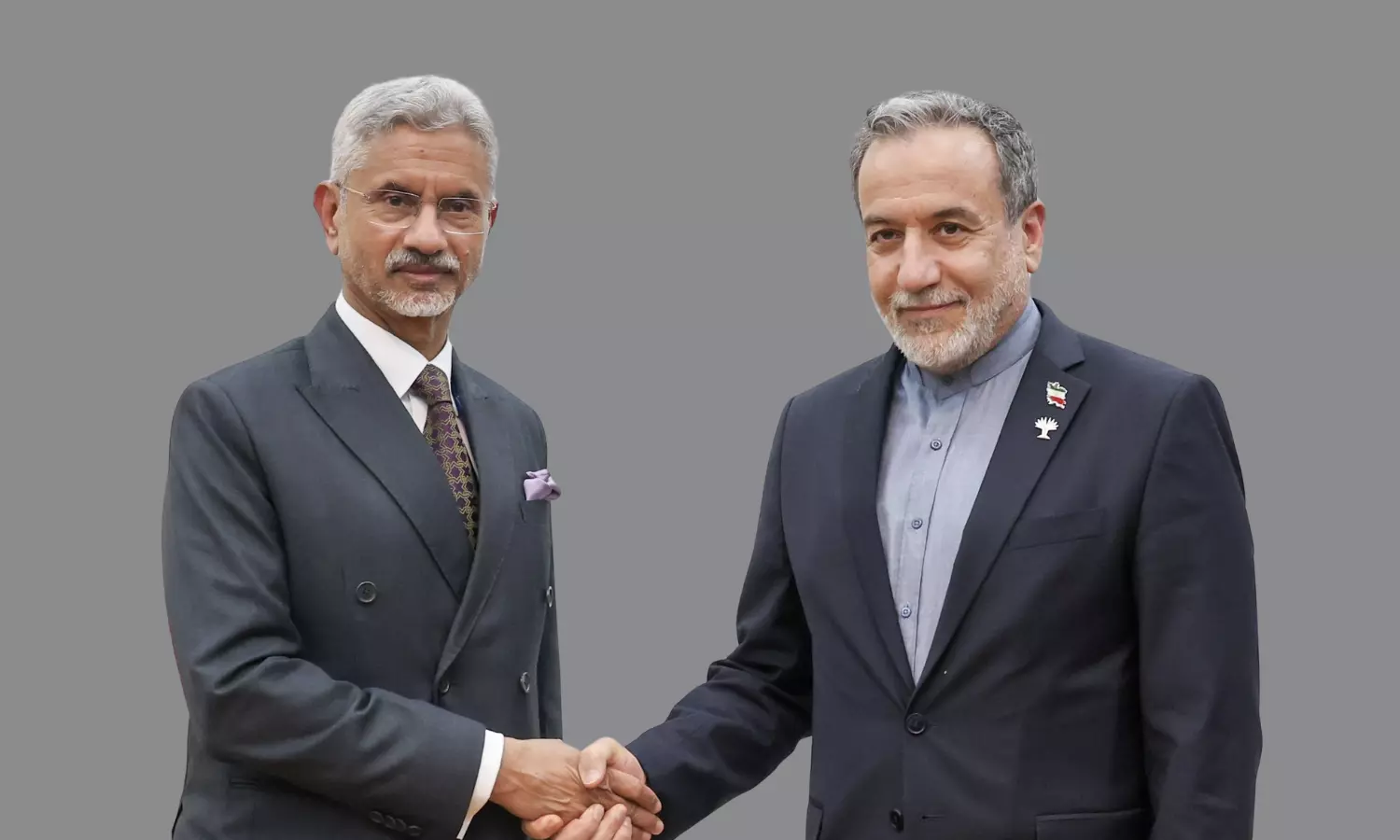
External Affairs Minister Dr. S. Jaishankar (left) and Iranian Foreign Minister Abbas Araghchi held a telephonic conversation during which India urged that commercial shipping and seafarers be protected amid escalating tensions in West Asia, while reaffirming its support for dialogue and diplomacy. (File Photo)
IN Short
- External Affairs Minister S. Jaishankar speaks with Iranian Foreign Minister Abbas Araghchi.
- India urges Iran to ensure the safety of commercial shipping and seafarers.
- New Delhi reiterates that it condemns attacks on civilian maritime traffic by any party.
- India continues to advocate dialogue and diplomacy as the only viable solution.
- Government confirms 16 Indian nationals, including 10 seafarers, have died in the West Asia conflict since 2026.
- 75 Indians have been injured across several countries in the region.
- 12 Indians also died in an unrelated industrial accident at Qatar’s Ras Laffan Gas Facility.
- India remains focused on protecting its citizens and ensuring the security of vital international shipping routes.
EAM S. Jaishankar conveys New Delhi’s concerns to Iranian Foreign Minister Abbas Araghchi; reiterates India’s support for dialogue and diplomacy
New Delhi: As tensions continue to escalate in West Asia, India has urged Iran to ensure that commercial shipping and seafarers are not targeted under any circumstances, reaffirming its commitment to the safety of international maritime trade and the protection of Indian nationals in the region.
External Affairs Minister Dr. S. Jaishankar conveyed India’s concerns during a telephonic conversation with Iranian Foreign Minister Abbas Araghchi, amid growing hostilities involving Iran and the United States and increasing threats to commercial vessels operating in the strategically important Strait of Hormuz.
Highlighting India’s position, Jaishankar said New Delhi remains deeply concerned over the deteriorating security situation in the region.
“Conveyed our deep concerns at the ongoing hostilities in the region. Strongly urged that attacks on commercial shipping and seafarers be avoided under any circumstance,” Jaishankar said after the conversation.
The External Affairs Minister also made it clear that India condemns attacks on civilian maritime traffic, irrespective of the party involved.
“India condemns any such attack by any party,” he emphasized, reiterating New Delhi’s consistent stand on safeguarding global shipping routes and maritime security.
Iran Shares Its Perspective
Following the discussion, Jaishankar said he was briefed by his Iranian counterpart on Tehran’s assessment of the evolving regional situation and the diplomatic efforts currently underway.
Reaffirming India’s long-standing foreign policy approach, he stressed that dialogue remains the only sustainable path towards peace.
“I was apprised of Iran’s perspective of current developments and discussions that are underway. India is always supportive of dialogue and diplomacy,” Jaishankar said.
The conversation assumes significance as international concern grows over the possibility of further disruption to one of the world’s busiest energy and trade corridors.
Safety of Indian Nationals Remains a Priority
The Centre has also expressed concern over the impact of the prolonged conflict on Indian citizens living and working across West Asia.
Responding to a question in the Rajya Sabha, Minister of State for External Affairs Kirti Vardhan Singh informed Parliament that 16 Indian nationals, including 10 seafarers, have lost their lives since the outbreak of the regional conflict in 2026.
He said the fatalities were reported from Saudi Arabia, Kuwait, Oman, Iraq and the United Arab Emirates, while 75 Indians sustained injuries across multiple countries, including the UAE, Oman, Qatar, Kuwait, Saudi Arabia and Israel.
The Minister also clarified that 12 additional Indian nationals died in an industrial accident at the Ras Laffan Gas Facility in Qatar, which was unrelated to the ongoing regional hostilities.
India’s Balanced Diplomatic Approach
India has consistently maintained a balanced diplomatic position, calling for restraint while safeguarding its strategic interests in West Asia. With millions of Indians living in the Gulf region and a significant portion of India’s energy imports passing through the Strait of Hormuz, stability in the region remains a key national priority.
Officials say New Delhi continues to engage all stakeholders through diplomatic channels while closely monitoring developments affecting maritime security, regional stability and the welfare of Indian citizens abroad.