Kumar Bahukhandi
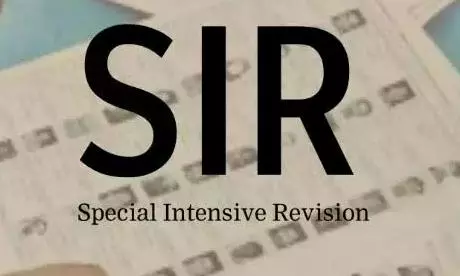
Representational image of the Special Intensive Revision of electoral rolls. The Supreme Court in New Delhi on Friday, October 30, 2026, directed the Election Commission to examine complaints of bulk Form 7 submissions in Uttar Pradesh and take necessary corrective steps.
Poll panel directed to verify allegations, take corrective steps and submit a compliance report; EC says false applications were checked and not acted upon
Key Highlights
• Supreme Court directs the Election Commission to examine alleged irregularities involving bulk Form 7 applications in Uttar Pradesh.
• Petitioners must submit a note detailing unresolved complaints to the Election Commission’s counsel.
• A petitioner’s counsel alleges that 32 applications in one constituency targeted voters from a particular community.
• The Election Commission says its officers verified the bulk applications, found them false and took no action on them.
• The court seeks necessary corrective steps and a compliance report.
New Delhi: The Supreme Court on Friday, October 30, 2026, directed the Election Commission of India to examine allegations concerning bulk submissions of Form 7 applications during the special intensive revision of electoral rolls in Uttar Pradesh and take necessary corrective steps.
The court was hearing petitions filed by Congress MP Tanuj Punia and others challenging the conduct of the revision exercise in the state.
Form 7 is used to raise objections to the inclusion of a name in an electoral roll or seek the deletion of an existing entry. The complaints before the court concerned its alleged use to target voters for removal.
Petitioners asked to detail unresolved complaints
A bench comprising Chief Justice of India Surya Kant, Justice Joymalya Bagchi and Justice V. Mohana asked the petitioners to prepare a note setting out the irregularities that remained unresolved and submit it to the senior counsel representing the Election Commission.
The bench directed the poll panel to examine the facts, take necessary corrective measures and report its compliance to the court.
“The irregularities which have been brought to the notice of the court shall be submitted to senior counsel appearing for the Election Commission of India by way of a note. On receipt thereof, let the Election Commission examine the factual aspects, thereafter take necessary corrective steps and file a compliance report,” the court directed.
The direction requires the Election Commission to assess the specific complaints placed before it rather than treating the allegations as established findings.
EC says false applications were not acted upon
Senior advocate D.S. Naidu, appearing for the Election Commission, acknowledged that bulk Form 7 applications had been submitted. He maintained, however, that officials had scrutinised them and that no action had been taken on the false applications.
“We found that bulk Form 7 applications had been submitted. Our officers checked and cross-checked them. They were false, and we have not acted upon them,” Naidu told the bench.
The Commission’s submission distinguished the receipt of applications from any subsequent decision to delete names from the electoral roll.
Allegation of community-based targeting
Counsel for one of the petitioners alleged that 32 applications had been submitted in a single constituency to target voters belonging to a particular community.
The bench asked the Election Commission to examine that allegation and take appropriate action.
The court’s directions place responsibility on the poll panel to verify the complaints, address any irregularities established through that examination and submit a compliance report.