Kumar Bahukhandi
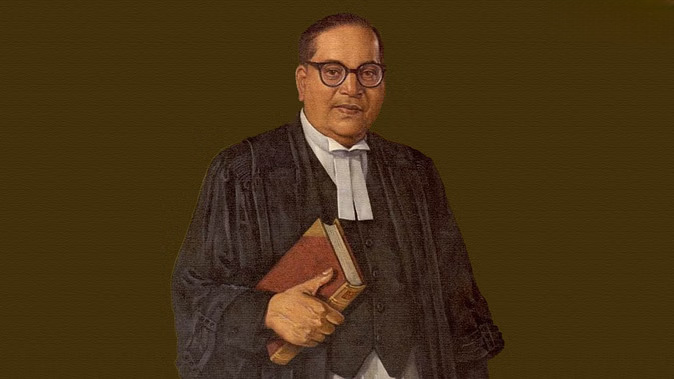
Bhimrao Ambedkar – Photo : https://main.sci.gov.in/AMB
If Ambedkar himself had seen the grandeur with which Ambedkar Jayanti was celebrated across the country recently, he would have been surprised. Prime Minister Modi’s people-centric policies have changed the lives of Dalits, but government statistics show that Ambedkar’s dream of a united nation and Dalit revival is yet to be fulfilled.
Dr BR Ambedkar’s 135th birth anniversary on 14th April was arguably the grandest and possibly the most attended event. Leaders of the ruling party as well as opposition parties paid floral tributes to him. They saluted the Dalit leader who endured immense humiliation, injustice and discrimination in his life despite his intellectual brilliance, vast legal knowledge and degrees from prestigious foreign universities. Had Babasaheb been watching these celebrations, he would not have believed that it was for him!
He could not have imagined that this was the same country where when he arrived at Bombay Victoria Terminus wearing a coat and tie with two doctorate degrees, no one took him to his village. On the recommendation of the station master, a bullock cart driver agreed to take him for a very high amount. That too after sunset, so that Ambedkar’s shadow would not defile it. Not only this, he also put a condition that he would just walk in front of the bullock cart while Ambedkar and his brother would drive the cart. The brothers went thirsty all the way, as no temple, mosque or shop provided them with water. Later when they came to Bombay (now Mumbai), no one was willing to rent them a house to live in, so they had to hide their real names and pretend to be Parsis to rent a room. But when their old Parsi landlady found out from their mail that they were not Parsis, she threw them out! There was no end to their sufferings and humiliation. In the office, no one would hand them files and documents but put them on the floor!
His health deteriorated as he worked long hours to draft the Constitution. Despite his efforts to bring the Hindu Code Bill in its original form, it was partially passed in Parliament in October 1948, a pathbreaking proposal to give Hindu women the right to inherit property, initiate divorce proceedings and manage their own finances, but it was strongly opposed by conservative Congress leaders, including the country’s first President. He was deeply disappointed that despite Prime Minister Nehru’s support, the Bill could not be passed even in its brief form, except for a small provision on marriage and divorce. In a way, he felt betrayed by the Prime Minister, while Nehru felt otherwise. Eventually, a disappointed Ambedkar resigned as Law Minister on 27 September 1951. He also refused to deliver his farewell speech in Parliament, as he was hurt by the behaviour of the Deputy Chairman. Despite his credentials and unflinching commitment to fight for the empowerment of Dalits, Ambedkar’s political critics ensured that he was never elected to the Lok Sabha again!
After writing his famous essay ‘Annihilation Caste’ in 1936, he became disillusioned with Hinduism. Shashi Tharoor writes in his book- Ambedkar a Life, ‘Ambedkar was convinced that he would have to abandon Hinduism in search of fair treatment for his people, and the obnoxious behavior of Hindu traditionalists over the Hindu Code Bill convinced him that there was no hope of meaningful social reform from that direction.’ He converted to Buddhism on October 14, 1956, in a passionate speech to thousands of followers in Nagpur, saying, ‘Having abandoned my ancient religion, which was a symbol of inequality and oppression, today I have been reborn.’ He declared, ‘I will abandon the caste system and spread equality among human beings. I will strictly follow the Eightfold Path of the Buddha. Buddhism is a true religion and I will be guided by the three principles of wisdom, right path and compassion.’ His effigies were burnt and his funeral processions were taken out in many cities.
The outrage against Ambedkar continued even after his death. Senior leaders like Madhu Limaye and Chandrashekhar stood by Ambedkar then and acknowledged his great contribution. Today, state governments are competing to install Babasaheb’s statues and publicise their achievements in implementing schemes for the welfare and empowerment of Dalits. Hundreds of people-centric policies and decisions taken by the government led by Prime Minister Modi have benefited millions of Dalits. Not surprisingly, the BJP’s vote share from Dalit communities has increased significantly, while BSP supremo Mayawati’s influence in UP has declined drastically.
If ‘Sabka Saath, Sabka Vikas’ continues, the fortunes of Dalits could change. Analysts believe that the overwhelming reverence for Dr Ambedkar today is aimed solely at getting the support of Dalit voters in elections. Is this not an acknowledgment that even 70 years after his death, nobody can challenge Ambedkar’s messianic hold on the Dalit psyche in India? The aspiration to become a developed India by the year 2047 is a noble goal. We must all contribute in our own way to achieve it. But should we not take a pledge that in this developed India, there will be no trace of untouchability (today it is practised in more than 13,000 villages), Dalits will not be prevented from entering temples, a Dalit woman will not be raped every 15 minutes as it happens today, thousands of Dalits will not be attacked and beaten up (according to NCRB records, there are more than 45,000 attacks on Dalits every year; the actual figure could be four times higher), Dalit students will not be routinely discriminated against in medical colleges, IITs and universities?
If we can ensure this, Babasaheb will bless us from wherever he is. Contrary to the false claims of many, Ambedkar dreamt of an undivided India. As early as August 1946, he had said, ‘I am confident that according to the times and circumstances, nothing in the world will prevent this country from being united. And, with all our castes and religions, I have no hesitation in saying that we will be a united nation in the future.’
Express your views