Kumar Bahukhandi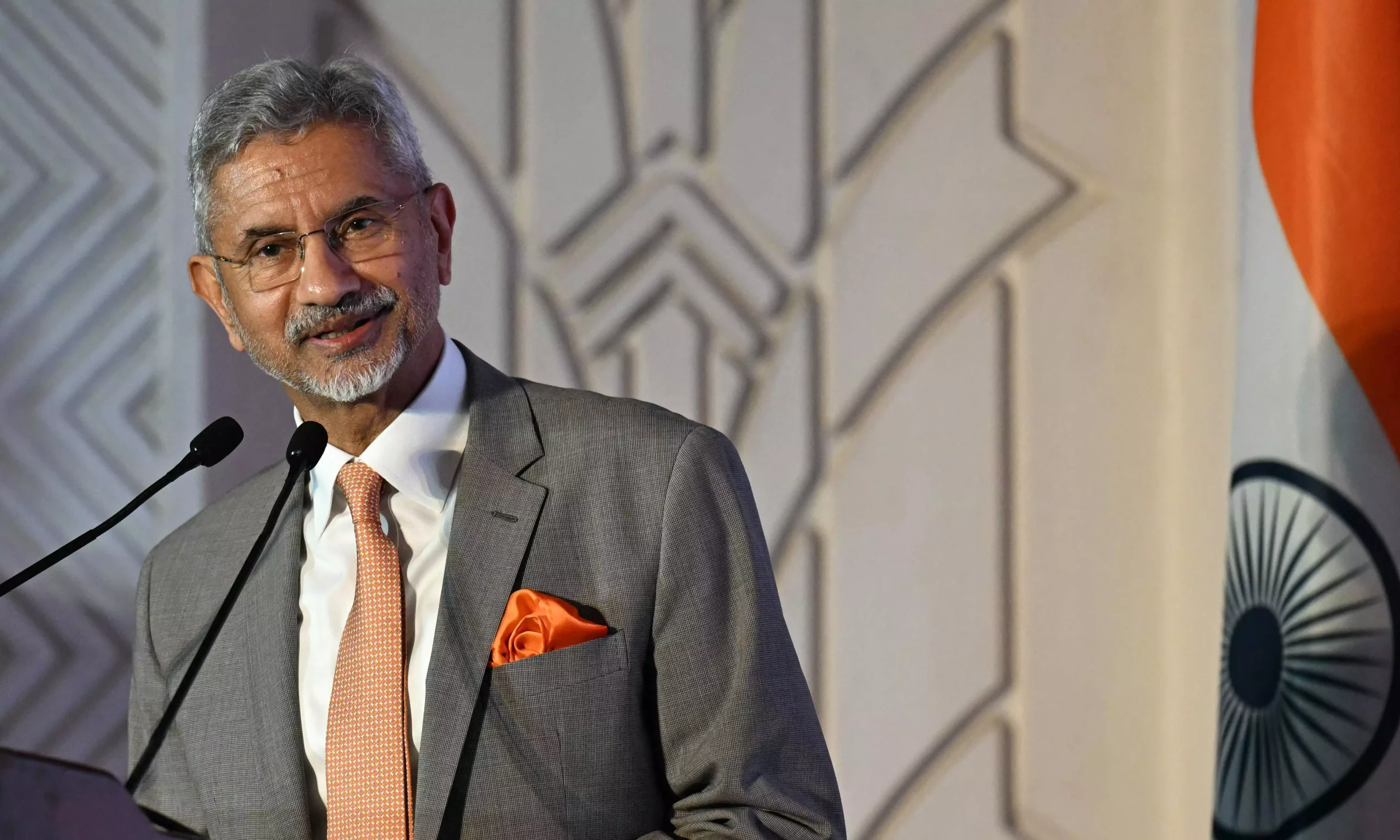
External Affairs Minister S. Jaishankar-PTI Photo
As global power shifts, India must rethink ties with the US and China
The Trump administration’s opening six months have exploded many assumptions about America, since the end of the Second World War. These included the United States as the citadel of liberal democracy, free trade and demographic diversity. Since 1991, when the economic liberalisation of India began, better relations with the US have been a cornerstone of Indian foreign policy. In the 21st century, this desire for closer engagement has been demonstrated by both sides.
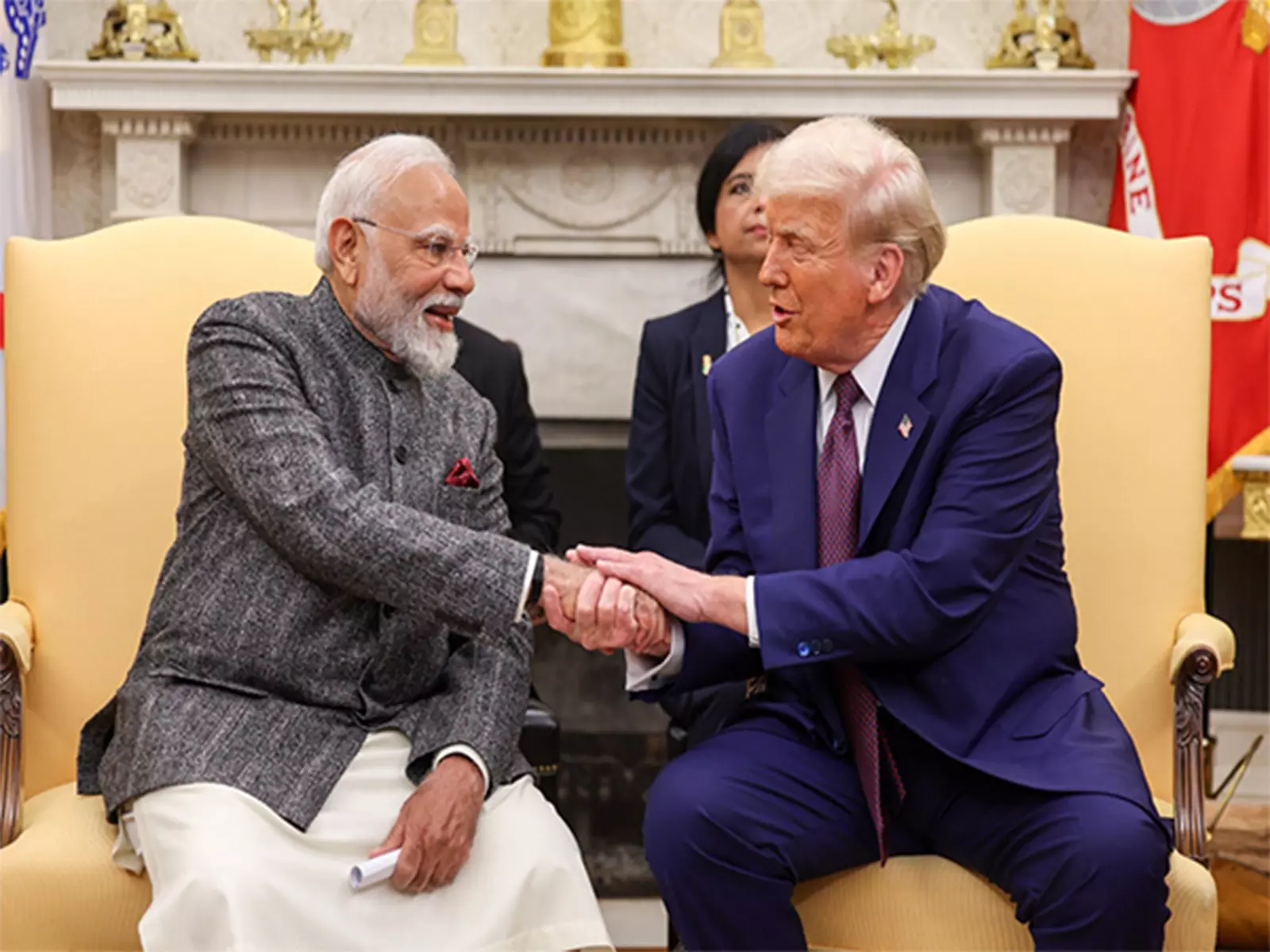
The epitome of this India-US diplomatic dalliance was Prime Minister Narendra Modi, at the Houston Indian diaspora event on the eve of the 2020 US presidential election, alongside President Donald Trump shouting: “Abki Baar, Trump Sarkar”.
Despite amounting to blatant interference in the US election, it reflected the shared euphoria.
Unbelievably, five years later, with the same person as US President again, there are many doubts and questions facing India’s relations with the United States. In particular, India has been concerned about disruption of bilateral trade and, since June, with President Trump’s approach towards the four-day India-Pakistan armed conflict and Pakistan itself.
The disruption of global trade, of course, goes well beyond India-US relations. Beginning with the April 2 declaration of universal tariffs as the “Liberation Day”, the saga is still going on. The threatened new tariffs have had shifting deadlines, first July 9 and then August 1, to encourage America’s trade partners to swiftly finalise trade deals. Mr Trump’s promised 90-deals-in-90-days has been a partial success. After the global markets dropped initially, calm returned, perhaps assuming that Mr Trump’s threats are much worse than his actions.
The United States being India’s largest trading partner, a similar assumption cannot be India’s guide. Even after the fifth round of India-US trade talks on July 14-17 in Washington, an interim trade deal appears to be elusive. India is resisting opening up its agriculture and dairy markets. The US seeks unrestricted access for its industrial goods, automobiles, wines, petrochemicals, agricultural and dairy goods, besides apples, tree nuts, and, controversially, genetically modified crops. On July 7, the US reiterated its threat by writing to 14 nations and setting August 1 as the new deadline to finalise trade deals. India was not on that list.
Alongside these concerns, President Trump has been repeatedly embarrassing the Indian government claiming that he mediated the India-Pakistan ceasefire by threatening to use the trade weapon. Initially India tried ignoring this, but after rising embarrassment, it publicly denied it, although without criticising Mr Trump.
However, on July 18, speaking to Republican leaders at dinner, while re-chanting old mediation claims, he also said: “I think five jets were shot down”. This undermined India’s denial and silence on the issue, followed by delayed and vague acceptance by the Chief of Defence Staff. Indian concerns on US-Pakistan relations had already been aroused by President Trump’s lunch for Field Marshal Asim Munir, the Pakistan Army chief, on June 16. In fact, insult was added to injury when President Trump invited Prime Minister Narendra Modi, then attending the G-7 summit in Canada, to swing by Washington on his way home. This completely ignored that the optics of the Indian Prime Minister being in the US capital, as the Pakistan Army chief was being hosted to a White House lunch, would be politically toxic in India. This followed the IMF approving a financial package for Pakistan.
Just hours before President Trump’s latest claims, US secretary of state Marco Rubio announced that The Resistance Front (TRF), a frontal organisation of the Pakistan-sponsored terrorist group Lashkar-e-Tayyaba, was being designated as a Foreign Terrorist Organisation (FTO) and Specially Designated Global Terrorist (SDGT).
The Indian satisfaction was negated by Mr Trump’s five-plane barb. A major Indian national daily, next morning, carried a satellite picture of India also having hit Kirana Hills in Pakistan, believed to be a nuclear weapons storage facility. This appeared like a convenient diversionary tactic, on the eve of the Monsoon Session of India’s Parliament, during which the Opposition planned to question the government about Operation Sindoor.
The diplomatic challenge confronting India is far wider than the two issues described above. A new bipolarity has emerged with the US as one pole and the Russia-China axis as the other. The Cold War bipolarity having ended in 1991, the world first drifted towards America’s unipolar dominance, until its military embroilment in Afghanistan and Iraq.
After that a gradual transition had been occurring towards multi-polarity. New plurilateral groups like the G-20, indicated the transition from the G-7 dominated world to one in which emerging powers like China, India and Brazil played a greater role. India had a foot in each camp, despite outstanding and serious differences with China over the land border, as indeed the growing China-Pakistan axis. Another group representing this transition has been Brics, which besides the above three emerging powers also includes Russia and South Africa. The fact that Prime Minister Narendra Modi attended the Brics summit in Brazil indicated a hedging strategy in a world order undermined by President Trump’s disruptive announcements and policies.
Mr Modi had barely left Brazil when an altercation broke out between the Presidents of the US and Brazil. Brazilian President Luiz Inácio Lula da Silva openly countered Mr Trump’s threats by observing that he should desist from pretending to be the world’s emperor. President Trump directly targeted Brics, threatening steep tariffs against any member supporting anti-US policies. China rushed to finalise new trade agreements with Brazil, picking up 70 per cent of the Brazilian soyabean crop, shifting from their dependence earlier on American exports.
Similarly, the principal members of the European Union are transitioning towards military self-dependence and defence of Ukraine by providing for diminished US military assistance. President Trump, during his first term, had demanded that Nato members increase their defence budgets to two per cent of GDP. The talk after the June Nato summit is of a hike up to five per cent, with 3.5 per cent on core expenditure and 1.5 per cent on related matters like assistance to Ukraine.
This drastically new world may never revert to the old one even as Mr Trump weakens domestically or his presidency is over. India is caught between an unreliable America and rival China dominating the second pole. The BJP government needs to rethink its diplomacy and majoritarian domestic politics. It needs a united India as the world gets ready for another major transition, away from the post-Second World War order.
The writer is a senior Journalist based in Delhi