Kumar Bahukhandi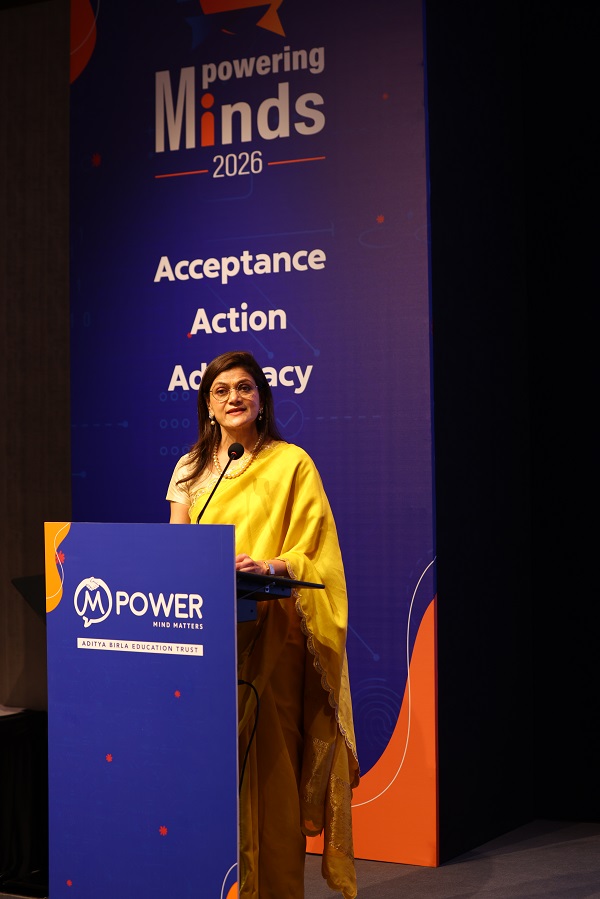
New insights from Mpower, a holistic mental health care provider and an initiative of the Aditya Birla Education Trust, founded by Mrs Neerja Birla, Founder Chairperson Aditya Birla Education Trust and Mpower, reveal a significant rise in emotional stress, loneliness, and relationship-related challenges among women across urban India.
 |
Mrs. Neerja Birla brings women’s mental health to centre stage at Mpowering Minds 2026, driving dialogue on evolving needs across life stage
Drawing from interactions with over 395,000 female beneficiaries over the past 3 years across counselling centres, helplines, school outreach programmes, and community initiatives, the findings offer a comprehensive view of how mental health concerns among women are evolving across life stages and geographies.
The data highlights distinct emotional patterns across age groups, presenting a life-stage view of women’s mental health in urban India.
-
Adolescents (below 18) are increasingly engaging with mental health programmes through schools, educational institutions, and counselling services available to them, reflecting both rising awareness and early emotional vulnerability driven by academic pressure, identity formation, and social dynamics.
-
Young women (18-25) frequently report academic stress, career uncertainty, relationship conflicts, and challenges with emotional boundaries as they transition into adulthood.
-
Women in prime working years (26-49) emerge as the most emotionally burdened, experiencing loneliness, relationship strain, workplace stress, financial pressures, and emotional burnout while balancing multiple roles.
-
Women aged 50+ often face loneliness, family transitions, and evolving emotional needs linked to later life stages.
While the overarching trends remain consistent, the data reveals distinct city-specific stressors shaped by local socio-economic and cultural contexts:
-
In Delhi, emotional strain is strongly linked to loneliness among working women and boundary and identity challenges among younger women, reflecting the pressures of high-performance urban environments.
-
In Mumbai, family conflict, marital stress, and relationship tensions emerge as dominant concerns, alongside a notable rise in adolescent engagement, indicating increasing openness toward seeking support.
-
In Kolkata, mental health challenges are shaped by academic pressure, emotional isolation, and family expectations, particularly among younger women navigating educational and career transitions.
-
In Bangalore, women frequently report workplace stress, financial pressures, and burnout, reflecting the demands of a fast-paced, career-driven urban ecosystem.
Together, these insights highlight how local realities intersect with broader societal shifts, creating layered and evolving mental health challenges for women across India.
Further the analysis of data by Mpower highlights key trends emerging across urban India
-
Loneliness is rising, particularly among working women
-
Relationship stress and family conflict are central emotional triggers
-
Workplace and financial pressures are intensifying distress
-
Early mental health engagement is increasing, especially among adolescents
-
Stigma continues to delay timely support
Commenting on the findings, Mrs Neerja Birla, Founder and Chairperson, Aditya Birla Education Trust and Mpower, said, “Women’s mental health is shaped not only by individual experiences but by the systems they navigate every day across work, family and society. As more women come forward to seek support, it is critical that we build accessible, stigma-free ecosystems across homes, workplaces and communities that enable them to prioritise their wellbeing.”
Adding an expert’s perspective Dr. Preeti Parakh, Psychiatrist and Head Mpower- The centre Kolkata and Delhi, said, “What we are seeing across urban India is a shift from episodic stress to more sustained, layered emotional strain among women. At different life stages, these challenges manifest differently -from identity and boundary-related concerns among younger women to chronic emotional fatigue, loneliness, and role overload among those in their 30s and 40s. This highlights the need to understand women’s mental health not as isolated concerns, but as evolving patterns shaped by life transitions, social expectations, and cumulative pressures.”
Further, Dr. Harshida Bhansali, Head Psychiatrist, Mpower-The Centre, Mumbai, added, “Untreated mental health concerns in women often have far-reaching consequences – impacting not only individual wellbeing, but also family dynamics, workplace productivity, and long-term health outcomes. Delayed intervention can lead to more complex psychological and physical conditions over time. Strengthening early access to support through schools, workplaces, and communities, along with normalising help-seeking, is critical to reducing this long-term social and economic cost.”
The findings underscore the need for coordinated efforts to address women’s mental health challenges:
-
Expanding access to affordable counselling services
-
Integrating mental health awareness in education systems
-
Strengthening workplace wellbeing policies
-
Encouraging open, stigma-free conversations
-
Integrating Mental Health into Primary Healthcare
-
Ensuring access to psychiatric care and essential medications
-
Expanding the mental health workforce (psychologists, psychiatrists, social workers)
-
Building early intervention systems for children and adolescents
-
Leveraging digital mental health platforms with quality and privacy safeguards
-
Strengthening implementation of mental health policies and increasing public health funding
-
Developing community-based support systems and peer networks
-
Establishing robust crisis intervention services, including 24/7 helplines
-
Training non-specialists (teachers, managers, frontline workers) in basic mental health support
-
Promoting preventive mental health practices and emotional resilience at all life stages
At Mpower, a sustained focus on women’s mental health is reflected not only in its on-ground interventions but also in the data emerging from its work, which highlights critical gaps in access, awareness, and continuity of care. Building on these insights, the organisation convened the Mpowering Minds 2026 Women’s Mental Health Summit – bringing together experts, practitioners, and thought leaders from India and globally to examine these challenges in depth. The discussions were anchored in real-world evidence, enabling a richer exchange of perspectives and solutions, and culminated in a collective call to action for more integrated, accessible, and life-stage–responsive mental health support systems for women.
About Mpower
Backed by Aditya Birla Education Trust, Mpower is a pioneering holistic mental health initiative, now marking a decade of impact in transforming mental health awareness and care in India. Since its inception in 2016, under the leadership of Mrs. Neerja Birla, Mpower has been committed to building an inclusive ecosystem where individuals and their caregivers receive professional support, compassionate care, and acceptance – free from stigma or discrimination.
Through a multidisciplinary and integrated approach, Mpower delivers impact across a diverse ecosystem – including clinical services, outreach and awareness programs, institutional partnerships, helplines, educational initiatives such as Minds Matter, and sports-focused interventions like AMP.
Its growing footprint spans multiple locations including Mumbai, Bengaluru, Pune, Kolkata, Delhi, Palghar, Kalyan, JECRC University (Jaipur), Kota, along with campus-based presence across BITS Pilani (Pilani, Goa, Hyderabad) and other partner institutions.
Over the past 10 years, Mpower has played a pivotal role in normalizing conversations around mental well-being, reaching millions through its care delivery, prevention programs, and large-scale partnerships – continuing to enable individuals to seek support with dignity, confidence, and hope.
For more information, please visit mpowerminds.com.