Kumar Bahukhandi
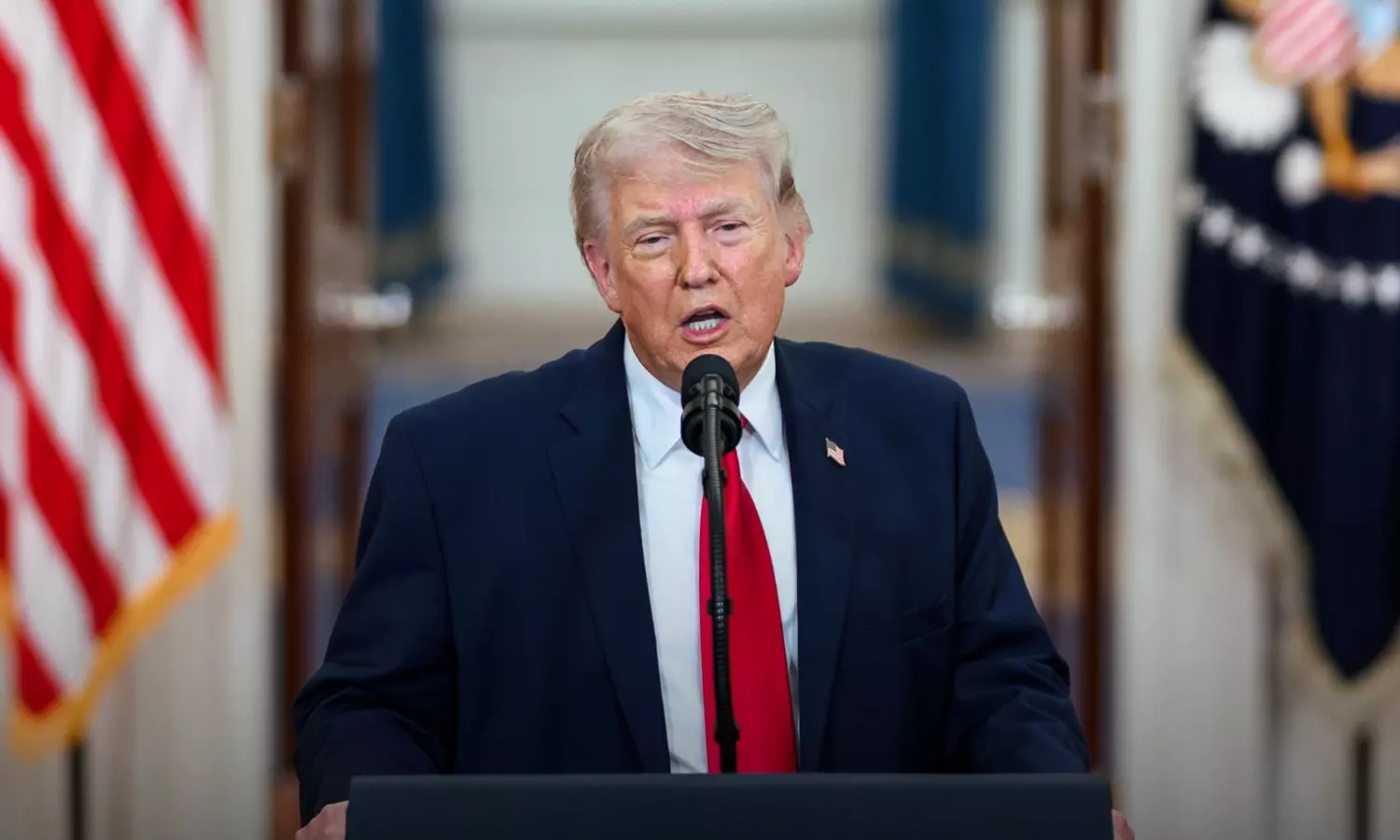
Trump has claimed they have achieved all their military objectives-Photo Credit -Reuters
Throughout the over-month-long conflict, Trump has made contradictory statements about his goals for Iran, including putting an end to the country’s nuclear program, destroying its military capabilities, and creating regime change.
Washington: Even before Washington and Tehran shared a negotiation table this week, US President Donald Trump claimed total victory over Iran in the ongoing war in the Middle East. Hailing the Pakistani-brokered two-week ceasefire, Trump said it was “a big day for world peace”. The US Secretary of Defence, Pete Hegseth, claimed America has achieved all their military objectives, including severely depleting Iran’s military capabilities.
“Operation Epic Fury was a historic and overwhelming victory on the battlefield,” he said.
A similar narrative of victory emerged in Israel, where Prime Minister Benjamin Netanyahu framed the conflict as existential and declared that Iran no longer posed such a threat. These parallel claims of success invite a closer examination of what the principal actors–the United States and Israel–have actually achieved or failed to accomplish through the war.
What Were Trump’s War Goals?
Throughout the over-month-long conflict, Trump has made contradictory statements about his goals in Iran, including putting an end to the country’s nuclear programme, destroying its military capabilities, and creating regime change. Furthermore, Iran’s control over the economically crucial Strait of Hormuz emerged as a new point of contention that had not existed before the war.
If the current deal endures during the scheduled peace talks in Islamabad this week, Trump’s justifications for the more than five-week conflict appear largely unmet, as the claims of halting Iran’s nuclear ambitions or dismantling its ballistic missile programme remain open-ended questions.
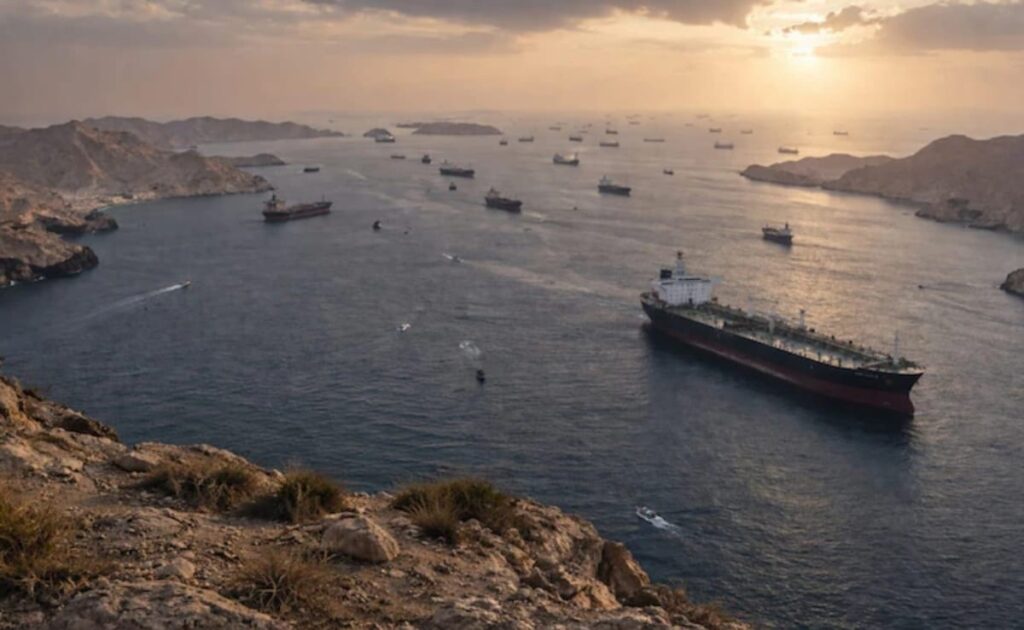
Photo Credit: AI Generated via ChatGPT
Announcing the ceasefire deal, the United States said that Iran has agreed to release its chokehold on the important shipping route, the Strait of Hormuz. But that was the benefit that existed even before the war started. Iran closed the vital shipping route to claim leverage after it came under attack from the US and Israel on February 28. Iran’s shutdown of the vital chokepoint — through which 20 per cent of the global oil supply passes generally — has led to increased gas prices across the world.
Moreover, the ceasefire agreement between the US and Iran leaves Tehran in control of the strategic waterway. In a statement on
The United States, on the other hand, offered no specifics on how a reopening of the strait would work or how soon the estimated 2,000 ships that have been waiting for transit would begin steaming. In a social media post, all Trump said was that the US “will be helping with the traffic buildup in the Strait of Hormuz” and that US forces would be “just ‘hangin’ around’ in order to make sure that everything goes well. I feel confident that it will.”
According to Ian Ralby, a nonresident senior fellow with the Atlantic Council’s Global Energy Centre, a truce that leaves Iran in control of the strait is a worse outcome than the status quo before the war.
It puts Tehran in “a pretty powerful position”, he said while talking to NPR. In some ways, it legitimises Iran’s control of the strait.
“So now they’re in a position to use that to their advantage much more proactively,” he adds. Before the war, Iran allowed ships to pass unimpeded.
The Military Victory
The US is claiming military victory, with Trump and Hegseth claiming they have achieved all their military objectives, including severely depleting Iran’s military capabilities.
“President Trump has the power to cripple Iran’s entire economy in minutes. But he chose mercy,” Hegseth said. He boasted that Iran’s navy is “at the bottom of the sea”, and its air force has been “wiped out”. The defense secretary also stated that Tehran’s drone and missile program had undergone “functional destruction.”
Speaking to NPR, retired US Army General Joseph Votel, a former commander of the US Central Command, which covers the Middle East and Gulf region, noted that there is “no doubt” that the Islamic regime’s military capabilities have suffered a setback.
However, Iran’s military has continued to function, striking daily in Israel, in multiple Arab Gulf countries, and occasionally at US military bases in the region, he said.
Iran’s Nuke Program
At the onset of the war, Trump had insisted that Iran was only weeks away from acquiring a nuclear weapon, despite experts disputing the claim. In its ceasefire proposal, Iran has agreed not to pursue nuclear weapons, but that has always been its position publicly. In fact, the former Supreme Leader Ali Khamenei, who was killed in US-Israeli strikes at the beginning of the war, had issued a fatwa, or religious decree, against nuclear weapons.
Trump said on Wednesday that Iran will not be allowed to enrich uranium under the deal, asserting that the United States will work with Iran to dig up its stockpiles of highly enriched uranium. There was no indication that Iran has agreed to comply with either of these points, and they are likely to be subject to negotiations that are slated to begin on Friday.
In fact, now Iran’s new leadership could be more motivated than ever to pursue a nuclear weapon, according to Shibley Telhami, a professor at the University of Maryland. He said that, with Ali Khamenei gone, “the fatwa dies.” Now, Iran has “every incentive” to develop a nuclear capability “in short order”, he said.
“The war has taught Iran’s leadership a lesson about nuclear weapons: States that have them, such as North Korea, are safe, while Iran has been attacked multiple times,” he said.
The Regime Change
The US is also saying it achieved regime change, though that was not the objective of the war. Trump has claimed there has been “complete and total regime change” in Iran, with “different, smarter, and less radicalized minds” taking power. However, the claim is disputable, as the same regime is in power, with the son of the former Ayatollah running the country, and if anything, he’s more hardline.
According to Daniel Benaim, a former senior State Department official, the Iranian leadership may have changed, but there’s no sign of changed policies.
Now Iran Has Leverage
Now, under the truce talks, the US has opened the door for Iran to negotiate terms that profit Tehran, like lifting sanctions and ending not just this conflict but other conflicts in the region, like the one in Lebanon; receiving financial compensations for damages done during the war; and discussions on whether or not Iran can control Hormuz going forward.
Benaim said the glass-half-full version is that “maybe having demonstrated overwhelming military force, the United States will now be open to the diplomatic solution” on the nuclear program in exchange for Iran getting some sanctions relief.