Kumar Bahukhandi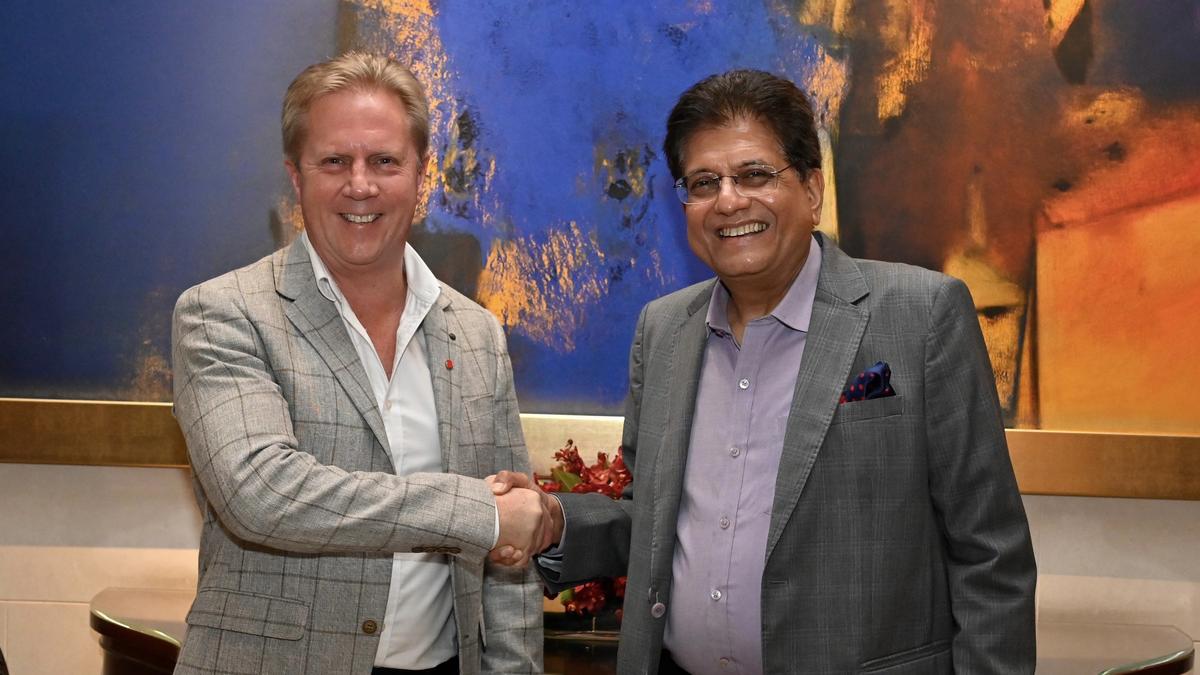
Union Minister Piyush Goyal welcomes Todd McClay, New Zealand’s Minister for Trade & Investment on April 24, 2026. Picture: X/@PiyushGoyal
The FTA between the two countries is one of the fastest-negotiated trade agreements that India has entered into, with negotiations being announced in March 2025 and concluded in December that same year.
India and New Zealand will on Monday April 27, 2026 sign a Free Trade Agreement (FTA) that will remove tariffs on 100% of India’s exports to New Zealand, and either sharply reduce or remove tariffs on 95% of current imports from New Zealand.
Commerce Minister Piyush Goyal on Saturday April 25, 2026 took to social media to welcome Todd McClay, New Zealand’s Minister for Trade & Investment to New Delhi ahead of the signing of the agreement.
“As we approach the #IndiaNZFTA signing on 27th April 2026, his visit marks a defining moment in our bilateral journey, reflecting the trust, shared values, and common vision that underpin our partnership for sustainable economic growth, driving prosperity for both our nations,” Goyal said.
The FTA between the two countries is one of the fastest-negotiated trade agreements that India has entered into, with negotiations being announced in March 2025 and concluded in December that same year.
India’s exports to New Zealand grew 32.1% in 2024-25 to $711.1 million, the latest full financial year for which there is data. Imports from New Zealand grew 75.2% to $587.1 million over the same period.
Trade and investment gains for India
The deal will provide India with immediate duty-free access on 100% of tariff lines. This is down from the 10% tariff New Zealand currently levies on about 450 tariff lines that India exports, including textiles and apparel products, leather and headgear, ceramics, carpets, and automobiles and auto components.
On average, New Zealand levied a tariff of 2.2% in 2025, which will come down to zero under the agreement.
India has also managed to keep several items out of the FTA, including all dairy products such as milk, cream, whey, yoghurt, cheese, etc, animal products other than sheep meat, vegetable products such as onions, chana, peas, corn, almonds, etc., sugar, artificial honey, animal, vegetable or microbial fats and oils, arms and ammunition, gems and jewellery, and copper and aluminium and their products.
The FTA also includes a provision wherein New Zealand will invest $20 billion in India over 15 years. This is in the same vein as the $100 billion investment ‘commitment’ the European Free Trade Association made in their FTA with India.
Mobility for professionals and students
Notably, the FTA also includes several provisions relating to the mobility of working professionals and students. New Zealand has signed an annex on student mobility and post-study work visas for the first time with any country. Under this, Indian students can work up to 20 hours per week while studying in New Zealand, with extended post-study work visas.
Further, the agreement includes a quota of 5,000 visas for skilled Indians for stay up to three years in the sectors of interest to India, which include AYUSH practitioners, yoga instructors, chefs, and music teachers), as well as other key sectors such as IT, engineering, healthcare, education, and construction.
Under the Working Holiday Visa programme included in the agreement, 1,000 young Indians annually can avail multiple entry in New Zealand for a period of 12 months.
What India has conceded?
According to the Indian government, India has offered New Zealand exporters market access in 70.03% of the tariff lines with 30% of these lines seeing tariffs being immediately removed while the rest will see a phased removals or reductions.
According to the New Zealand government, 95% of New Zealand’s current exports will see tariffs either reduced to zero or sharply reduced.
The agreement also includes a provision that says that, in the event that India in the future offers another country better terms on services and wine, these new terms will automatically apply for New Zealand as well.
Similarly, the FTA contains a consultation commitment for dairy in the event that India offers tariff concessions on these products to a comparable economy in future.