Kumar Bahukhandi
Repositioning India as a destination for global talent goes beyond branding or promotional efforts; it involves engaging carefully with a set of underlying structural challenges that continue to shape the higher education landscape. – Photo: iStock-Getty Images
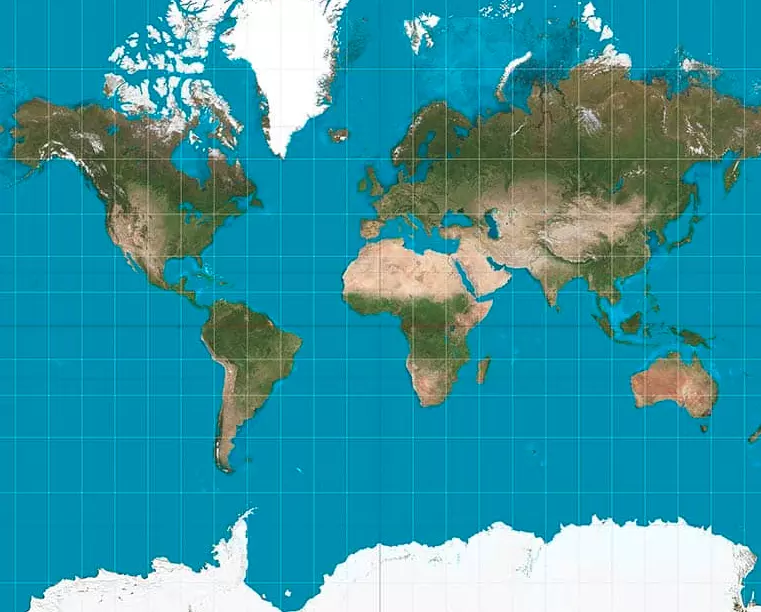
For decades, India’s relationship with global higher education has been defined by outflow. Each year, hundreds of thousands of students leave for universities in the United States, Canada, Germany, Australia, United Kingdom and other western countries, drawn by stronger research ecosystems, clearer career pathways, and the promise of international recognition. This pattern has been framed, often generously, as evidence of Indian ambition and global integration. This also points to a structural imbalance: India contributes substantially to global talent pools, yet it captures very little value in return. That imbalance may now be up for renegotiation — not because India has resolved its institutional challenges, but because the world to which Indian students have long looked is quietly, and consequentially, closing its doors.
More expensive, less certain global pathways
The liberal international student regime—once defined by high volumes, relatively accessible pathways, and implicit employment prospects—is steadily giving way to a more restrictive order. This shift is being driven by converging domestic pressures, including housing shortages, infrastructure strain, labour market recalibration, and tighter migration controls.
Canada has imposed a temporary cap on study permits, reducing new approvals by roughly 35% in 2024. Australia has tightened visa conditions and raised financial thresholds, aligning intake more closely with domestic priorities. Germany has increased its proof-of-funds requirements, while the United States—long the top destination for Indian students—has become more selective in its visa processes. Taken together, these are not short-term adjustments but signs of deeper structural change. For students from countries like India, what was once a relatively predictable international pathway is becoming increasingly uncertain, more expensive, and, in many cases, less welcoming.
As traditional destinations become more selective, the possibility opens for countries with sufficient scale and capability to absorb and attract talent. India is one of the few countries with the institutional diversity required to attempt such a transition—if it can align its systems effectively. The question, then, is whether India is positioned to absorb even a portion of this redirection—and whether it can attract students from across the world seeking credible, affordable alternatives as higher education destinations.
India: Key lies in governance shift
The more realistic answer is that India can do so only partially, and unevenly. Its higher education system combines genuine strengths with well-known constraints. At the apex, institutions such as the Indian Institutes of Technology and leading central universities command international credibility, supported by strong alumni networks, competitive entry standards, and research output recognised in global academic circles. The limitation is not capability, but questions of scale, institutional autonomy, and sustained resource investment.
A cohort of new-age private universities is also beginning to demonstrate that Indian institutions can offer internationally competitive academic environments with interdisciplinary curricula, global faculty, and research-oriented cultures. They remain limited in number but significant in what they signal that institutional culture can shift when governance permits it.
Less visible in these conversations, but perhaps most strategically important, are India’s state universities distributed across diverse geographies. These universities are uniquely placed to develop area-specific expertise that few global institutions can replicate. For example, universities in the Himalayas can anchor climate and mountain systems research; coastal campuses can build credibility in marine sciences and the blue economy; institutions in technology hubs such as Bengaluru, Hyderabad, or Pune can integrate organically with technology and innovation ecosystems. The constraint is not relevance but the persistent absence of sustained investment, governance reform, and credible research infrastructure.
Hiring systems and academic freedom
Repositioning India as a destination for global talent goes beyond branding or promotional efforts; it involves engaging carefully with a set of underlying structural challenges that continue to shape the higher education landscape. Research funding, for instance, often remains fragmented and slow to disburse, with administrative processes that can inadvertently delay the work institutions aim to support. In many public universities, hiring and promotion systems still tend to emphasize seniority, which can, at times, limit the full recognition of merit and innovation. Equally important is the question of academic freedom. As a necessary condition for credible and rigorous inquiry, it is less an abstract ideal and more a practical foundation that benefits from consistent strengthening.
While these issues may appear somewhat removed from the immediate goal of attracting international students to India’s higher education system, they are, in fact, central to it. The global appeal of any academic destination is shaped not only by visibility, but by the credibility, dynamism, and intellectual openness of its institutions—qualities that emerge from addressing precisely these underlying conditions.
Visa and competitive post-study work pathways
On the student experience side, the priorities are equally tangible: ensuring transparent and efficient visa processes for international students, creating competitive post-study work pathways, and aligning degree frameworks with global recognition. Without these elements in place, even well-resourced institutions may find it difficult to attract the diverse international cohorts that enrich academic environments. At the same time, the ambition need not be limited to absorbing students redirected from traditional Western destinations; rather, it can be to build systems and institutions that students choose with intention—drawn by the distinct value India offers. The present moment reflects a convergence of external shifts and internal opportunity: as some established destinations become more restrictive, new spaces are emerging in the global education landscape.
India possesses a combination of strengths few countries can match: scale, linguistic diversity with global reach, a rapidly expanding research base, and a diaspora that maintains strong ties to its institutions. What has been missing is the policy coherence and sustained institutional investment needed to translate these advantages into a credible global offering.
Nalanda and Takshashila are sometimes invoked in these discussions, occasionally to excess. Yet the underlying point is not without substance: India has historically been a producer and exchanger of knowledge, not merely a consumer of it. The question before policymakers and institutional leaders is whether that older orientation can be re-articulated in conditions that demand far more rigour, transparency, and sustained commitment than nostalgia alone can provide. The capacity exists. The question, as ever, is whether the intent will follow.
(Prof. Santonu Goswami is a Professor at the School of Climate Change and Sustainability, Azim Premji University, Bengaluru.)