Kumar Bahukhandi
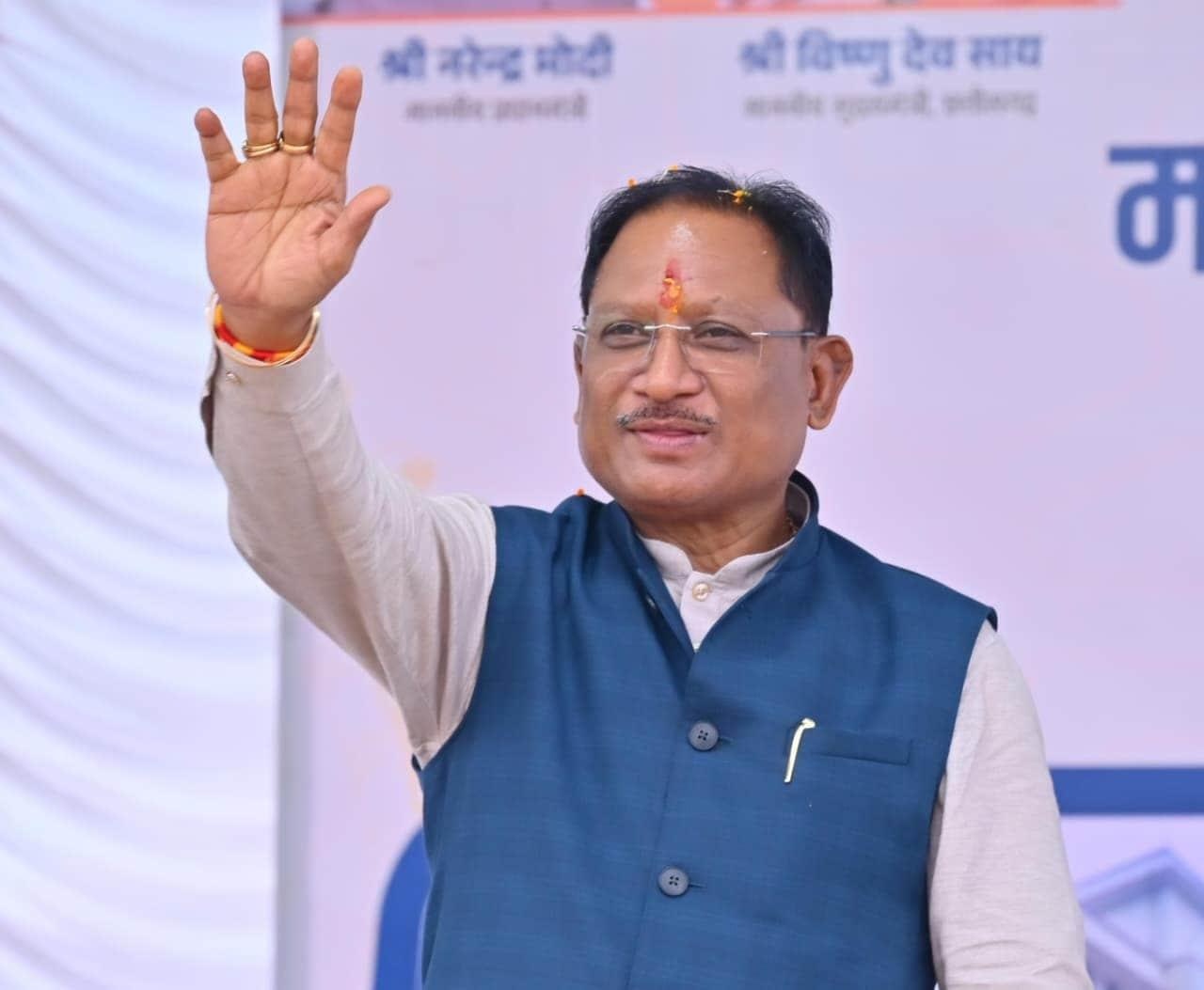
The controversy highlights the broader challenge of balancing urban development with social justice and public accountability-Photo Credit -channel24india.com (Photo File)
Key Factors
- Over 80 houses in Nakti village were demolished during an anti-encroachment drive.
- The state government maintains that the action was carried out under due legal process.
- The Opposition, led by former Chief Minister Bhupesh Baghel, alleges that the land is being cleared for an MLA housing project.
- The BJP government rejects these allegations, asserting that the operation was undertaken strictly in accordance with law and public interest.
- The controversy has shifted from a land dispute to a broader debate on governance, rehabilitation, and political accountability.
With BJP MP Brijmohan Agrawal expressing concern over the demolition and the Opposition intensifying its criticism, the Nakti controversy has become a political challenge extending beyond party lines.
The demolition of more than eighty homes in Nakti village on the outskirts of Raipur has rapidly become one of the most politically charged issues in Chhattisgarh. What might have remained an administrative exercise against encroachments has instead evolved into a larger contest over governance, legality, public perception, and political credibility.
The controversy raises a question that extends beyond Nakti itself: Are few of the BJP MPs allowing an administrative action to become a political liability!
The state’s position has remained consistent. Officials argue that the land in question is government property, that legal notices were served before the demolition, and that the anti-encroachment drive forms part of a broader effort to reclaim public land. From the government’s perspective, enforcing the rule of law cannot be selectively suspended because an issue becomes politically sensitive.
However, politics is rarely governed by legal reasoning alone.
The Opposition has succeeded in reframing the issue. Rather than debating the legality of the demolition, it has focused public attention on its human consequences. Former Chief Minister Bhupesh Baghel has questioned why families who allegedly received electricity connections, drinking water, ration cards, and in some cases benefits under government welfare schemes are suddenly being described as illegal occupants. He has further alleged that the land is being cleared for an MLA residential project, portraying the episode as one where the poor have been displaced to accommodate the politically influential.
Whether these allegations withstand scrutiny is ultimately a matter for evidence and public transparency. Yet politically, they have shifted the conversation.
The Nakti controversy demonstrates an important reality of democratic governance: administrative decisions are judged not only by their legality but also by their perceived fairness.
Governments undoubtedly possess both the authority and the responsibility to remove illegal encroachments. Allowing unauthorized occupation of public land undermines urban planning, infrastructure development, and the rule of law. If encroachments are identified through due process, governments cannot simply ignore them.
When long-settled communities are displaced, questions naturally arise regarding rehabilitation, alternative housing, and the state’s responsibility toward vulnerable families. These concerns become especially significant when residents have lived in an area for years while simultaneously receiving various public services. Such situations blur the distinction between administrative oversight and individual culpability.
For the BJP government, the challenge is therefore not merely to defend the demolition but to convincingly explain the broader policy framework. Transparency regarding land records, notices issued, rehabilitation measures, and future land use is essential if public confidence is to be maintained.
The Opposition, meanwhile, also carries a burden of credibility. If it argues that these settlements were legitimate communities deserving protection, it must also explain why questions surrounding land ownership and regularization were not comprehensively addressed during its own tenure in government. Political criticism is strongest when accompanied by consistent policy positions rather than selective outrage.
Ultimately, the Nakti issue reflects a larger national debate. Across India, governments have increasingly relied on anti-encroachment drives to reclaim public land. Such actions often receive public support in principle, but they also attract criticism when rehabilitation appears inadequate or when enforcement is perceived as inconsistent.
The lesson for all governments is clear.
Development and urban planning are indispensable. So too are legality and disciplined land management. Yet democratic governance is measured not only by the ability to remove structures but also by the capacity to preserve public trust.
If the Nakti controversy continues to be viewed primarily through a political lens rather than one of transparent governance, it is all about making an issue of nothing , however it is just about removing illegal encroachments and nothing else .
The BJP still has an opportunity to shape that narrative—not merely through political rebuttals, but through openness, rehabilitation where appropriate, and consistent application of the law.
Because in politics, bulldozers may clear land, but only public confidence can build legitimacy.