Kumar Bahukhandi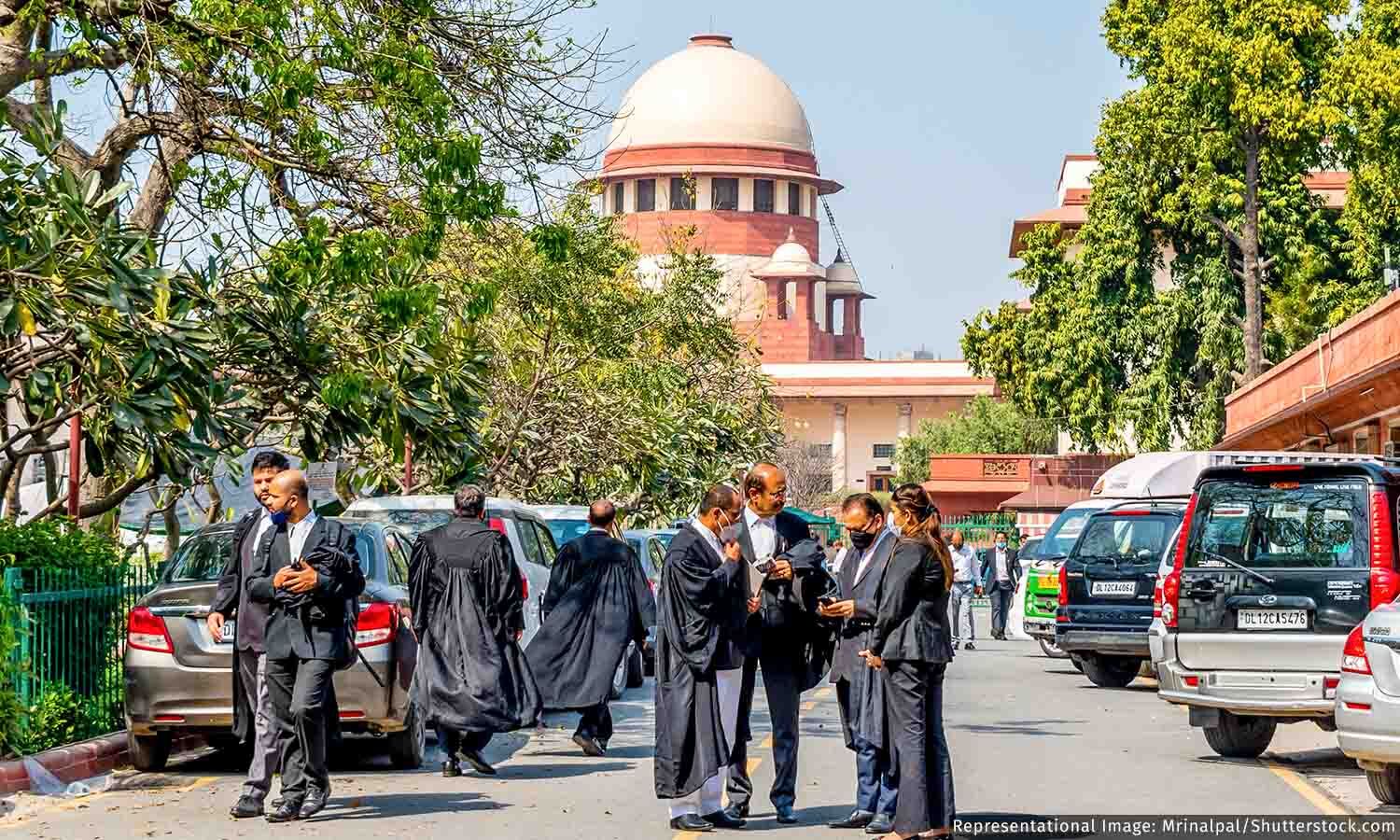
The Supreme Court’s observations have revived a national debate on whether English, after centuries of use, has become an integral part of India’s linguistic identity while preserving the constitutional vision of promoting Indian languages-Supreme Court of India ( File Photo)
Key Issues
- Supreme Court questions whether English can now be regarded as an indigenous Indian language.
- Bench raises concerns over the use of the term “native” in official educational terminology.
- Debate centres on the implementation of the three-language framework.
- Discussion highlights the balance between promoting Indian languages and recognising English’s practical role.
- The observations may influence future thinking on language policy and educational reforms.
A constitutional debate over language policy raises a larger question: After centuries of use, has English become part of India’s linguistic identity?
India’s language debate has once again moved to the centre of national attention, this time inside the Supreme Court. During the hearing of a matter related to the implementation of the three-language framework, the Court raised a thought-provoking question that extends far beyond legal interpretation: Can English, after more than three centuries of continuous use in India, be regarded as an indigenous Indian language?
The observation has opened a wider discussion on the country’s evolving linguistic identity, the role of English in modern India, and the constitutional vision behind promoting Indian languages.
The Bench also expressed concern over the continued use of the word “native” in an official education-related context, suggesting that such terminology carries historical and colonial overtones. The judges indicated that language classifications should reflect present-day realities rather than inherited colonial definitions.
More Than a Colonial Legacy
English first arrived in India during the colonial era, but independent India transformed its purpose. Today, it is no longer merely the language of administration inherited from the British. It has become the language of higher education, technology, science, law, diplomacy, business, and global communication.
Millions of Indians speak, write, teach, and think in English every day. In several States, it functions as an important medium of official communication, while across the country it serves as a bridge language connecting people from different linguistic backgrounds.
This raises an important question: Does the origin of a language alone determine its identity, or does its long-term acceptance and widespread use within society redefine its place?
Balancing Constitutional Goals
India’s Constitution encourages the promotion and preservation of its diverse regional languages while also recognising the practical need for English in governance and communication during the country’s transition after Independence.
The ongoing discussion does not diminish the importance of Indian languages. Instead, it highlights the challenge of balancing two equally significant objectives—strengthening mother tongues while ensuring that students remain globally competitive through proficiency in English.
The three-language approach was designed to encourage multilingual learning rather than create competition between languages. The debate before the Court appears to focus on how these objectives should be presented and implemented in a modern educational framework.
A Changing Definition of Identity
Language is not static. Across the world, societies continuously absorb, adapt, and transform languages over generations. Words, expressions, and even entire languages often become inseparable from the cultures that adopt them.
India itself offers countless examples of linguistic evolution, where Persian, Arabic, Portuguese, Sanskrit, and English influences coexist within everyday vocabulary across different regions.
The Supreme Court’s observations invite policymakers to reconsider whether historical labels remain appropriate in a nation that has evolved dramatically since Independence.
Education Beyond Labels
The larger issue is not whether English replaces Indian languages, but whether language policy should recognise India’s multilingual reality without creating unnecessary hierarchies.
Students today benefit from strong foundations in their mother tongue while also acquiring proficiency in English and other languages that expand educational and professional opportunities. A balanced policy can strengthen cultural identity without limiting future aspirations.
The debate is therefore less about choosing one language over another and more about ensuring that every language serves the interests of learners and the nation.
My Insight
The Supreme Court’s remarks have reignited a discussion that extends beyond classrooms into the broader idea of what defines Indian identity in the 21st century. Whether English is ultimately viewed as an indigenous Indian language may remain a matter of constitutional interpretation and public discourse. Yet one reality is undeniable: after centuries of continuous use, English is no longer simply a colonial inheritance—it has become an integral part of India’s educational, administrative, and social landscape.
A confident nation need not fear linguistic diversity. Instead, it can embrace every language that empowers its people while preserving the rich heritage of its own mother tongues.