Kumar Bahukhandi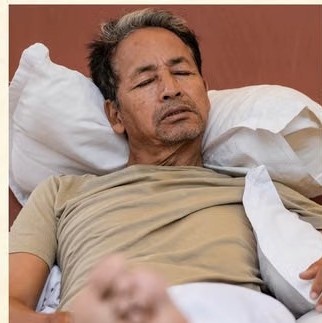
Social activist Sonam Wangchuk during his ongoing hunger strike. While doctors have expressed concern over his declining blood sugar levels, Wangchuk has appealed for public participation in a peaceful march to Parliament on July 20 instead of urging him to end his fast-Photo Credit-channel24india.com
In Short
- Sonam Wangchuk says his condition is “not good, but not very bad either.”
- He has urged supporters to join a peaceful march to Parliament on July 20 instead of asking him to end his fast.
- Doctors report that his blood sugar levels are declining, increasing health risks associated with prolonged fasting.
- The protest has reignited debate over Ladakh’s concerns and democratic methods of seeking policy change.
- The broader question remains whether the movement is primarily a call for systemic reform or an effort to intensify political pressure on the government.
- The outcome may ultimately depend on constructive dialogue between protesters and policymakers.
As the activist’s health weakens and his call for a Parliament march gains momentum, the debate shifts from the streets to the nation’s conscience.
Social activist Sonam Wangchuk, widely known for his advocacy of sustainable development and the protection of Ladakh’s fragile ecology, has once again captured national attention. His prolonged hunger strike, coupled with a call for a peaceful march to Parliament on July 20, has transformed a regional issue into a national debate over democratic engagement, environmental governance, and the limits of protest.
In a recent video shared on X, Wangchuk reassured supporters, saying, “I’m not in good shape, but not so bad either. Rather than asking me to break my fast, please join me on 20th July… Peaceful March to the Parliament.” The message reflects both his resolve and his desire to broaden public participation rather than focus solely on his personal sacrifice.
Medical experts monitoring his condition have expressed concern. According to his doctors, prolonged fasting has led to declining blood sugar levels, increasing the possibility of serious health complications if the fast continues. While they describe him as conscious and active, they have repeatedly urged him to end the hunger strike. Wangchuk, however, has maintained that he will continue until meaningful action is taken on his demands.
The central question now is no longer confined to Wangchuk’s health. It has evolved into a larger political and constitutional discussion: Is this movement genuinely seeking systemic reform, or is it primarily aimed at placing the government under political pressure?
There are compelling arguments on both sides.
Supporters contend that peaceful protest and hunger strikes have long been part of India’s democratic tradition. They argue that when citizens believe institutional channels have failed to address their concerns, non-violent public mobilisation becomes a legitimate means of drawing attention to important issues. In this view, Wangchuk’s campaign is less about confrontation and more about compelling policymakers to revisit commitments relating to Ladakh’s future.
Critics, however, argue that prolonged hunger strikes combined with large-scale public mobilisation can create pressure that risks bypassing established democratic processes. They believe policy decisions should emerge through dialogue, legislative debate, and institutional consultation rather than through sustained public pressure that may leave governments with limited political flexibility.
Ultimately, both perspectives acknowledge one undeniable fact: Wangchuk’s movement has succeeded in bringing Ladakh’s concerns back into the national conversation.
The challenge now lies with all stakeholders. Protest movements carry greater credibility when they remain peaceful, transparent, and open to dialogue. Governments, on the other hand, strengthen democracy when they engage constructively with public concerns rather than allowing distrust to deepen.
Whether Sonam Wangchuk’s campaign ultimately results in policy changes will depend not only on public support but also on the willingness of both sides to replace confrontation with meaningful engagement.
As July 20 approaches, the nation will watch closely—not merely to see how many people join the march, but to see whether dialogue prevails over deadlock.