Kumar Bahukhandi

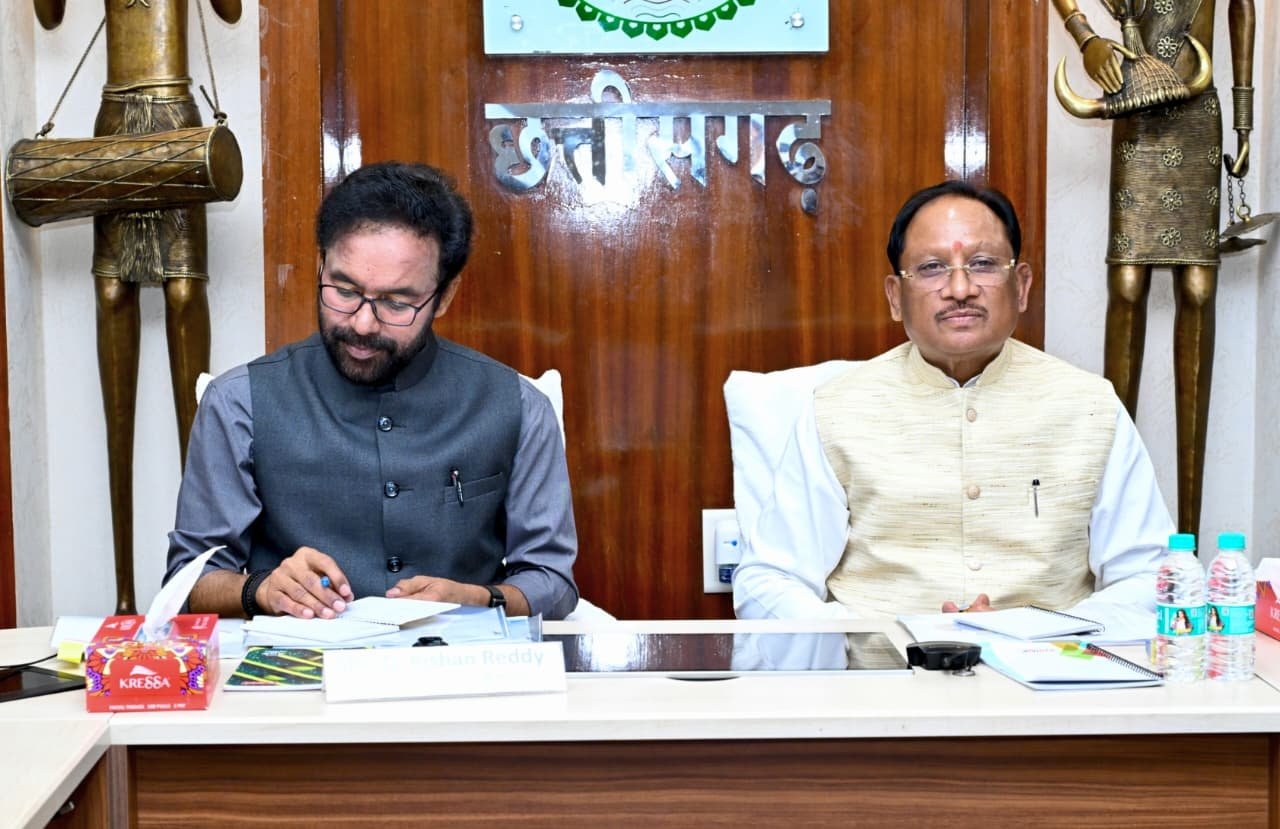
Chief Minister Vishnu Deo Sai’s government has introduced the Chhattisgarh Ease of Doing Business Act, 2026, ushering in India’s first risk-based business permission system aimed at simplifying approvals, promoting MSMEs, and strengthening the state’s investment ecosystem-Photo Credit-channel24india.com
Key Factors
- Chhattisgarh Assembly passes the Ease of Doing Business Act, 2026.
- State to become India’s first to implement a risk-based business permission system.
- Self-certification replaces frequent inspections for eligible low-risk businesses.
- Automatic approval if departments fail to act within the prescribed timeline.
- Annual licence renewals abolished for eligible categories.
- 43 government services across eight departments brought under the new framework.
- Three-tier monitoring mechanism headed by the Chief Minister, Chief Secretary, and District Collectors.
- More than 15 lakh MSMEs expected to benefit from simplified compliance and faster approvals.
State Set to Become India’s First to Introduce a Risk-Based Business Permission System
Raipur: In a landmark reform aimed at transforming the state’s investment climate, the Chhattisgarh Legislative Assembly has on Thursday July 16, 2026 passed the Chhattisgarh Ease of Doing Business Act, 2026. Under the leadership of Chief Minister Shri Vishnu Deo Sai, the state is poised to become the first in India to implement a risk-based and trust-based business permission framework, significantly simplifying the process of establishing and operating businesses.
The legislation marks a major shift from conventional compliance-heavy regulations towards a governance model built on trust, self-certification, and time-bound approvals. It seeks to reduce unnecessary regulatory burdens while creating a more transparent, predictable, and entrepreneur-friendly ecosystem, particularly for Micro, Small and Medium Enterprises (MSMEs).
Simplified Approvals for Low-Risk Businesses
Under the new Act, industries and commercial establishments will be classified according to their size and level of operational risk. Small, low-risk enterprises will benefit from simplified approval procedures, while high-risk projects will continue to undergo technical scrutiny and mandatory inspections to ensure public safety and regulatory compliance.
This differentiated approach is expected to spare small entrepreneurs from navigating the same complex procedures applicable to large industrial projects.
Self-Certification and Automatic Approvals
One of the Act’s defining features is the introduction of self-certification for eligible low-risk businesses. Instead of repeated departmental inspections, compliance may be certified by licensed engineers, architects, or other authorised professionals, making the approval process faster and more accountable.
The Act also introduces an auto-approval mechanism. If the concerned department fails to decide on an eligible application within the prescribed timeframe, approval will be deemed granted automatically. However, projects classified as high-risk will continue to require technical evaluation and physical verification before clearance.
Annual Licence Renewals to End
Entrepreneurs will also receive relief from the burden of annual licence renewals. The new risk-based permission system eliminates the need for routine yearly renewals for eligible businesses, allowing enterprises to focus more on expansion and operations rather than repetitive paperwork.
For MSMEs, permissions related to water supply can be granted through self-declaration, registration of societies or firms will follow a time-bound process, and building approvals may be issued based on self-certification or certification by authorised experts.
43 Services Across Eight Departments Covered
The Act initially brings 43 government services provided by eight departments under the risk-based permission framework. Additional services may be incorporated in the future with the approval of the Executive Council, enabling the system to expand progressively.
Three-Tier Monitoring Mechanism
To ensure effective implementation, the government has established a three-tier monitoring framework. A committee headed by the Chief Secretary will supervise implementation at the state level, while district-level committees under the respective Collectors will oversee execution locally. Both bodies will function under the guidance of a council chaired by the Chief Minister.
Boost for Over 1.5 Million MSMEs
The government estimates that the reform will directly benefit more than 1.5 million MSMEs across Chhattisgarh. By reducing compliance costs, shortening approval timelines, and promoting trust-based governance, the Act is expected to improve the state’s investment climate while maintaining stringent oversight for projects involving higher levels of risk.
The Chhattisgarh Ease of Doing Business Act, 2026 represents one of the state’s most significant governance reforms, signalling its intent to position itself as a competitive, transparent, and investment-friendly destination for entrepreneurs and industries alike.