Kumar Bahukhandi
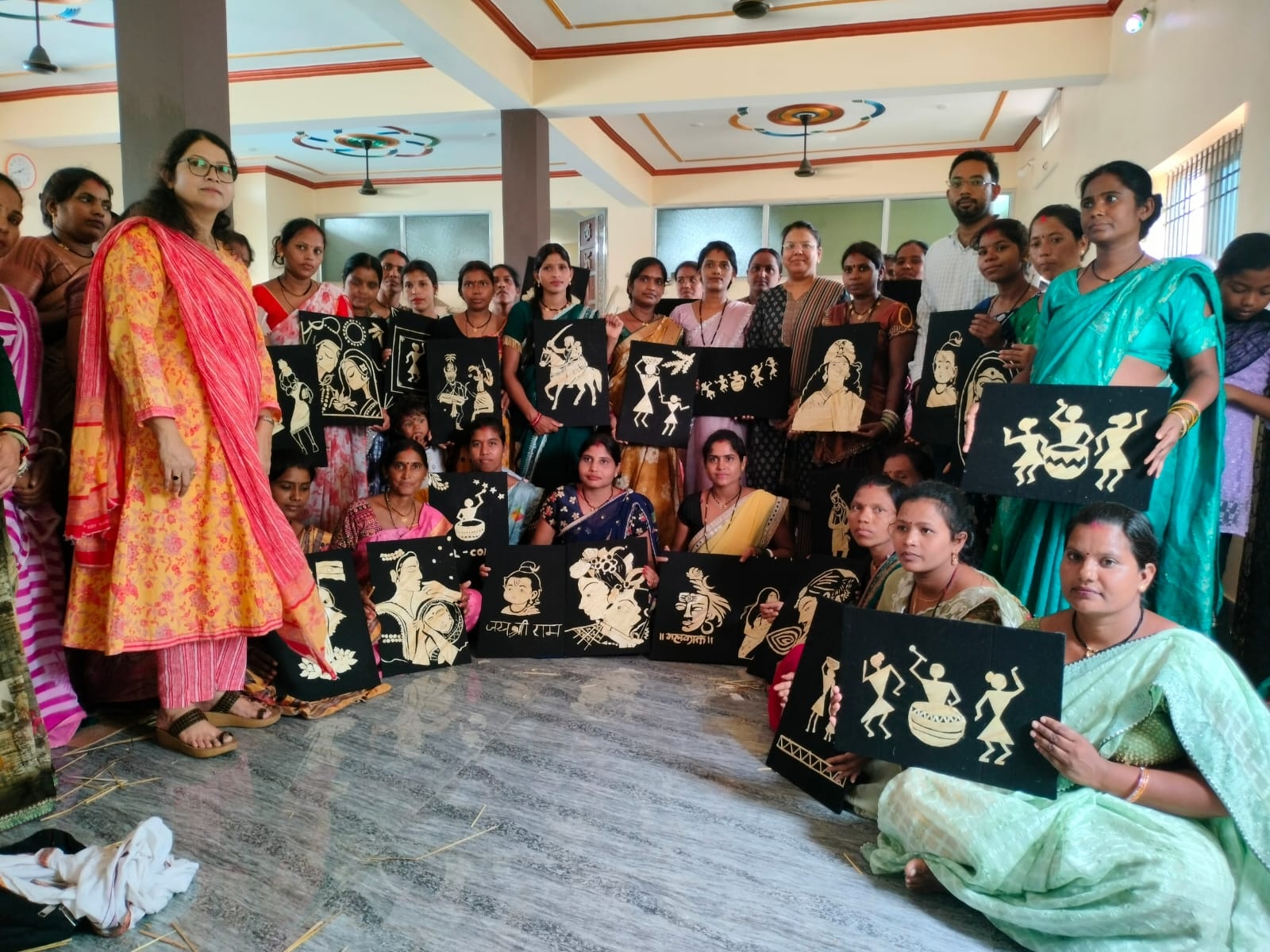
Women from Self-Help Groups proudly display their handcrafted Para Art creations after completing a specialised training programme in Lahod village, Balodabazar, aimed at promoting sustainable livelihoods through eco-friendly rural craftsmanship-Photo Credit-channel24india.com via CG/PR
IN Short
- 40 Self-Help Group women trained in Para Art at Lahod village, Balodabazar.
- Paddy straw and rice grains transformed into eco-friendly decorative artworks.
- Training conducted by the Balodabazar-Bhatapara District Administration under the BIHAN initiative.
- District Panchayat CEO distributed certificates and appreciated participants’ creativity.
- Initiative promotes women’s entrepreneurship, sustainable livelihoods, and environmental conservation.
- Para Art creates new opportunities for rural income while preserving Chhattisgarh’s traditional artistic heritage.
Para Art Training Empowers 40 Self-Help Group Women in Balodabazar with Sustainable Livelihood Skills
In the rice-rich heartland of Chhattisgarh, what was once regarded as agricultural waste is steadily being transformed into an instrument of creativity, sustainability, and economic empowerment. Through an innovative Para Art training programme, 40 women from Self-Help Groups (SHGs) in Lahod village of Balodabazar block have acquired a unique skill that has the potential to generate both income and confidence.
The initiative, organised by the Balodabazar-Bhatapara District Administration, reflects a growing emphasis on promoting rural entrepreneurship through locally available resources. Instead of burning leftover paddy straw after harvest—a practice that contributes to environmental pollution—participants are learning to convert it into artistic masterpieces depicting cultural icons, tribal motifs, religious figures, and decorative wall art.
The programme is more than an art workshop; it is a model of how traditional knowledge and modern livelihood strategies can work together to create sustainable economic opportunities.
Transforming Waste into Value
Known locally as Para Art, this craft involves carefully arranging dried paddy straw to create textured portraits and intricate designs. The artwork requires patience, precision, and imagination, but once mastered, it opens up opportunities for handmade products that can attract buyers in local markets, exhibitions, tourism centres, and online platforms.
As demand for eco-friendly handicrafts continues to rise, Para Art offers rural artisans a chance to convert an inexpensive raw material into products with significant commercial value.
Certificates Recognise New Skills
Following the successful completion of the training programme, the Chief Executive Officer (CEO) of the District Panchayat presented certificates to all participating women. During the event, the CEO also visited an exhibition of the artworks created during the training and appreciated the participants for their creativity and dedication.
The recognition marked not only the completion of a course but also the beginning of new livelihood possibilities for many women.
BIHAN Initiative Expands Rural Livelihoods
District officials stated that the training was organised through the collective efforts of the BIHAN mission, which continues to encourage non-farm livelihood opportunities across rural Chhattisgarh.
By equipping women with specialised artistic skills, the programme aims to diversify income sources beyond agriculture. Participants can now utilise paddy straw and rice grains—materials readily available in their villages—to produce decorative items that have market demand throughout the year.
Such initiatives reduce dependence on seasonal agricultural income while encouraging entrepreneurship among rural women.
Economic Empowerment Through Creativity
The programme demonstrates how skill development can become a powerful catalyst for women’s financial independence. By creating marketable handicrafts from agricultural residue, the women are expected to earn supplementary income while contributing to environmental conservation.
Beyond economics, Para Art also preserves Chhattisgarh’s artistic traditions by blending indigenous craftsmanship with contemporary design preferences. Every artwork reflects the region’s cultural identity while promoting sustainable use of natural resources.
A Model Worth Replicating
As governments increasingly promote circular economy practices and rural entrepreneurship, initiatives like this highlight the immense potential hidden within local resources and community participation. Training women to transform farm residue into artistic products addresses multiple objectives simultaneously—waste management, environmental protection, skill development, and income generation.
For Chhattisgarh, widely recognised as India’s “Rice Bowl,” Para Art represents far more than a handicraft. It symbolises how innovation rooted in local traditions can create dignified livelihoods, strengthen rural economies, and inspire women to become self-reliant entrepreneurs.
Source Note-Dhananjay Rathore, Joint Director, Chhattisgarh Public Relations, Raipur.