Kumar Bahukhandi
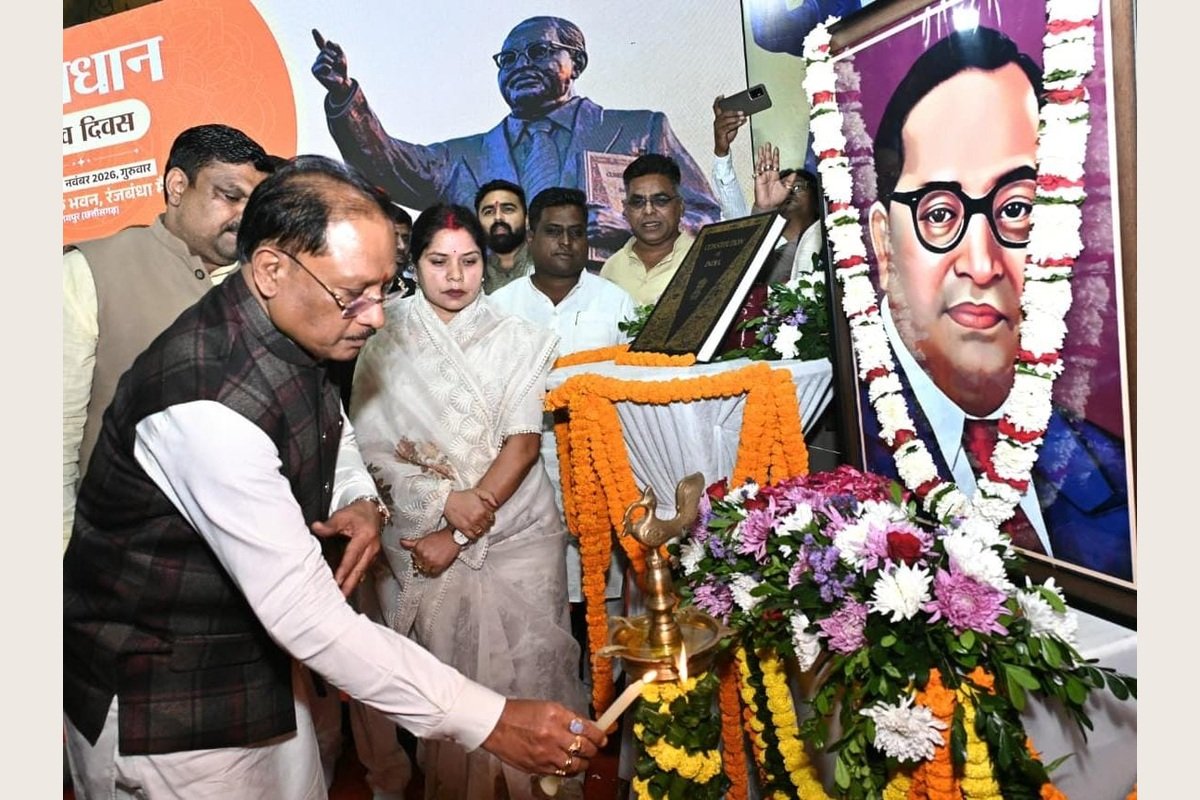
Chief Minister Vishnu Deo Sai lights the ceremonial lamp beside a portrait of Dr B.R. Ambedkar at the Samvidhan Gaurav Diwas programme at Shaheed Smarak Bhawan in Raipur on 26 November 2026. Photo: channel24india.com via CG/PR
At Raipur’s Shaheed Smarak Bhawan, the Chief Minister opened an exhibition on Dr B.R. Ambedkar, released a book on constitutional values and recalled his family’s experience of the Emergency.
Key Highlights
- Sai said Chhattisgarh has formed a committee to examine the implementation of a Uniform Civil Code and pledged to protect tribal customs and traditions.
- He recalled that Narhari Sai, a senior member of his family, spent 19 months in jail for opposing the Emergency.
- He credited Bastar’s voters with upholding democracy despite Naxalite violence and pointed to efforts to extend roads, schools and healthcare to remote areas.
Raipur: When Chief Minister Vishnu Deo Sai spoke about freedom of expression on Constitution Day, he recalled what its loss had meant for his own family. Narhari Sai spent 19 months in jail for opposing the Emergency, he said, and the family faced hardship during his imprisonment. Sai told the gathering that remembering those experiences mattered to a generation that had grown up with freedoms others had fought to defend.
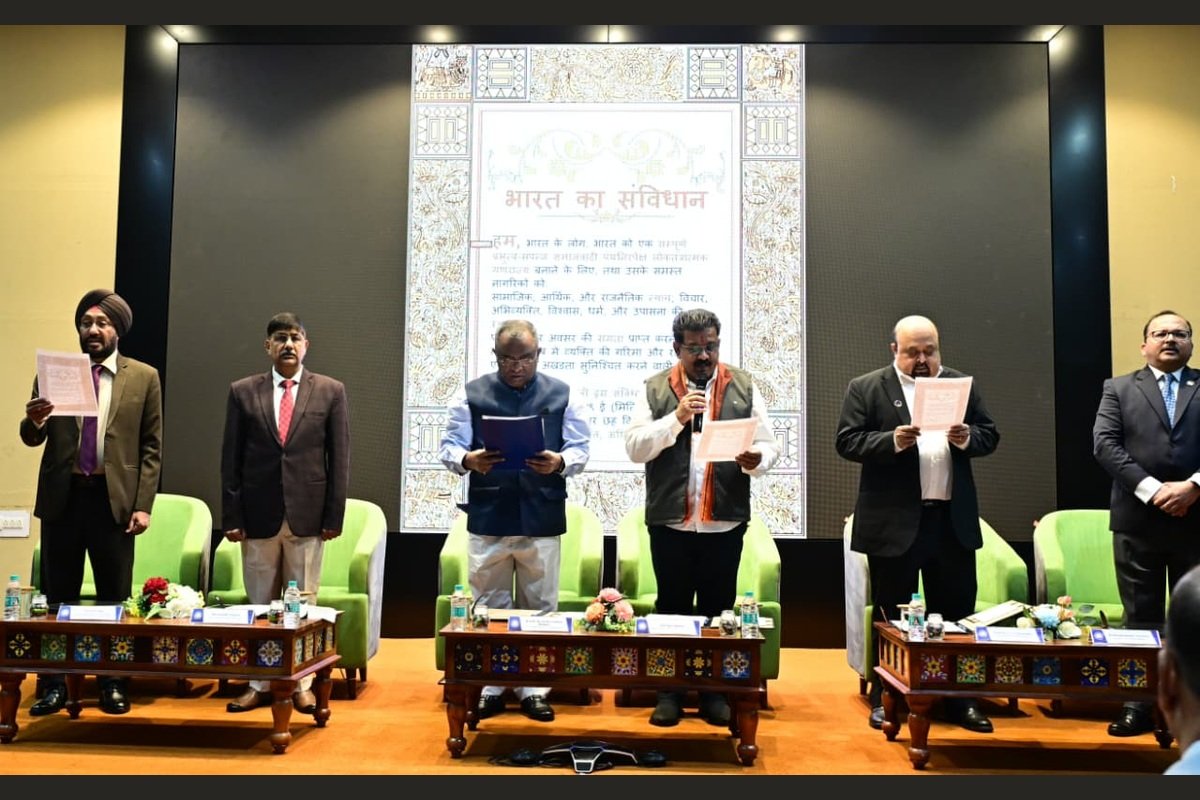
Sai was speaking at the Samvidhan Gaurav Diwas seminar at Shaheed Smarak Bhawan in Raipur on 26 November 2026. He opened an exhibition on Dr B.R. Ambedkar’s life, ideas and role in drafting the Constitution, and released Samvidhan se Sushasan Tak: Babasaheb ke Sapno ka Sashakt Chhattisgarh.
A pledge to protect tribal customs
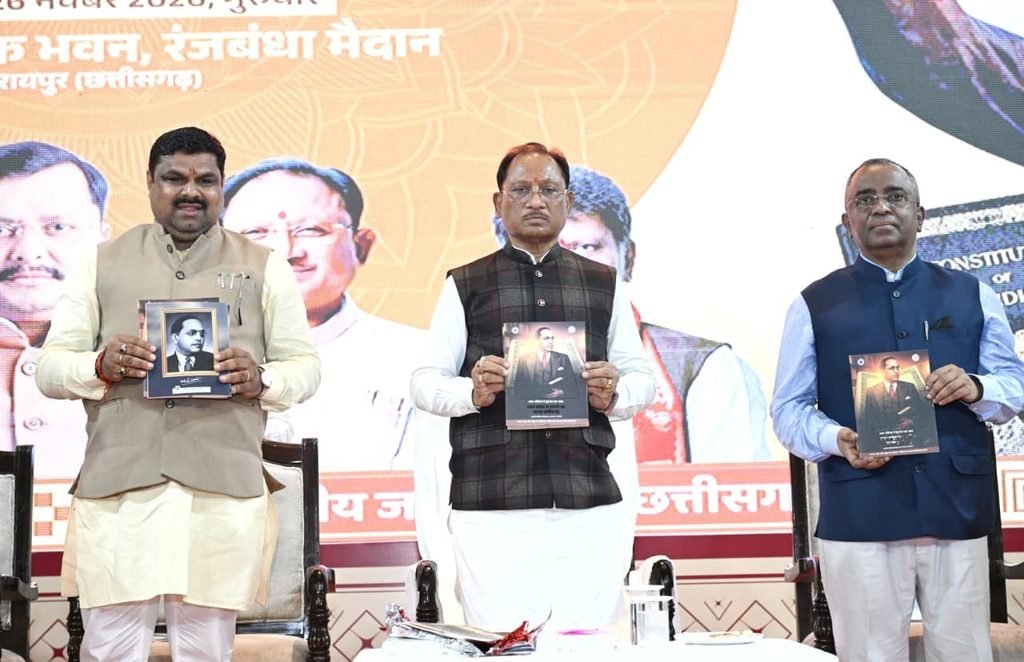
Chief Minister Vishnu Deo Sai (centre) and Cabinet Minister Gajendra Yadav (left) hold up copies of Samvidhan se Sushasan Tak: Babasaheb ke Sapno ka Sashakt Chhattisgarh at the book’s launch at Shaheed Smarak Bhawan in Raipur on 26 November 2026. Photo: channel24india.com via CG/PR
Sai said the state had formed a committee to examine how a Uniform Civil Code could be implemented in Chhattisgarh. Addressing concerns among tribal communities, he pledged that their culture, traditions and customary practices would be protected as the state considered the code.
He cited President Droupadi Murmu’s rise to the country’s highest constitutional office as an example of what equal opportunity can make possible. He also referred to the changes to Article 370 in Jammu and Kashmir and the law against instant triple talaq as decisions the Union government had taken in the name of strengthening equality and civil rights.
Remembering the Emergency and Bastar’s voters
Sai recalled restrictions on civil liberties and press freedom during the Emergency imposed in 1975. He said the annual observance of 25 June as Samvidhaan Hatya Diwas was intended to acquaint younger generations with that period. Chhattisgarh, he added, has restored the honorarium for those recognised for their role in resisting the Emergency.
Turning to Bastar, Sai pointed to residents who voted despite years of Naxalite violence. He credited the voters with keeping democratic institutions alive under difficult conditions and acknowledged the role of security forces in improving security. He said the state was now extending roads, education, healthcare and other basic services to remote areas.
What constitutional ideals mean in government
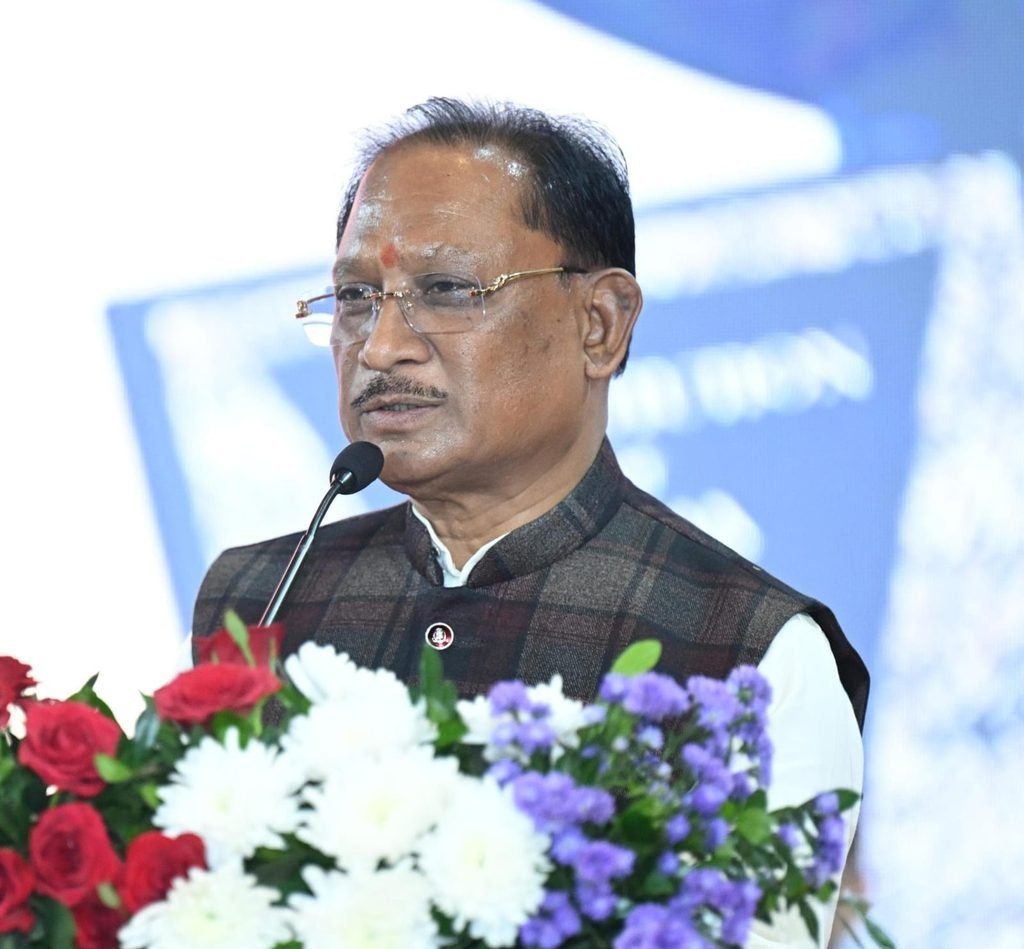
Chief Minister Vishnu Deo Sai addresses the Samvidhan Gaurav Diwas seminar at Shaheed Smarak Bhawan in Raipur on 26 November 2026, speaking about constitutional rights, equal opportunity and the protection of tribal customs. Photo: channel24india.com via CG/PR
Sai argued that the Constitution’s promise of dignity and equal opportunity should be visible in decisions that affect families. He cited paddy procurement of up to 21 quintals per acre at ₹3,100 per quintal, input assistance under the Krishak Unnati Yojana and the ₹1,000 monthly payment to eligible women under the Mahatari Vandan Yojana. He also pointed to efforts to secure better prices for forest produce and make recruitment more transparent.
Cabinet Minister Gajendra Yadav spoke about the Bharatiya Nyaya Sanhita and the need to make justice easier for citizens to access. Rajnandgaon MP Santosh Pandey highlighted the development of five sites associated with Ambedkar’s life. Former Chhattisgarh High Court judge Justice Gautam Bhaduri urged citizens to learn about their rights and duties and to pass on the history of the freedom struggle and Constitution-making to younger generations.