Kumar Bahukhandi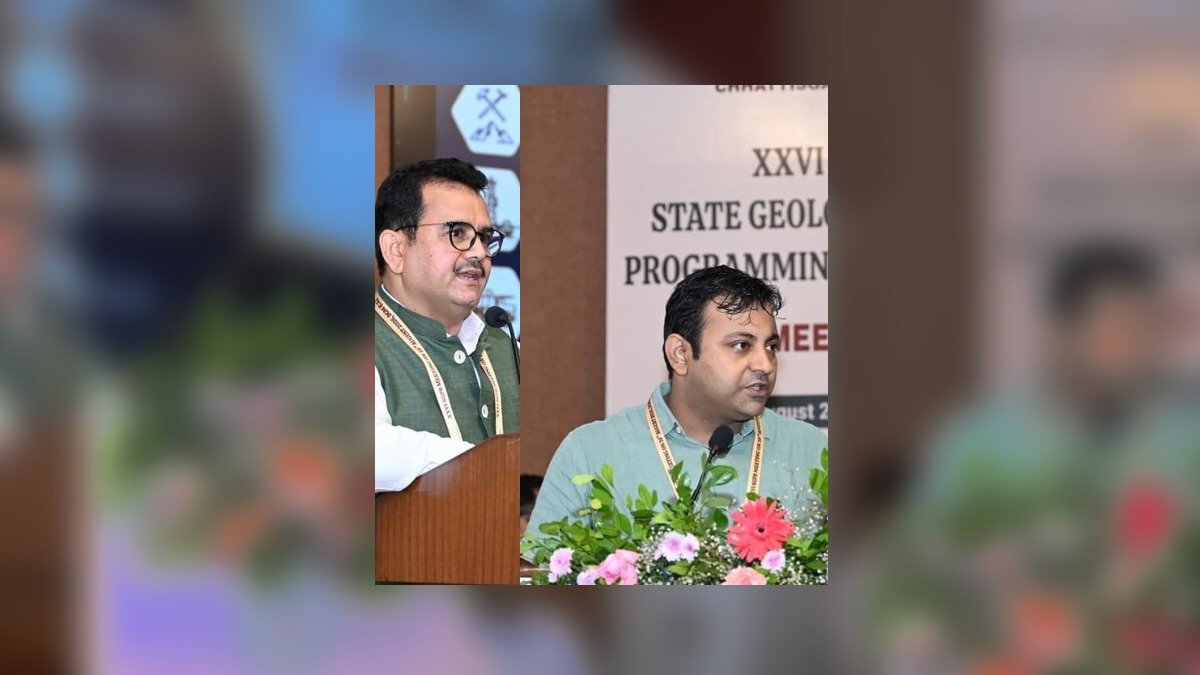
Mineral Resources Department Secretary P. Dayanand, left, and Special Secretary and Director of Geology and Mining Rajat Bansal address the 26th meeting of the Chhattisgarh State Geological Programming Board at the Old Circuit House in Raipur on Wednesday, August 19, 2026-Photo Credit:channel24india.com via CG/DPR
State Geological Programming Board approves exploration programme covering lithium, graphite, rare-earth elements and deep-seated minerals; mining revenue reaches nearly ₹16,738 crore
Key Highlights
- Twenty-sixth meeting of the State Geological Programming Board held in Raipur
- Forty-five new and continuing mineral exploration projects finalised
- Programme includes 35 critical and strategic mineral blocks, four deep-seated blocks and six bulk-mineral projects
- Geological Survey of India’s Raipur unit to undertake 25 exploration projects
- State identifies 2,590 million tonnes of limestone and 32.26 million tonnes of iron ore resources
- Eleven exploration proposals finalised by the Directorate of Geology and Mining for 2026–27
- Mineral royalty and revenue collection reaches approximately ₹16,738 crore in 2025–26
- GSI hands mineral-resource maps of five Chhattisgarh districts to the Mineral Resources Department
Raipur: Chhattisgarh finalised 45 new and continuing mineral exploration projects during the 26th meeting of the State Geological Programming Board at the Old Circuit House in Raipur on Wednesday, August 19, 2026.
Mineral Resources Department Secretary P. Dayanand chaired the meeting, which reviewed exploration activities undertaken during 2025–26 and determined the state’s mineral-search priorities and programmes for the financial year 2026–27.
Special Secretary and Director, Geology and Mining, Rajat Bansal; Geological Survey of India Deputy Director General Amit Dharwadkar; and representatives of major Central and state agencies, exploration organisations and private industries participated in the deliberations.
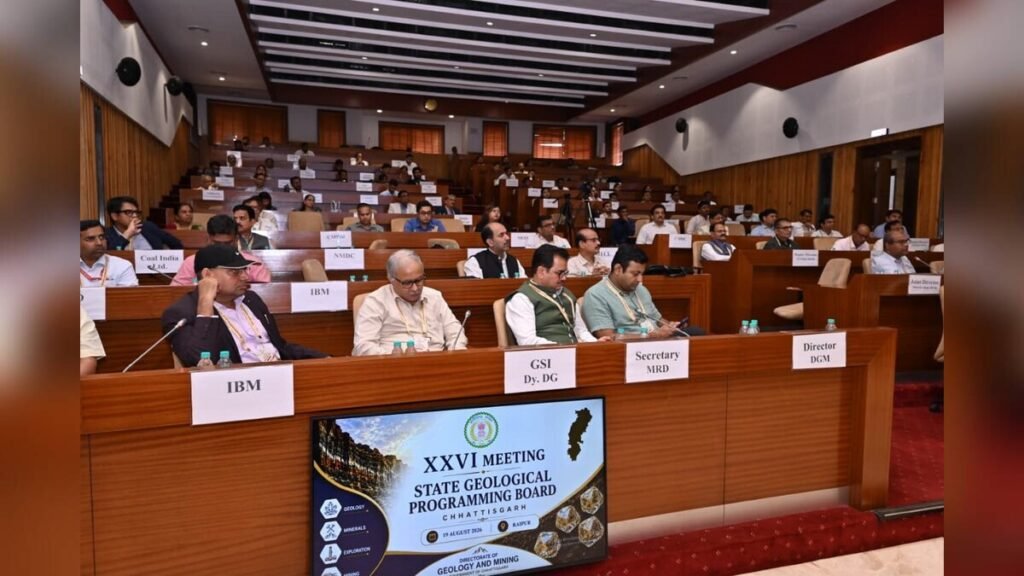
Mineral Resources Department Secretary P. Dayanand chairs the 26th State Geological Programming Board meeting at the Old Circuit House in Raipur on Wednesday, August 19, 2026. Seated with him in the front row are officials of the Indian Bureau of Mines, GSI Deputy Director General Amit Dharwadkar and Director of Geology and Mining Rajat Bansal, while representatives of Central and state agencies and the mineral industry participate in the deliberations-Photo Credit:channel24india.com via CG/DPR
The 45 projects include 35 blocks containing critical and strategic minerals, four deep-seated mineral blocks and six bulk-mineral projects. The programme reflects Chhattisgarh’s effort to expand exploration beyond conventional minerals and identify resources required by the energy, electronics, defence and advanced-manufacturing sectors.
The Raipur unit of the Geological Survey of India will undertake 25 of the approved exploration projects, giving the national agency a central role in the state’s mineral-development programme.
During 2025–26, exploration activities established approximately 2,590 million tonnes of limestone resources and 32.26 million tonnes of iron ore resources in Chhattisgarh.
Four exploration projects initiated during 2025–26 will continue in the current financial year. Nine projects approved under the National Mineral Exploration Trust’s exploration framework will also remain under implementation.
Dayanand said the continuing projects would maintain momentum in the search for critical and strategic minerals while further strengthening the state’s recognised mineral-resource base.
Strategic Minerals and Advanced Exploration Take Priority
The approved programme places particular emphasis on lithium, graphite, tin, tantalum, niobium, rare-earth elements, rare metals, glauconite and bauxite.
These minerals have assumed growing strategic importance because of their use in batteries, renewable-energy systems, electronics, telecommunications, aerospace technologies and other advanced industrial applications.
The meeting called for faster exploration in the South Bastar region and the adoption of advanced technology to identify and assess minerals located at greater depths.
Deep-seated mineral deposits are more difficult to locate and evaluate than resources occurring closer to the surface. Their exploration requires modern geophysical surveys, geochemical analysis, remote sensing, three-dimensional geological modelling and precision drilling.
Greater cooperation among the participating agencies was therefore identified as essential for avoiding duplication, sharing scientific information and converting geological indications into viable exploration projects.
Dayanand said Chhattisgarh received approximately ₹16,738 crore in mining royalty and associated revenue during 2025–26. The collection underlines the mining sector’s importance to the state’s finances and its wider industrial economy.
Bansal described the establishment of 2,590 million tonnes of limestone and 32.26 million tonnes of iron ore resources during the year as an important achievement in the state’s mineral-exploration programme.
The additional resources could strengthen long-term raw-material availability for cement, steel and mineral-based industries. However, resources identified through geological exploration must undergo further assessment before their commercial viability, extraction schedule and environmental implications can be determined.
The Geological Survey of India handed mineral-resource maps covering five Chhattisgarh districts to the Mineral Resources Department during the meeting.
The maps are expected to support future exploration planning by bringing together geological formations, known mineral occurrences and potential resource zones. They can also help agencies prioritise surveys and identify areas requiring more detailed investigation.
Participants discussed measures to expand mineral-search possibilities, improve coordination among Central and state agencies and create a stronger roadmap aligned with the requirements of mineral-based industries.
Representatives attended from the Geological Survey of India, Indian Bureau of Mines, Atomic Minerals Directorate for Exploration and Research, Mineral Exploration and Consultancy Limited, National Mineral Development Corporation, Central Institute of Mining and Fuel Research, Central Ground Water Board, Central Mine Planning and Design Institute Limited, MOIL, Hindustan Copper Limited and Chhattisgarh Mineral Development Corporation.
The meeting also included representatives from the Chhattisgarh Council of Science and Technology, notified private exploration agencies and companies including Jindal Steel, UltraTech Cement, Maa Kudargarhi Steel Private Limited, Deccan Gold and Mikey South Mining Private Limited, along with the Mineral Concession and Technical Assessment team of the Directorate of Geology and Mining.
The exploration programme is expected to help Chhattisgarh obtain a clearer understanding of its mineral potential while preparing for increasing national demand for critical and strategic resources. Its success will depend upon the quality of exploration, transparent allocation of mineral blocks, environmental safeguards and the extent to which mining development creates durable economic benefits for local communities.