Kumar Bahukhandi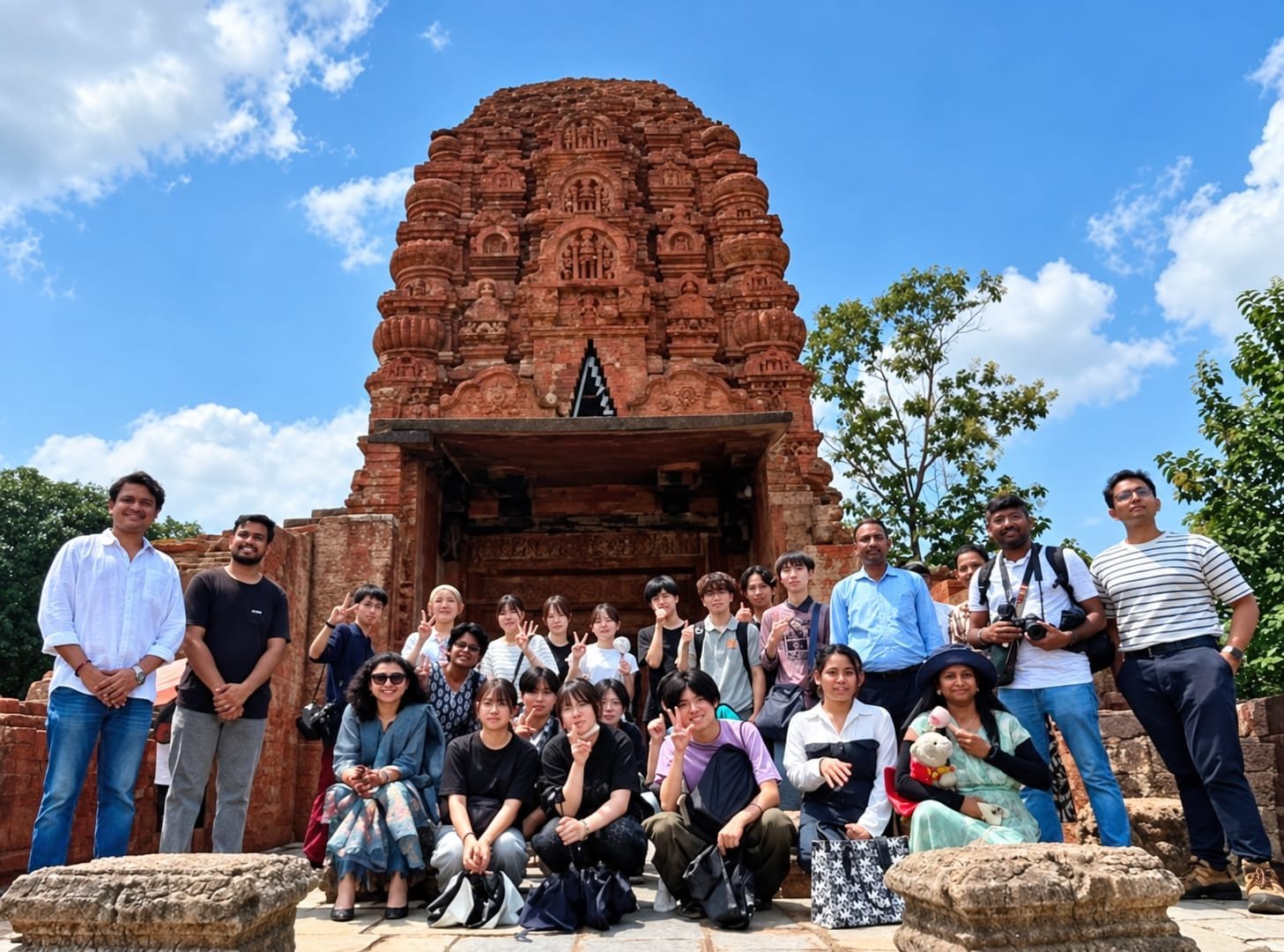
The visiting Ehime University delegation poses at one of Sirpur’s historic monuments during its heritage tour, highlighting growing academic and cultural engagement between Japan and Chhattisgarh. Photo Credit: channel24india.com via CG/DPR primelookindia.com via CG DPR
17-member Ehime University team explores Buddhist, Hindu and Jain heritage as Chhattisgarh Tourism Board showcases Sirpur’s potential for international academic and cultural tourism
Key Highlights
- 17-member delegation from Ehime University, Japan, visited Sirpur on September 14.
- The delegation was in Chhattisgarh from September 12–14 for academic and research engagement hosted by NIT Raipur.
- Visitors explored Lakshman Temple, Anand Prabhu Kuti Vihar, Swastik Vihar and Teevardev Mahavihara.
- The tour highlighted Sirpur’s distinctive Buddhist, Hindu and Jain archaeological heritage.
- Chhattisgarh Tourism Board organised the special heritage tour, expert guidance and hospitality arrangements.
- The initiative seeks to strengthen Sirpur’s visibility among international students, researchers and cultural travellers and encourage wider India-Japan academic and heritage engagement.
A journey through the centuries-old ruins of Sirpur offered a visiting Japanese university delegation a close encounter with Chhattisgarh’s remarkable archaeological and cultural legacy, opening another avenue for academic and cultural engagement between India and Japan.
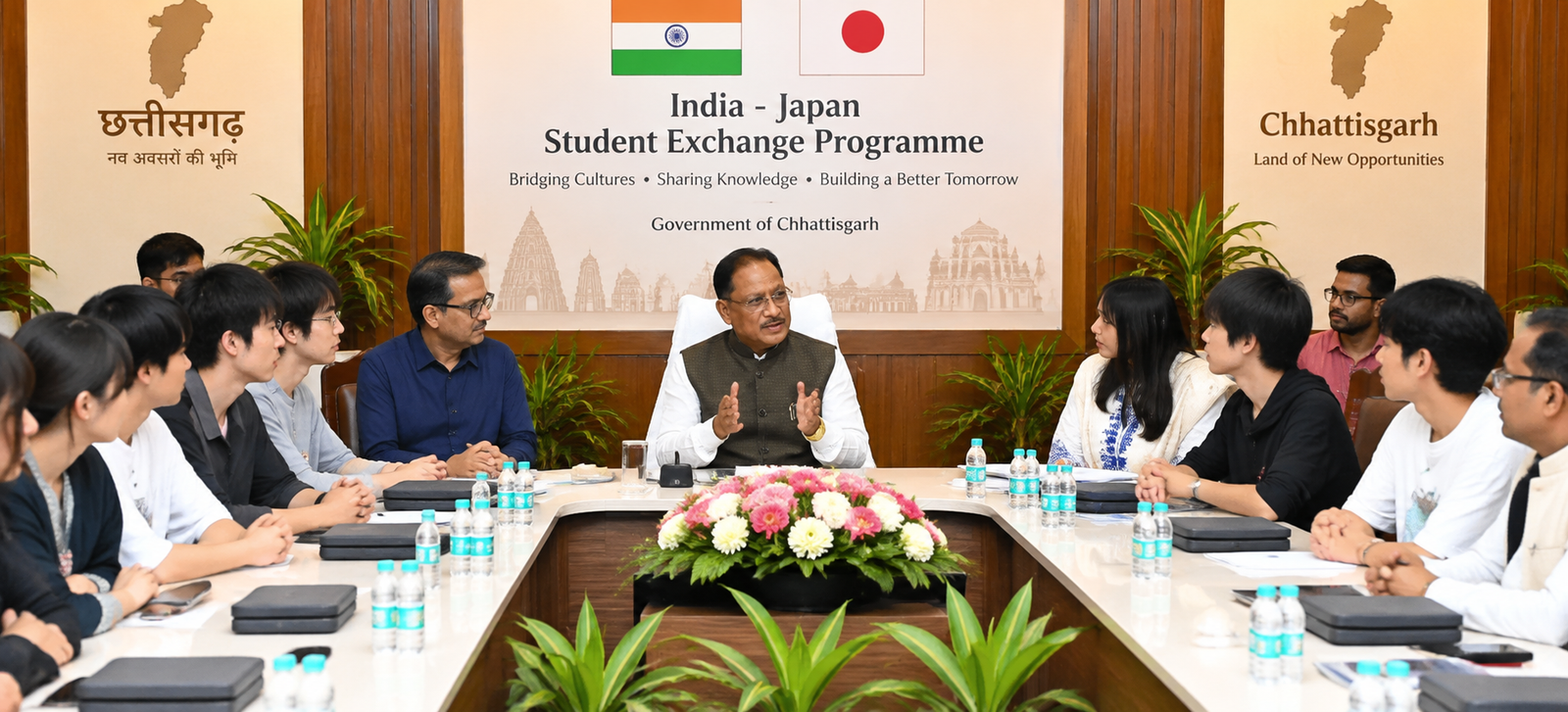
A 17-member delegation from Ehime University, Matsuyama, Japan, visited the historic town of Sirpur on September 14 as part of a special heritage tour organised by the Chhattisgarh Tourism Board. The delegation was in Chhattisgarh from September 12 to 14 for academic and research engagement hosted by the National Institute of Technology (NIT) Raipur.
During the Sirpur visit, the Japanese students and representatives explored some of the ancient settlement’s most significant archaeological sites, including the Lakshman Temple, Anand Prabhu Kuti Vihar, Swastik Vihar and Teevardev Mahavihara.
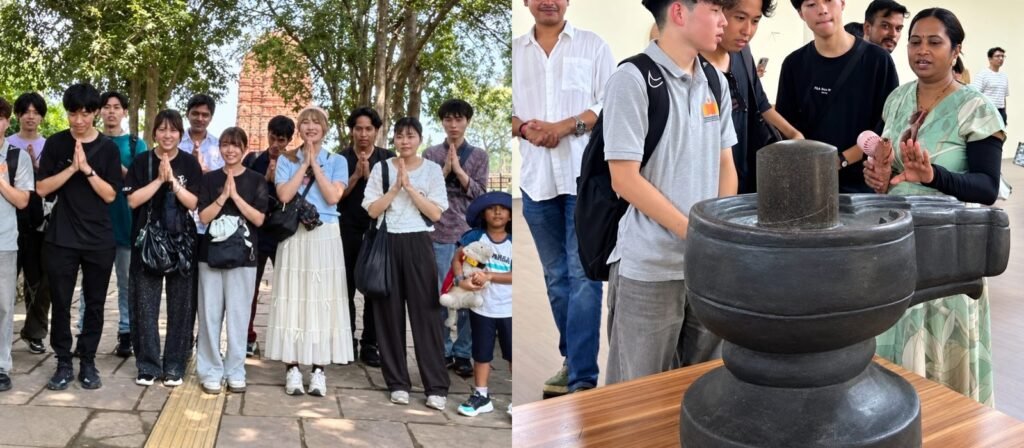
Members of Japan’s Ehime University delegation experience Chhattisgarh’s spiritual and cultural heritage during their visit to Sirpur, greeting with folded hands and learning about the significance of a Shivlinga as part of the special heritage tour. Photo Credit: channel24india.com via CG/DPR
The visit provided the delegation with more than a conventional sightseeing experience. Local experts introduced the visitors to Sirpur’s architectural traditions, religious history, archaeological discoveries and its distinctive coexistence of Buddhist, Hindu and Jain influences.
Sirpur Opens a Window into Ancient India
Situated on the banks of the Mahanadi, Sirpur was known in ancient times as Shripur and occupied an important place in the history of Dakshina Kosala. Archaeological discoveries across the area have revealed temples, monasteries, sculptures and other structures associated with different religious and cultural traditions.
For the Japanese visitors, this archaeological landscape offered an opportunity to understand how religion, scholarship, architecture and community life developed alongside one another in ancient India.
The Lakshman Temple emerged as one of the principal attractions of the tour. Associated with around the seventh century, the monument is widely recognised for its ancient brick architecture and intricate ornamentation. Members of the delegation examined its architectural features and received information about the historical and cultural context of the monument from the accompanying guide.
Sirpur’s Buddhist heritage held particular interest for the visiting students and researchers.
At Anand Prabhu Kuti Vihar, they were introduced to the remains of an ancient monastic complex, including its arrangement of cells around a central courtyard and its sculptural heritage. Archaeological accounts associate the site with a 14-room monastic complex and Buddhist artistic remains, including representations connected with Buddha and Padmapani Avalokiteshvara.
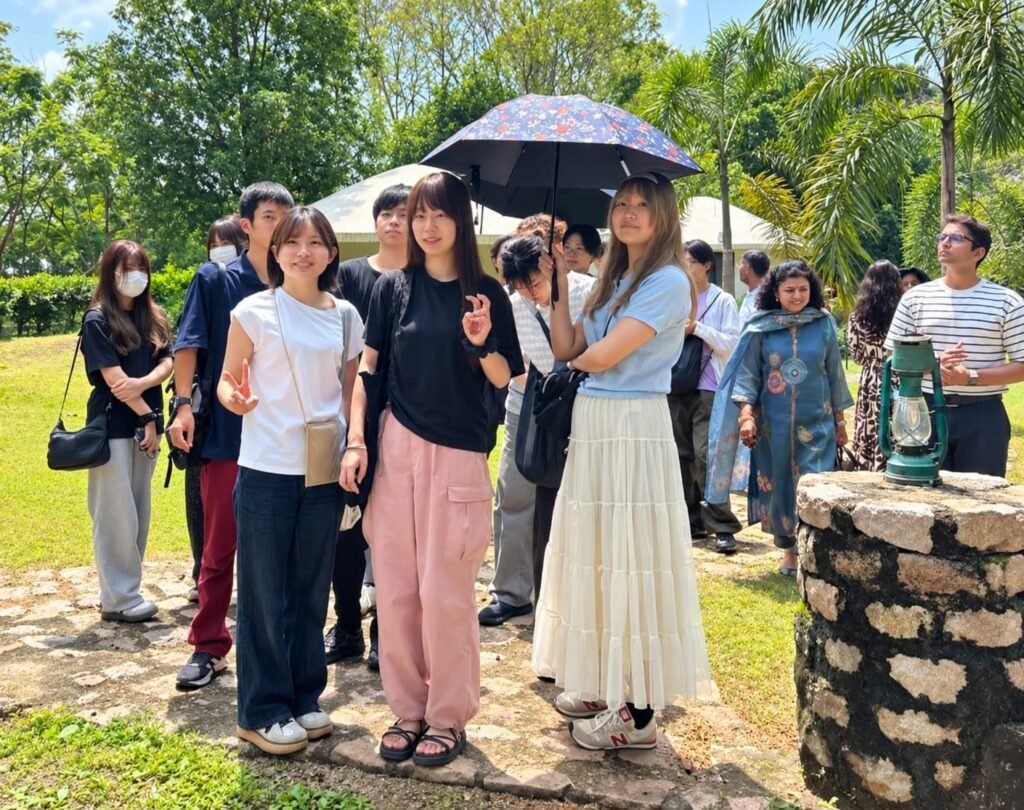
Students and members of the 17-member Ehime University delegation explore Sirpur during a special heritage tour organised by the Chhattisgarh Tourism Board, gaining first-hand exposure to the ancient city’s archaeological and cultural legacy. Photo Credit: channel24india.com via CG/DPR
The visit acquired an additional cultural dimension because Buddhism has played a profound role in Japanese history, philosophy, art and society. Sirpur therefore provided the delegation with an opportunity to encounter an important chapter of the Indian heritage from which Buddhist thought travelled and evolved across Asia.
At Swastik Vihar, the visitors studied the site’s distinctive architectural layout and learned about the Buddhist remains discovered during archaeological excavations. The interaction helped illustrate Sirpur’s historical importance not merely as a religious centre but also as a place associated with learning and intellectual activity.
Teevardev Mahavihara offered another striking example of Sirpur’s cultural synthesis. Its artistic elements bring together Buddhist imagery with motifs associated with broader Indian religious and artistic traditions. The visiting delegation observed sculptures and architectural elements reflecting this interaction of traditions.
Heritage Tourism Meets Academic Exchange
The Chhattisgarh Tourism Board arranged local expert guidance and hospitality for the international delegation, including food arrangements keeping the visitors’ preferences in mind. The initiative was designed to introduce the guests not only to archaeological monuments but also to the region’s culture and hospitality.
The visitors showed keen interest in ancient brick construction, sculpture, temple architecture and the planning of monastic complexes. Several members also took interest in understanding and documenting the archaeological features of the sites.
Professor Dilip Singh Sisodia of NIT Raipur appreciated the Tourism Board’s coordination and hospitality during the delegation’s visit.
He said such heritage visits for international guests go beyond tourism and can contribute to stronger cultural and academic interaction between countries. The arrangements enabled the visiting delegation to experience and understand Sirpur’s historical and cultural heritage at close quarters, he said.
A New International Audience for Sirpur
The Ehime University delegation’s visit also carries significance for Chhattisgarh’s effort to introduce Sirpur to a wider international audience.
Sirpur possesses an unusual concentration of archaeological remains associated with Buddhism, Hinduism and Jainism. Excavations have brought to light Buddhist monasteries, temples, sculptures and other structures that point to the town’s once-flourishing religious and intellectual life.
Its importance consequently extends beyond conventional heritage tourism. For archaeologists, historians, researchers and students of religion, architecture and Asian cultural exchanges, Sirpur offers considerable scope for study.
International university visits can help connect that heritage with academic institutions beyond India and create opportunities for research interaction, cultural exchange and educational tourism.
The presence of students from Japan is particularly meaningful in this context. India and Japan share centuries-old cultural connections shaped significantly by the transmission of Buddhism across Asia. A Japanese academic delegation walking through the Buddhist monasteries and other ancient monuments of Sirpur therefore represents a contemporary encounter with that much older civilisational relationship.
For Chhattisgarh, such visits can also help position Sirpur beyond the domestic tourism circuit and introduce its archaeological wealth to travellers, universities and researchers internationally.
The monuments may belong to another age, but the Ehime University delegation’s journey through Sirpur demonstrated how an ancient city can still create new connections — linking Chhattisgarh’s past with Japan’s academic community and turning heritage into a living bridge between cultures.