Kumar Bahukhandi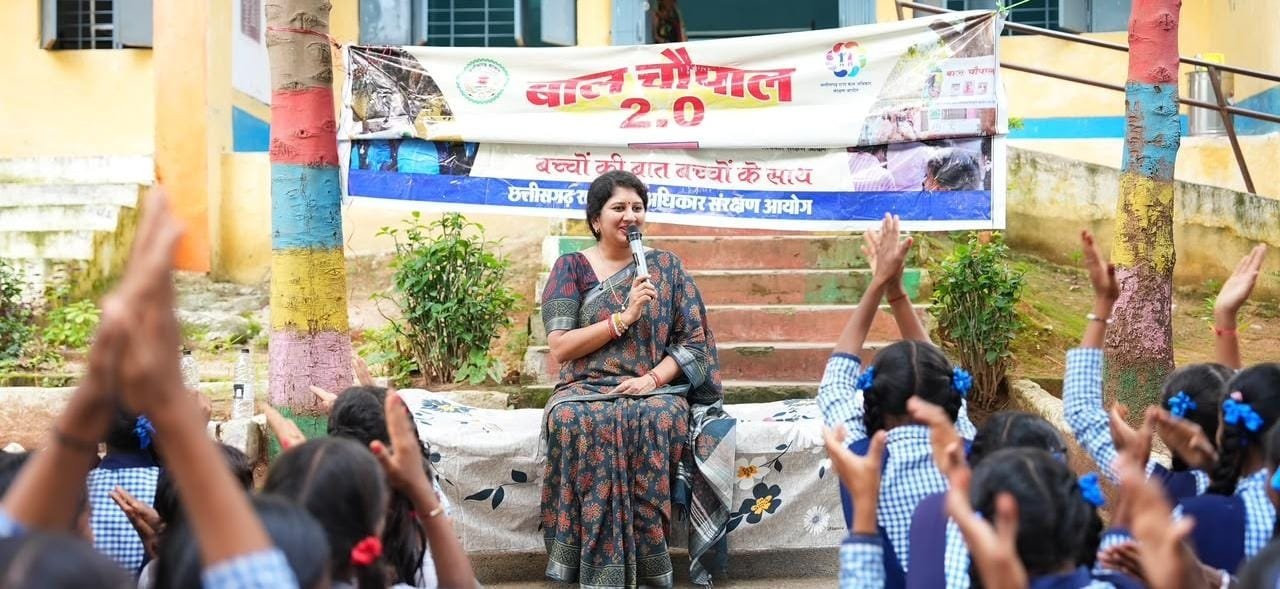
Children Speak at Bal Chaupal: Chhattisgarh State Commission for Protection of Child Rights Chairperson Dr Varnika Sharma interacts with schoolchildren during Bal Chaupal 2.0 in Kawardha district on Thursday, September 17, 2026. The initiative provided children an opportunity to speak about their education, safety, rights and everyday concerns-photo Credit:channel24india.com via CG/DPR
Chhattisgarh child rights panel chief interacts directly with children, inspects schools and hostels, and orders corrective action on gaps in education, health and residential facilities
Key Highlights
- Dr Varnika Sharma conducted Bal Chaupal 2.0 at Bairakh in Kawardha’s remote tribal region.
- Children discussed their education, interests, problems, safety and future aspirations directly with the Commission chairperson.
- Interactive activities covered child rights, good touch-bad touch, child marriage and child helpline awareness.
- Deficiencies in cleanliness, teacher availability, malaria-prevention arrangements and educational resources were flagged during inspections.
- Officials were directed to arrange teachers, particularly for Mathematics, English and Science, where required.
- Sharma joined students of Eklavya Residential School, Taregaon, in marking Prime Minister Narendra Modi’s birthday.
- District officials were directed to strengthen implementation of child-protection laws and welfare schemes.
Raipur: Taking the child-rights dialogue directly to one of Kawardha district’s remote tribal regions, Chhattisgarh State Commission for Protection of Child Rights Chairperson Dr Varnika Sharma organised ‘Bal Chaupal 2.0’ at Bairakh, interacting with children to understand their education, health, safety concerns and everyday needs.
During her visit, Sharma also inspected educational and residential institutions and later reviewed child-protection issues and government schemes with officials at the Collectorate.
She said children living in tribal areas possessed considerable talent and potential and stressed that access to quality education, modern learning resources and a secure environment could significantly widen their opportunities.
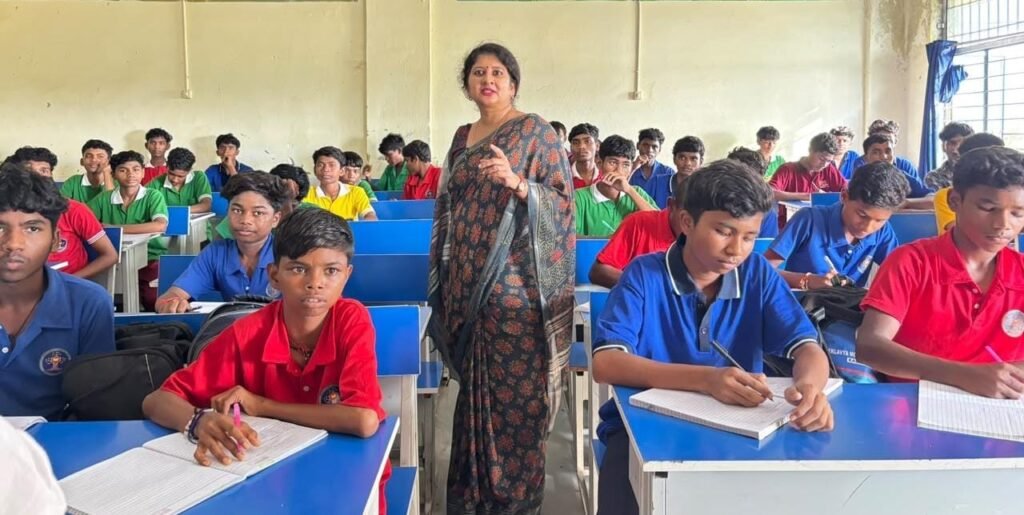
Taking the Dialogue into the Classroom: Dr Varnika Sharma interacts with students during her visit to educational institutions in Kawardha district, where she reviewed learning facilities and stressed the need for quality education and access to modern resources for children in tribal areas-Photo Credit:channel24india.com via CG/DPR
“Children in tribal regions are talented and capable. Their future can be strengthened by providing quality education, modern technological resources and a safe environment,” Sharma said.
She also emphasised connecting children with digital resources so that geographical remoteness did not restrict their learning opportunities.
Children Speak Freely at Bal Chaupal
The interaction at Bairakh was designed to give children an opportunity to speak directly about their studies, interests, problems and aspirations.
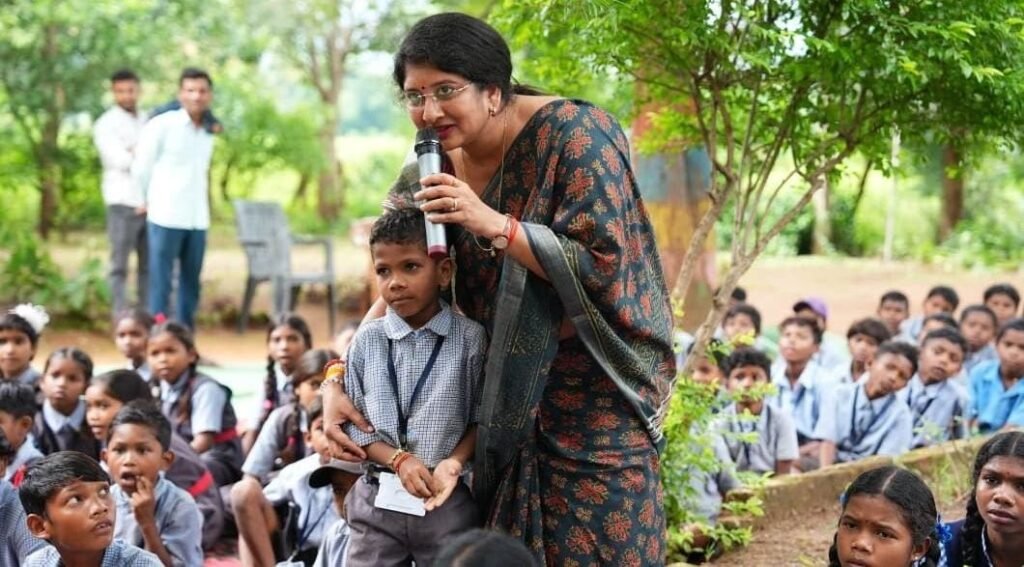
Child Rights Through Direct Interaction: Dr Varnika Sharma speaks with a young student during Bal Chaupal 2.0 in the tribal region of Kawardha. Children were sensitised about personal safety, child rights, the child helpline and other protection issues through direct and interactive sessions-Photo Credit:channel24india.com via CG/DPR
Activities including quizzes and a snakes-and-ladders game based on child rights were used to make awareness sessions more interactive. Children were also sensitised about good touch and bad touch, the child helpline, child marriage and other issues affecting their safety and rights.
Sharma encouraged the students to raise their concerns without hesitation and stressed the need for effective and regular counselling mechanisms in educational and residential institutions.
Her interaction extended beyond formal discussions. At the Government Boys’ Home in Kawardha, she had dinner with the children and joined the birthday celebration of one of the residents.
Gaps Found During Inspection, Officials Told to Act
During an inspection of the Tribal Boys’ Ashram at Bairakh and other institutions, shortcomings were noticed in cleanliness, storage arrangements, availability of teachers and measures for preventing malaria.
Sharma directed officials to address the deficiencies immediately. Instructions were issued to provide new mosquito nets as part of malaria-prevention measures and to take up the shortage of teachers with the appropriate authorities while keeping the Commission informed.
Deficiencies relating to science equipment at a high school were also flagged for corrective action.
The Commission chairperson asked officials to arrange guest teachers until permanent appointments could be made and particularly stressed the availability of teachers for Mathematics, English and Science.
Celebrates PM Modi’s Birthday with Eklavya Students
At Eklavya Residential School, Taregaon, Sharma joined students in marking Prime Minister Narendra Modi’s birthday.
According to the information provided, students spoke about drawing inspiration from Modi’s journey and commitment to public service and expressed their intention to contribute to the country in the future.
Sharma used the interaction to learn about the students’ ambitions and difficulties and called for regular counselling and appropriate assessment mechanisms so that problems faced by children could be identified and addressed in time.
Child Protection Reviewed with District Officials
At a review meeting in the Collectorate, Sharma directed departments to place children’s interests at the centre of implementation and work with sensitivity, urgency and accountability.
The Tribal Development Department was asked to improve facilities in ashram schools and hostels. She also called for coordinated implementation and monitoring of the COTPA Act and child labour laws.
The Health Department was directed to ensure effective implementation of the PCPNDT Act, while the Women and Child Development and Labour departments were asked to coordinate so that eligible beneficiaries receive maximum benefits under the Pradhan Mantri Matru Vandana Yojana (PMMVY) and Minimata Mahtari Jatan Yojana.
The visit combined inspection with direct interaction, putting children themselves at the centre of the exercise rather than limiting the assessment to official reports and institutional records.