Kumar Bahukhandi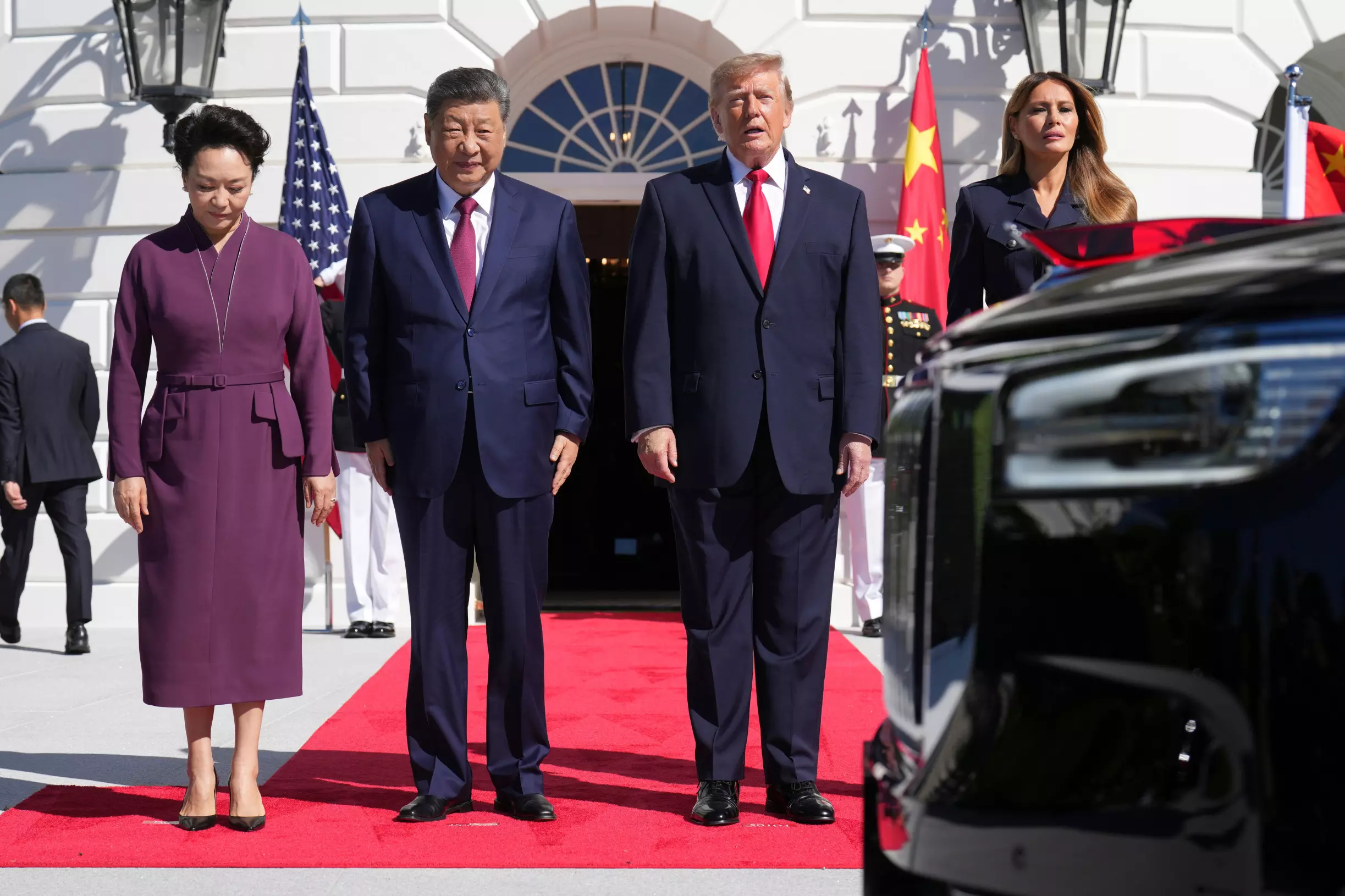
US President Donald Trump and First Lady Melania Trump with Chinese President Xi Jinping and Peng Liyuan during Xi’s state visit to Washington. The US and China reached consensus on recommendations for more favourable tariff treatment covering $30 billion of non-sensitive goods in each direction and established new mechanisms for dialogue on emerging technologies. Photo: AP.
Trump-Xi summit yields movement on trade and investment mechanisms as Washington and Beijing establish a channel for discussions on emerging technologies
Key Highlights
- US and China reach consensus on recommendations for more favourable tariff treatment covering $30 billion of non-sensitive goods in each direction.
- The two countries operationalise the US-China Board of Trade and Board of Investment, created during the May 2026 Beijing summit.
- Products covered include agricultural goods, seafood, wood products, cosmetics and medical devices from the US, and selected consumer goods from China.
- China commits to importing at least 10 million metric tonnes of US coal in 2027 and again in 2028.
- Washington and Beijing establish a new dialogue on advanced technologies and a bilateral communication channel for related incidents.
- Both sides continue discussions on rare earths and other critical-mineral supply issues.
Washington, September 26, 2026: The United States and China have agreed on recommendations for more favourable tariff treatment covering $30 billion worth of non-sensitive goods in each direction, marking one of the principal economic outcomes of Chinese President Xi Jinping’s three-day state visit to Washington.
The agreement emerged from talks between US President Donald Trump and Xi as the world’s two largest economies sought to build on mechanisms established during their earlier summit in Beijing.
According to a White House fact sheet issued following the talks, the two countries have now operationalised the US-China Board of Trade and US-China Board of Investment, both of which were chartered at the May 2026 summit in Beijing. The White House
Trade, Investment and Technology Take Centre Stage
Under the Board of Trade, the two sides reached consensus on recommendations for more favourable tariff treatment for $30 billion of non-sensitive goods flowing in each direction.
For US exports, the products identified include agricultural goods, fish and seafood, logs and wood products, cosmetics and medical devices. Chinese exports covered by the recommendations include consumer products such as small appliances, toys, holiday decorations and children’s car seats.
The development represents a targeted easing of trade barriers rather than a broad removal of tariffs between the two countries.
The Board of Trade will also establish a working group to address market-access barriers in the agricultural sector.
On investment, the newly operationalised Board of Investment will provide a structured government-to-government mechanism for discussing potential investment opportunities, impediments to investment and other commercially significant issues between the two countries.
Energy also featured in the economic package. China has agreed to import at least 10 million metric tonnes of coal from the United States in 2027 and another 10 million metric tonnes in 2028, according to the White House.
The two sides will meanwhile continue discussions over US concerns regarding supply-chain shortages involving rare earths and other critical minerals, an issue that has become increasingly important to industries dependent on advanced manufacturing and technology.
Technology emerged as another significant area of engagement during the summit. The two countries established a bilateral dialogue to exchange views on the risks and benefits associated with advanced emerging technologies, with the next exchange expected by November. They also agreed to establish a communication channel for technology-related incidents.
The agreements do not remove the wider strategic and economic differences between Washington and Beijing. They do, however, create additional institutional channels through which the two governments can address trade, investment and technology issues at a time when their economic relationship continues to carry global consequences.
Beyond economic issues, Trump and Xi also discussed international concerns including Russia, North Korea and Iran, according to the White House account of the summit.
The Washington meetings followed the May summit in Beijing, where the two leaders established the trade and investment boards that have now moved into their operational phase.