Kumar Bahukhandi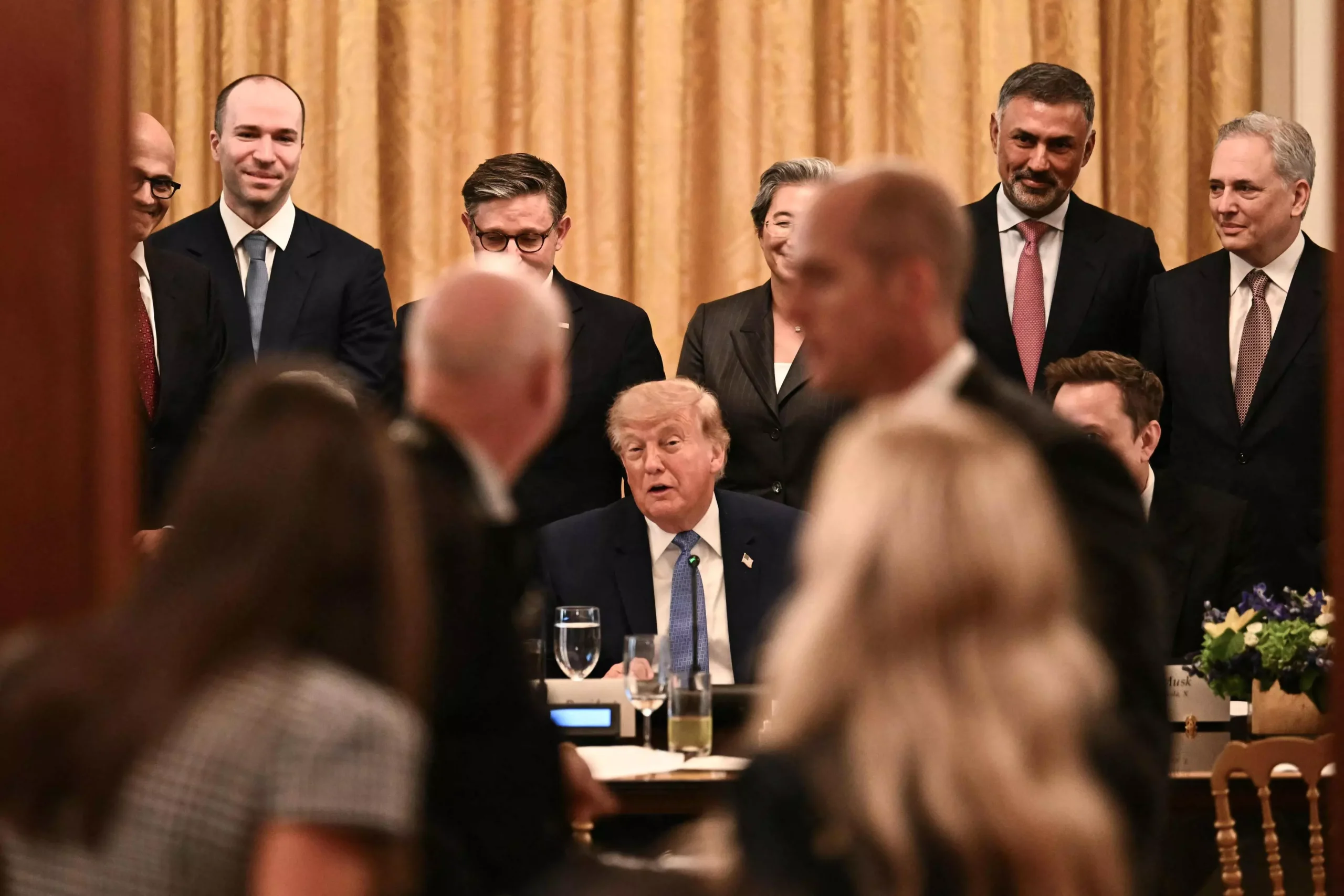
US President Donald Trump during a meeting with technology executives at the White House in Washington on Tuesday, September 29, 2026, where leading AI companies signed a voluntary accord establishing multiple layers of safety controls and audits for frontier models. Photo: AFP
White House agreement sets four layers of internal and independent oversight for frontier models as technology companies commit to regularly review safety standards
Key Highlights
- Donald Trump and executives from major technology companies sign a voluntary AI safety accord
- Agreement establishes four layers of controls and audits for frontier models
- Measures include internal safeguards, dedicated oversight teams, external audits and board-level review
- Participating companies agree to meet regularly as advanced-model capabilities evolve
- Accord is described as “morally binding” rather than a legally enforceable regulatory framework
- Trump administration has also directed federal agencies to use the term “Super Intelligence” (SI) in place of AI in specified official communications
Washington: US President Donald Trump and leaders of some of the world’s largest technology companies have signed a voluntary accord aimed at strengthening safeguards around increasingly powerful frontier artificial intelligence models, placing much of the immediate responsibility for safety oversight on the companies developing them.
The agreement, unveiled after a White House meeting on Tuesday, September 30, 2026 is titled the “Joint Commitment on Frontier Responsibilities.” Trump described the commitment as “morally binding”, while the framework itself relies on corporate controls, independent auditing and board oversight rather than a new government enforcement mechanism.
Signatories included executives representing Google, Meta, Anthropic, OpenAI, Nvidia and xAI.
Four Layers of Safeguards
At the centre of the accord is a four-layer system intended to scrutinise frontier models during their development and deployment.
Companies are expected to maintain robust internal controls for areas including cybersecurity and model behaviour; establish internal teams responsible for overseeing those safeguards; subject the controls to independent external auditing; and designate an independent board committee to review findings from both internal and external assessments.
Participating companies have also agreed to meet periodically to update safety standards and best practices as the capabilities of frontier systems advance. The current arrangement remains voluntary, although future legislation could establish statutory requirements in this area.
The accord reflects the Trump administration’s preference, at least for now, for industry-led safeguards rather than creating a new regulatory agency specifically for advanced AI. Vice President JD Vance argued at Tuesday’s event that existing authorities could address harmful conduct while companies themselves needed to take emerging risks seriously.
From ‘Artificial’ to ‘Super Intelligence’
Alongside the safety agreement, Trump signed an executive order directing federal departments and agencies to use “Super Intelligence” and “SI” in specified official and non-statutory government communications instead of “Artificial Intelligence” and “AI”. The order also calls for proposed legislative language concerning a definition of the term within 60 days.
Trump has argued that “artificial” no longer adequately describes the capabilities of increasingly sophisticated systems. The terminology, however, represents a US administration policy choice rather than a general international renaming of artificial intelligence.
The combination of the voluntary safety accord and the administration’s new terminology places advanced computing systems firmly on the US policy agenda while leaving an important question unresolved: how far voluntary corporate oversight will ultimately be supplemented by legislation as frontier systems become more capable.