Kumar Bahukhandi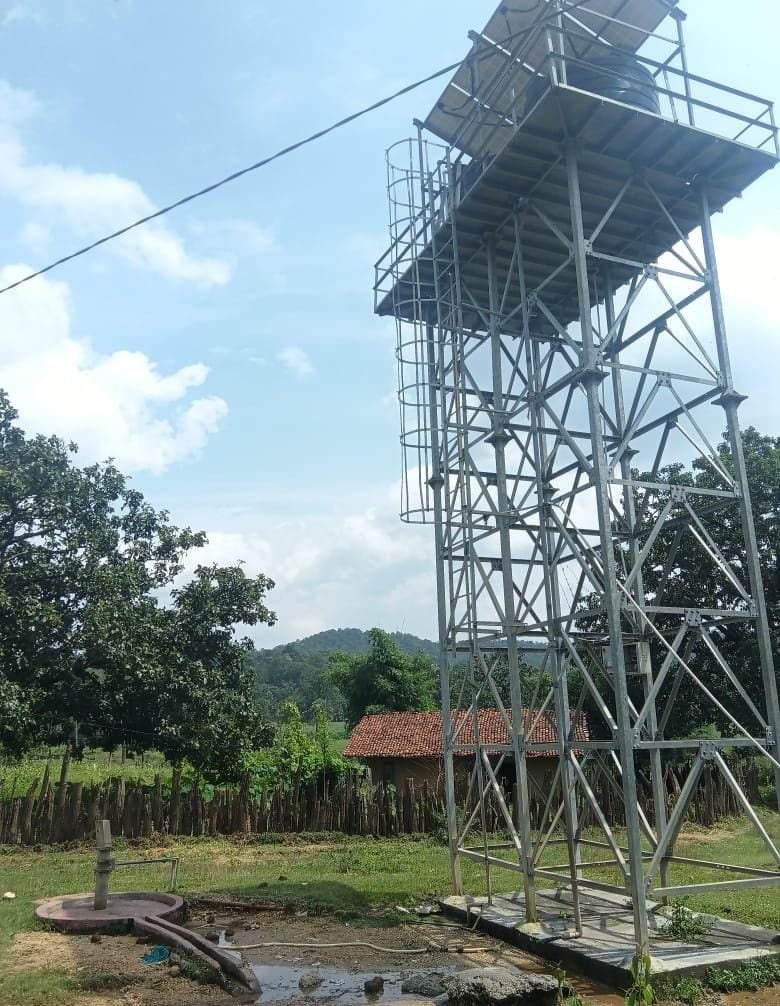
solar-powered dual pump installation with an elevated water storage tank in Narayanpur district, Chhattisgarh, illustrates the ongoing effort to improve drinking water access in remote villages and hamlets of Abujhmad under the Jal Jeevan Mission and CREDA initiative, as reported on Monday, October 12, 2026. Of the 1,064 solar dual pumps targeted across 371 villages and hamlets, 849 have been installed to help reduce dependence on distant and potentially unsafe traditional water sources.Phoro:channel24india.com via CG/DPR
Under Jal Jeevan Mission and CREDA’s Joint Initiative, 1,064 Solar Dual Pumps Targeted Across 371 Villages and Hamlets, Reducing Dependence on Unsafe Traditional Water Sources
Key Highlights
- 849 solar dual pumps installed against a target of 1,064 in Narayanpur district.
- The initiative aims to improve drinking water access across 371 villages and remote hamlets.
- Jal Jeevan Mission, CREDA and the Public Health Engineering Department are working together to extend water supply to difficult-to-reach settlements.
- Solar-powered systems reduce dependence on conventional electricity in remote and unelectrified areas.
- Villages including Nelangur, Padamkot, Jatlur, Usebeda, Harbel, Kasturmenta-2, Dhurbeda and Gumarka are among the beneficiaries.
- Improved access to drinking water is reducing the time and physical effort required to collect water, particularly for rural women.
Raipur: A solar-powered drinking water initiative is bringing relief to remote villages and scattered hamlets of Abujhmad and other difficult-to-reach areas of Narayanpur district, where geographical isolation, rocky terrain and limited electricity infrastructure have long complicated access to safe drinking water. Under a joint initiative involving the Jal Jeevan Mission, Chhattisgarh State Renewable Energy Development Agency (CREDA) and the Public Health Engineering Department, 849 solar dual pumps have been installed against a target of 1,064 across 371 villages and hamlets. The programme is intended to reduce dependence on traditional water sources, including locally known jhiriyas, and improve access to drinking water in some of Chhattisgarh’s most challenging rural settlements.
For generations, residents of remote forest settlements have faced considerable difficulties in obtaining water for their daily needs.
In several areas, families have depended on distant water sources or shallow traditional collection points, often requiring lengthy journeys through difficult terrain.
The solar dual pump initiative seeks to address these challenges by bringing water supply facilities closer to rural habitations through renewable energy technology.
371 Villages and Hamlets Covered Under Drinking Water Initiative
Narayanpur district presents distinctive challenges for drinking water infrastructure because of its extensive forest cover, rocky landscape and widely dispersed settlements.
Conventional water supply projects can be difficult to implement in areas where electricity connections are unavailable or unreliable.
To address these difficulties, the authorities have set a target of installing 1,064 solar dual pumps to improve drinking water access across 371 villages and hamlets.
According to the state government’s information released on Monday, October 12, 2026, installation of 849 pumps has been completed.
This represents approximately 79.8 per cent of the total installation target, with 215 pumps remaining.
The Public Health Engineering Department and CREDA are continuing efforts to complete the remaining installations.
Solar Technology Helps Overcome Electricity Constraints
One of the principal advantages of solar dual pump systems is their ability to operate using solar energy rather than relying entirely on conventional electricity supply.
This makes them particularly useful in remote settlements where extending electricity infrastructure can be technically difficult or expensive.
The systems use solar power to pump water, which can be stored in elevated tanks for subsequent distribution.
Stored water can support supply outside daylight hours, although actual availability depends on water-source capacity, storage, system performance and maintenance.
The state government has highlighted the potential of these systems to support round-the-clock drinking water availability in remote areas.
The initiative demonstrates how decentralised renewable energy technology can help address essential infrastructure requirements in geographically isolated communities.
Remote Abujhmad Settlements Gain Improved Water Access
The programme has reached several difficult-to-access villages and settlements in Narayanpur district.
Among the locations identified by the administration are Nelangur, Padamkot, Jatlur, Usebeda, Harbel, Kasturmenta-2, Dhurbeda and Gumarka.
These settlements are situated in areas where geographical conditions and limited infrastructure have historically made access to essential services difficult.
With solar dual pumps becoming operational, residents in the identified habitations are gaining access to water sources closer to their homes.
The development is intended to reduce the need for villagers to travel long distances to collect water.
For households that previously depended on distant or potentially contaminated sources, improved local supply represents an important change in everyday living conditions.
Reducing Dependence on Traditional Jhiriyas
In remote forest regions, some communities have traditionally relied on jhiriyas, shallow natural water collection points or seepage sources.
Such sources may be vulnerable to contamination, particularly where water is collected without adequate protection or treatment.
The solar dual pump programme is intended to reduce dependence on these sources by improving access to drinking water through installed pumping systems.
However, the safety of supplied water ultimately depends on the quality of the source, appropriate testing and regular maintenance of the infrastructure.
The wider objective of the initiative is to ensure that remote communities receive more dependable access to water suitable for household consumption.
Women and Families Among the Major Beneficiaries
The availability of water closer to residential settlements can make a significant difference to rural households, particularly women who frequently shoulder responsibility for collecting water.
In difficult terrain, collecting water may involve considerable physical effort and time.
When water supply becomes available closer to home, families can devote more time to other household responsibilities, childcare, education and livelihood activities.
The government release highlights these benefits as important outcomes of the programme.
For women in remote villages, reduced travel for water collection can also mean less physical strain and greater flexibility in managing daily responsibilities.
Improved Drinking Water Access Supports Public Health
Access to safe drinking water is closely connected to public health, sanitation and overall quality of life.
Consumption of contaminated water can contribute to waterborne diseases, including diarrhoeal infections.
By reducing dependence on unprotected traditional sources, improved drinking water infrastructure has the potential to lower exposure to unsafe water.
The administration has highlighted the public health benefits associated with the solar dual pump programme.
Sustaining these benefits will require regular water-quality monitoring, maintenance of pumping systems and protection of water sources from contamination.
The supplied government report does not provide specific medical or epidemiological data measuring reductions in waterborne diseases following the installations.
CREDA and Public Health Engineering Department Coordinate Implementation
The initiative brings together renewable energy technology and rural drinking water infrastructure.
CREDA’s role in promoting solar energy solutions complements the Public Health Engineering Department’s responsibility for drinking water supply.
The programme is being implemented in coordination with the Jal Jeevan Mission, which seeks to improve access to safe drinking water in rural households.
The partnership is particularly relevant in areas where conventional electricity-dependent pumping systems may not be practical.
By using solar technology, the administration aims to establish water supply arrangements suited to the geographical and infrastructure conditions of remote Narayanpur settlements.
215 Pumps Still to Be Installed
Despite substantial progress, the programme has not yet reached its full installation target.
Of the 1,064 solar dual pumps planned, 849 have been installed, leaving 215 installations pending.
The state government has indicated that work on the remaining systems is continuing.
Completion of these installations will be important for extending the initiative’s intended benefits to additional habitations.
Long-term success will also depend on reliable operation, timely repairs, water availability and sustained community access.
The number of pumps installed is an important measure of implementation progress, but the effectiveness of the programme will ultimately be determined by the consistency and quality of drinking water supplied to residents.
Renewable Energy Opens New Possibilities for Rural Development
The Narayanpur initiative illustrates the potential of renewable energy to address essential infrastructure challenges in remote regions.
Solar-powered pumping systems can provide practical alternatives where conventional electricity infrastructure remains limited.
For Abujhmad and neighbouring forest settlements, the significance extends beyond the installation of equipment.
Improved access to drinking water can reduce daily hardship, support household wellbeing and strengthen basic services in communities that have historically faced geographical disadvantages.
The initiative also reflects the growing role of decentralised clean energy in rural development.
With 849 solar dual pumps installed across the targeted programme area and 215 more awaiting completion, the Narayanpur project represents a significant step towards improving drinking water access in Chhattisgarh’s remote forest settlements. Its lasting success will depend not only on completing the remaining installations but also on ensuring that every operational system delivers dependable, safe drinking water to the communities it is intended to serve.