Kumar Bahukhandi
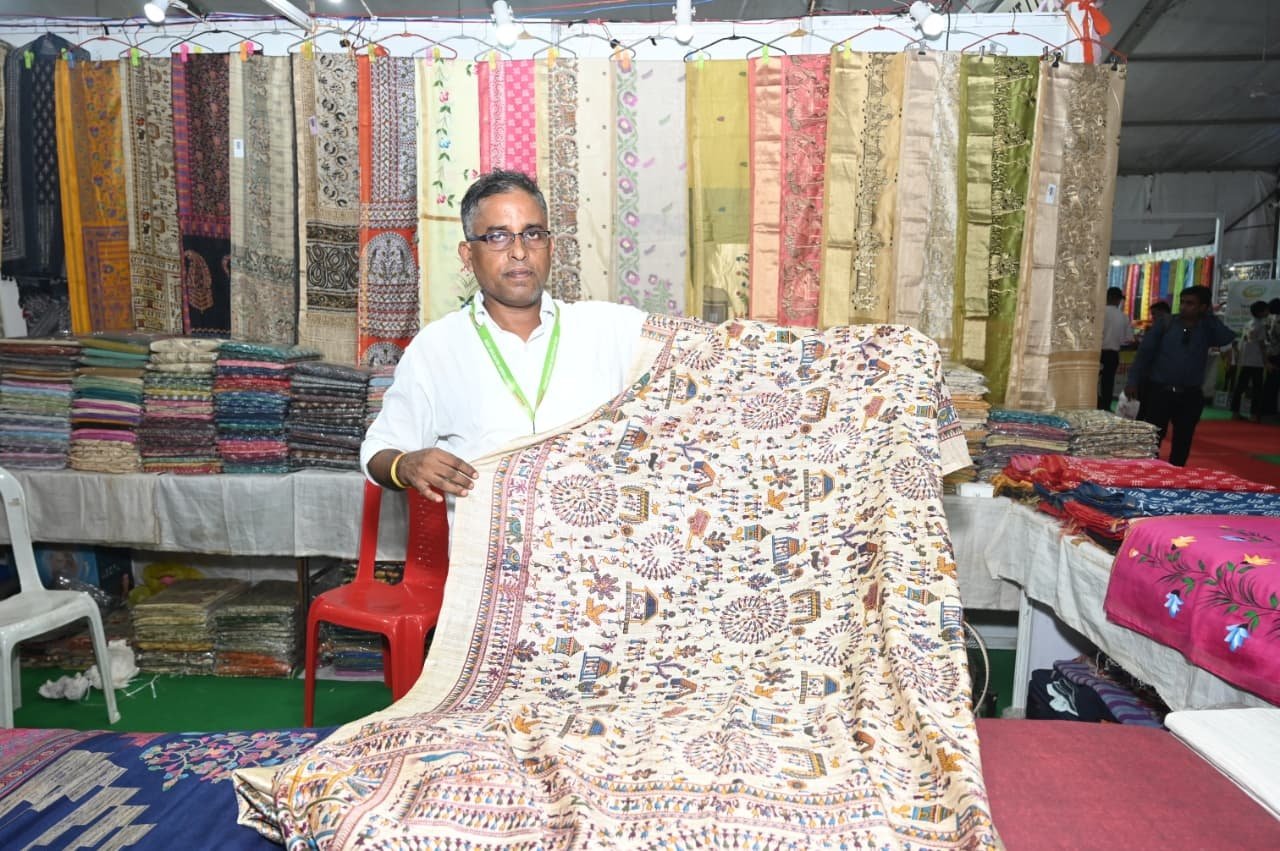
An exhibitor displays a floral-patterned textile amid colourful sarees and fabrics at the ongoing Rajyotsav 2026 exhibition in Nava Raipur on Monday, November 2, 2026. Photo: channel24india.com via CG/DPR
Maheshwari, Chanderi, Madhubani prints and Muga silk draw visitors as artisans from across the country showcase their craftsmanship in Nava Raipur
Key Highlights
- Textile stalls showcase weaving, embroidery and printing traditions from different states.
- Sarees, dupattas and scarves attract visitors with their colours, intricate designs and variety.
- Participating artisans report encouraging sales and appreciation from shoppers.
- Rajyotsav provides a platform for traditional craftspeople to reach buyers and support their livelihoods.
Raipur: India’s rich textile heritage is finding colourful expression at Rajyotsav 2026 in Nava Raipur, where handloom and textile stalls have become a major attraction for visitors. From delicately patterned sarees to vibrant dupattas and scarves, the exhibition brings together the craftsmanship of artisans from different parts of the country.
Artisans from Assam, Madhya Pradesh, Bihar, Uttar Pradesh, West Bengal and other states have brought collections reflecting their regional traditions. Visitors are appreciating the colour combinations, quality and variety of the fabrics, while the event offers exhibitors an opportunity to introduce their work to a wider market.
The stalls present a diverse selection for shoppers, with traditional motifs and contemporary colour choices sharing space across the displays.
A Colourful Collection of Regional Traditions
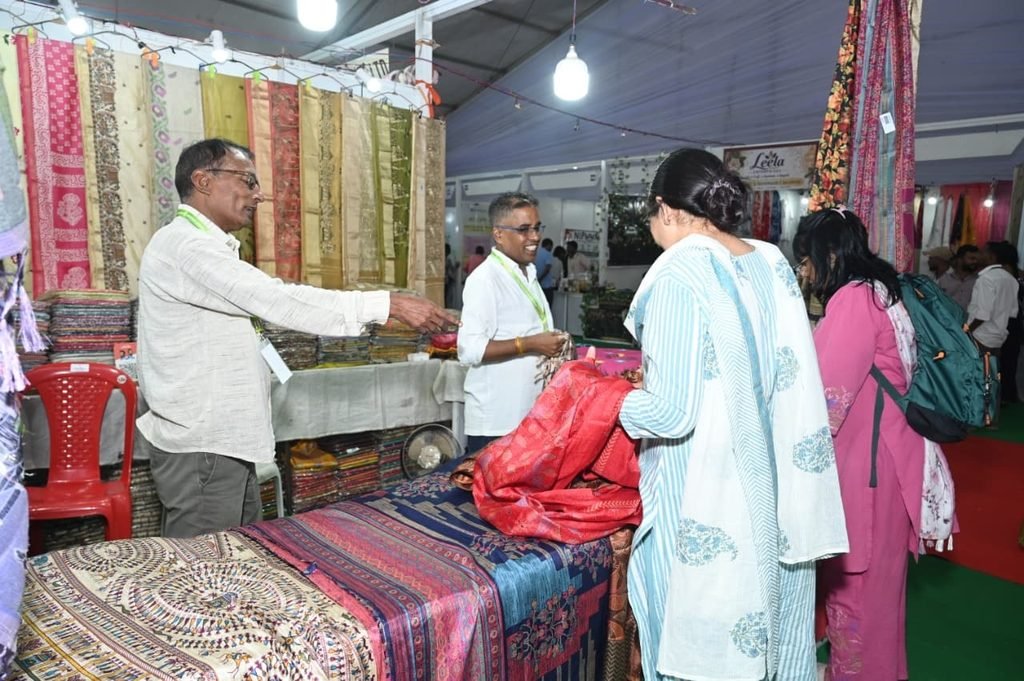
Visitors examine sarees and interact with exhibitors at a textile stall at the ongoing Rajyotsav 2026 exhibition in Nava Raipur on Monday, November 2, 2026. Photo: channel24india.com via CG/DPR
Maheshwari and Chanderi sarees, Madhubani prints, Kantha work, Muga silk and cotton varieties are among the collections available at the exhibition. Muslin and pure cotton sarees add to the range.
Visitors can also explore Banarasi, Pochampally, Kosa, printed silk, batik silk and Bhagalpuri varieties. Together, the collections offer a glimpse of the diversity of India’s textile traditions.
Sarees, dupattas and scarves are available at prices described by exhibitors as affordable, giving visitors a broad choice of fabrics and designs.
Madhya Pradesh Exhibitor Reports Encouraging Response
An exhibitor showcases a saree featuring intricate folk-art motifs at the ongoing Rajyotsav 2026 exhibition in Nava Raipur on Monday, November 2, 2026. Photo: channel24india.com via CG/DPR
Tej Bahadur Singh, who has travelled from Khandwa in Madhya Pradesh, said he participates in Rajyotsav every year and enjoys returning to Chhattisgarh.
“It feels wonderful to come to Chhattisgarh. Our products are receiving a good response here.”
— Tej Bahadur Singh, exhibitor from Khandwa
His stall features Maheshwari and Chanderi sarees, along with Madhubani-printed collections and dupattas. Among the designs are Mithila art motifs depicting wedding palanquins and shehnais, bringing traditional imagery into the fabric.
Singh also spoke about opportunities to develop his skills. He said he had recently visited Puducherry for training in marble printing and had travelled to Nepal to learn Madhubani printing.
He credited government encouragement for helping handloom artisans improve their skills and explore additional techniques.
Bengal and Bihar Collections Add Variety
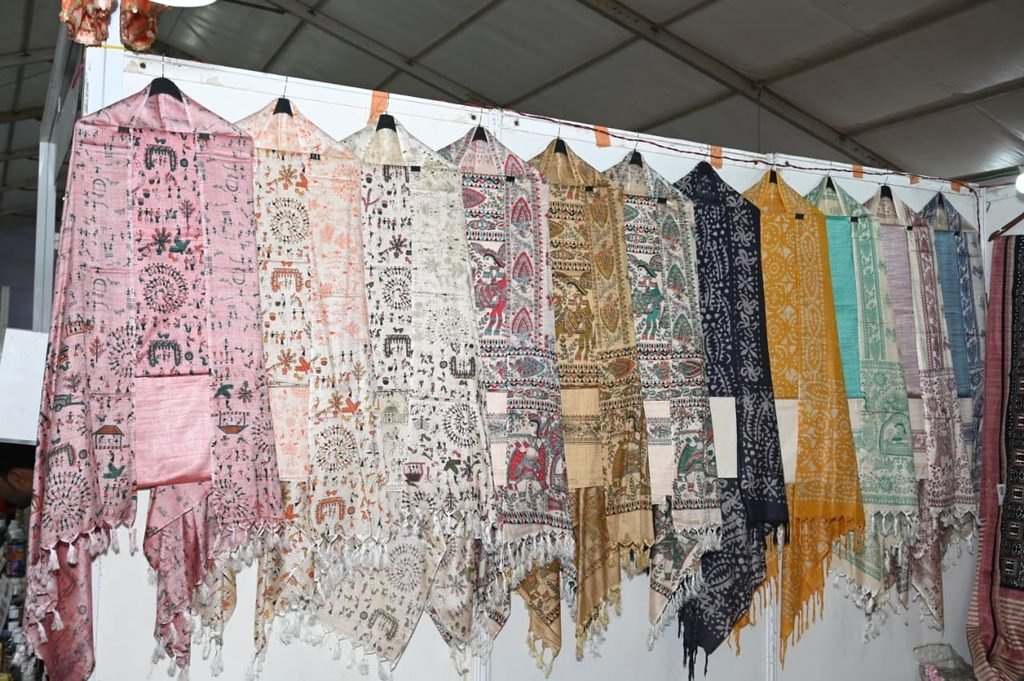
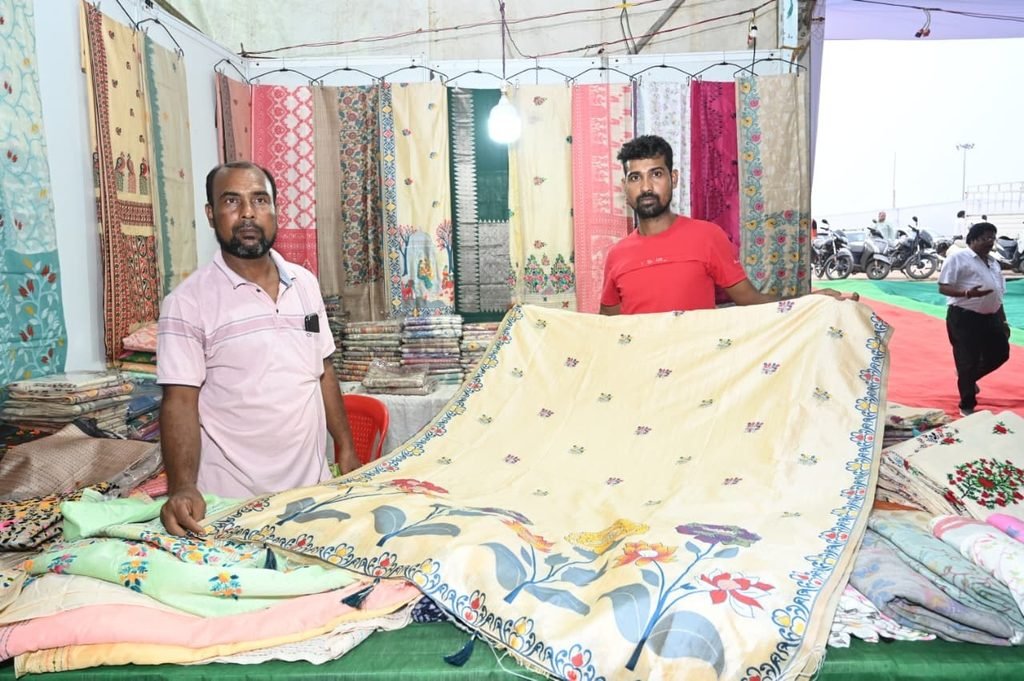
Colourful textiles featuring folk-art, floral and geometric motifs on display at the ongoing Rajyotsav 2026 exhibition in Nava Raipur on Monday, November 2, 2026. Photo: channel24india.com via CG/DPR
Hasibul, an exhibitor from West Bengal, reported good sales at his stall. His collection includes Kantha work, Assam Muga silk, Muga cotton and linen cotton sarees.
Mithilesh Kumar, who has come from Bihar, said his stall offers Madhubani prints alongside varieties described as banana silk, bamboo silk and cotton silk with Warli prints.
The collections give visitors an opportunity to compare different textures, patterns and decorative styles within the same exhibition space.
Shadir Ansari, another participant from West Bengal, said he was enjoying his experience in Chhattisgarh. His stall includes Kantha work, Jamdani, patchwork and Assam silk varieties, among other collections.
The exhibitors’ accounts reflect an encouraging response to the variety of textiles available at Rajyotsav.
A Marketplace for Craft and Livelihoods
For weavers and traditional craftspeople, textile production is an important source of livelihood. Platforms such as Rajyotsav enable them to display their work, interact directly with customers and understand buyers’ preferences.
The exhibition also draws attention to efforts to support weaving as a cottage industry. According to the state release, government initiatives aim to encourage weavers, preserve traditional craftsmanship and improve access to markets.
At Nava Raipur’s Rajyotsav grounds, these objectives take a visible form through stalls filled with fabrics, conversations between exhibitors and shoppers, and appreciation for the skills behind each collection.