Kumar Bahukhandi
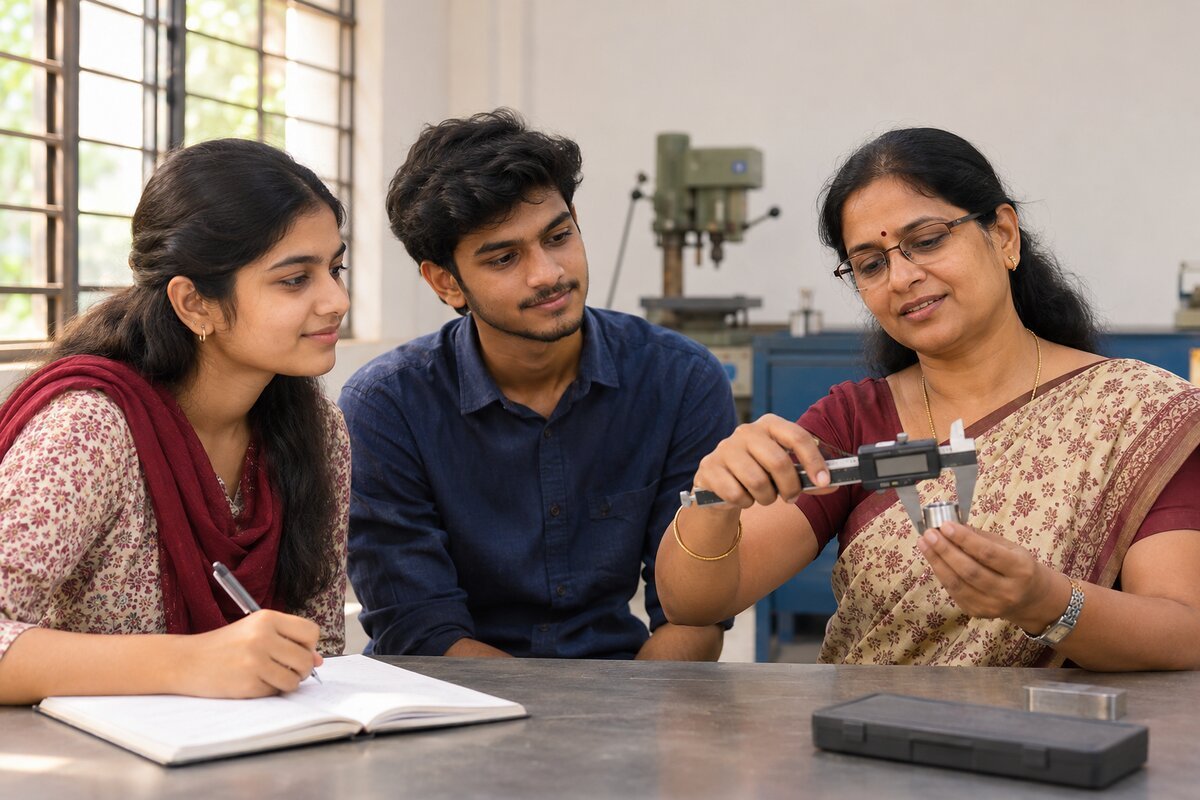
A mentor shows two students how to measure a component during a workshop. Chhattisgarh’s Internship Policy 2026 provides for 60 hours of hands-on training in the sixth semester of undergraduate study. AI-generated representative image for channel24india.com
Internship Policy 2026 connects sixth-semester students with industries, educational institutions and social organisations so they can put their knowledge to work before they graduate
Raipur, 28 November 2026 — A student’s first experience of a workplace can change what they take back to the classroom. A concept they have studied acquires a purpose when they use it to complete a task, explain a decision or solve a problem with others. Chhattisgarh’s Internship Policy 2026 brings that experience into the undergraduate degree through a 60-hour internship in the sixth semester.
Prepared in line with the National Education Policy 2020, the initiative is part of the State government’s effort to make higher education more practical and responsive to the needs of students. Under Chief Minister Vishnu Deo Sai’s leadership, the State is seeking to give young people opportunities to apply what they learn and explore where their skills might take them.
Sixty hours to put classroom learning into practice
Students will have opportunities to work with industries, educational institutions and social organisations. They will see how people in those settings organise their work, meet deadlines and share responsibility for a task. Applying subject knowledge in that setting can help students recognise their strengths and identify the skills they still need to develop.
Higher Education Minister Tank Ram Verma said the government wants students to leave college equipped to face new challenges and pursue opportunities with confidence. “Our goal is to build a strong link between education, skills and employment,” he said.
A chance to explore employment and enterprise
An industry placement can introduce students to workplace routines, technical requirements and changing job roles. Working with a social organisation offers a different kind of experience. It can help students understand how teams respond to community needs and how listening and collaboration shape the work.
Verma said early exposure to workplaces could also encourage students to explore self-employment and entrepreneurship. Seeing how an organisation solves everyday problems can give a student a starting point for developing an idea of their own.
Internship cells will connect campuses with host organisations
The policy provides for internship cells at colleges and universities to coordinate between students and host organisations. Divisional workshops are planned to train the staff who will run these cells. In the first phase of preparations, university registrars and college principals took part in an online training session on 30 October 2026.
Confidence that students can carry beyond college
For a student preparing to graduate, practical experience can make the next decision a little clearer. It might confirm an interest, reveal a different career path or show where further training would help. The policy gives students a chance to make those discoveries while they are still in college, with time to act on what they learn.
Vishnu Prasad Verma is an Assistant Director with the Chhattisgarh Department of Public Relations, Raipur. He writes about how the State’s Internship Policy 2026 helps undergraduates gain practical workplace experience before they graduate.