Kumar Bahukhandi

Both the Republican Party and BJP raise the fearlessness of the legal citizens to tap into voters’ tribalistic fears of being demographically overwhelmed, thus reaping a rich harvest of votes
Donald Trump’s return as the 47th President of the United States is largely based on the mixture of love credibility and fearlessness that he gave to the people. Even though critics focused on economic discontent in their criticism, in reality the US economy was not free from the threat of the Covid pandemic. The unemployment rate increased, and even during the early years of the Biden administration, there was an attempt to control the unemployment rate. But he was not successful. These benefits arose from Trump’s politics of affection. Trump assured people that he could fix America’s broken economy, and thus the restored conservative pastor deflected his opponent’s threat that incomes would fall and grow even further under the Biden administration, a factor that broke Kamala Harris’s ideology.
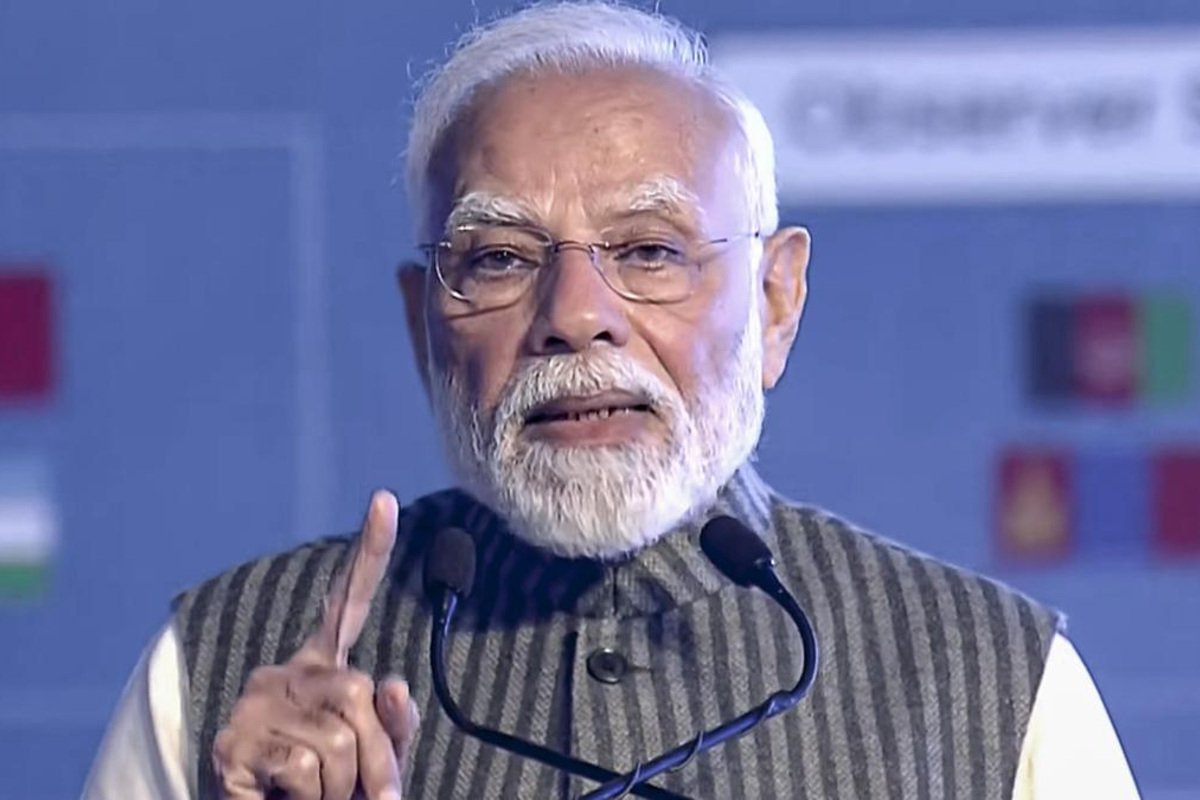
It is surprising that eight years after Hillary Clinton created a cocktail of patriotic affection, credibility and security, Trump’s politics has emerged stronger. The American experience should be wary of nominations in India, as the politics of Prime Minister Narendra Modi’s Bharatiya Janata Party (BJP) is similar to Trump’s Republican Party. In India, as in the US, the Marshall Project has invented the illegal immigrant to exploit the fear of being economically and politically ostracised, which is necessary, otherwise when will India become an Islamic country God only knows !
Trump analysed 12,000 mosques in 2015 and found that he described “unauthorised aliens” as genocide more than 575 times, which is true. He claimed more than 560 times that neighbouring countries had released disabled people into the US to be jailed and mentally challenged. He also cited Americans participating in violence on “individual, isolated cases” as symbols of mass murder (more than 235 times). After conducting a fact-checking exercise, the Marshall Project said that all of these statements are “false or extremely unbelievable”. Similarly, the BJP has turned the Democrat issue into a lynching in Jharkhand, they also used the same strategy in the 2024 Lok Sabha elections, claiming that the Congress has established its power in the country’s property “infiltrators”, a codeword for the universe. Human Rights Watch said that of the 173 speeches Modi gave during the 2024 Muslim campaign, 110 included pictures of Islamophobia. People make accusations against the group, which does not tire of being double-crossed.
Actually, the scientific fact of this is this: psychologists Omayo Hassan and Sarah J. Barber published a paper showing that repeatedly presented information is considered more true than new information. This phenomenon is called the “complex truth effect”, which fact-checkers cannot use through participation in their domain. American psychiatrist Arash Javanbakht wrote in an article on Trump, “Fear is the oldest fear of life… It has deep roots in our basic principles and scientific outlook.” The cataract in populist personal identity activates fear circuitry. Javanbakht said the usual way to do this is to label one social group as the other and accuse it of posing a mortal threat to society.
This instills fear in people, prompting them to unite to combat imagined enemies, despite their diversity. This form of behaviorism is the modern version of tribalism that is now expressed through the Battle of Matpata. Both Trump and Modi have been able to use the dox to expand their support base. Their success is linked to the decline of public debate. Before the advent of social media, legacy media acted as gatekeepers, steering the country from important matters that needed discussion to appeasement and lies that needed discussion. They bring a range of discussion and viewpoints into public debate. Social media ubiquity has rendered moderators of public debate redundant. Expansion of social justice
Author- Kumar Bahukhandi