Kumar Bahukhandi
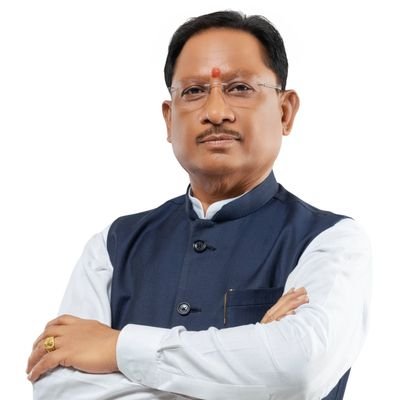
Chief Minister Vishnu Deo Sai flags off 57 mobile medical unit vehicles in Nava Raipur on Wednesday December 31, 2025 -Photo Credit -CG/PR
Regular healthcare services will be provided to over 2100 villages and settlements in 18 districts of the state
Raipur: Healthcare services will now reach the doorsteps of people in remote and densely forested tribal areas. Under the Prime Minister’s Tribal Justice Mega Campaign “PM Janman,” Chief Minister Vishnu Deo Sai flagged off 57 mobile medical unit vehicles in Nava Raipur on Wednesday December 31, 2025
. Health Minister Shyam Bihari Jaiswal, along with cabinet members, public representatives, and departmental officers and employees, were present at the event.
Preparations have been completed to provide regular healthcare services, especially to Particularly Vulnerable Tribal Groups (PVTGs), through the operation of these mobile medical units.
The government believes that this system will bring healthcare facilities directly to their villages and settlements, considering the difficulties faced by communities living in inaccessible areas in reaching hospitals.

CM Vishnu Deo Sai checking the medical facilities in the mobile van -Photo Credit CG/PR
The deployment of these mobile medical units will provide regular healthcare services to over 2100 villages and settlements in 18 districts of the state. This will directly benefit more than two lakh people belonging to Particularly Vulnerable Tribal Groups (PVTGs).
Chief Minister Vishnu Deo Sai said that treatment and diagnostic facilities will now be available in the villages themselves for families living in hilly and remote areas.
He described this initiative as a “solid foundation for the all-round participation and health security” of tribal communities.
Chief Minister Sai said that this is a proud day for Chhattisgarh. The people who are backward in every aspect – economic, social, and educational – are the people of the particularly vulnerable tribal groups. Out of the 3 crore population of Chhattisgarh, 230,000 people belonging to these particularly vulnerable tribal groups live in 2100 settlements across 18 districts.
These mobile medical units will prove to be a boon for them. This work will be made easier through 57 fully equipped mobile medical units. Each unit will have a doctor, nurse, lab technician, and local volunteers. This unit will provide 25 types of diagnostic tests and 106 types of medicines free of charge, CM Sai added.
Chief Minister Sai congratulated and extended his best wishes to Health Minister Shyam Bihari Jaiswal, CGMSC Chairman Deepak Mhaske, and all the officers and employees for this new scheme.
On this occasion, Health Minister Shyam Bihari Jaiswal said that Prime Minister Narendra Modi and Chief Minister Vishnu Deo Sai are working towards the upliftment of particularly vulnerable tribal groups.
This mobile medical unit is for remote forest areas where access to healthcare facilities is limited. Today, 57 mobile medical units are being dedicated to the entire state, which will fulfill the dream of Prime Minister Narendra Modi. Minister Jaiswal thanked Prime Minister Narendra Modi for giving Chhattisgarh the opportunity to contribute to this noble cause.
Health Secretary Amit Kataria said that Prime Minister Narendra Modi launched the PM Janman Yojana on November 15, 2023, for the social and economic upliftment of particularly vulnerable tribal groups. Its objective is to deliver basic facilities directly to the settlements.
He said that in emergency situations, it will be easier to transport patients to nearby health centers through these units. Our aim is not only to provide machines but also to ensure the availability of skilled and compassionate staff. Each mobile medical unit has a doctor, nurse, lab technician, pharmacist, and local health volunteers. These units will organise health camps every 15 days, where more than 25 types of tests and treatments for various diseases will be provided, and necessary medicines will be distributed. Seriously ill patients will be referred to the nearest health institutions as needed, Amit Kataria added.
It is worth mentioning that previously, due to a lack of resources, healthcare services could not reach remote areas regularly. Now, with the availability of new vehicles and trained personnel, this system can be operated continuously. This initiative will help in the timely identification and prevention of problems such as tuberculosis, malaria, anemia, and malnutrition.