Kumar Bahukhandi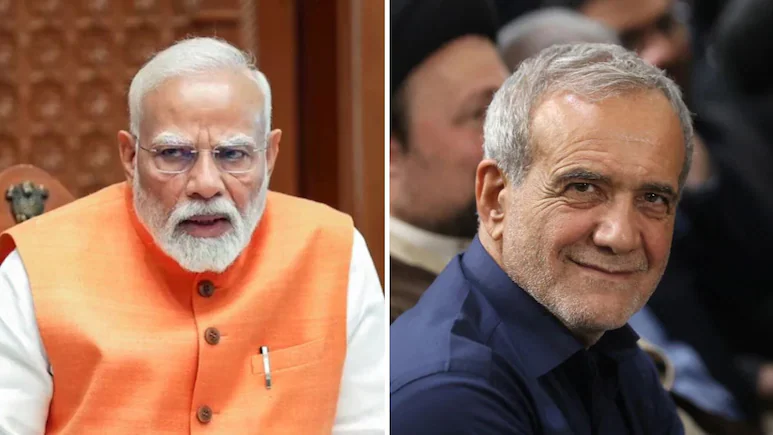
The PM also condemned attacks on critical infrastructure-Photo File .
“Reiterated the importance of safeguarding freedom of navigation,” Prime Minister Narendra Modi said after his conversation with Masoud Pezeshkian.
New Delhi: As Iran continues its chokehold on the vital Strait of Hormuz, Prime Minister Narendra Modi spoke to the country’s President, Masoud Pezeshkian, and reaffirmed the importance of safeguarding freedom of navigation on Sunday March 21, 2026 .
Following attacks by Israel on Iran’s largest gas field, South Pars, and retaliatory strikes, including on Qatar’s key Ras Laffan LNG complex, the Prime Minister also spoke out against the targeting of critical infrastructure, emphasising that it threatens stability and disrupts crucial supply chains.
In a post on X on Saturday, PM Modi wrote, “Spoke with President Dr. Masoud Pezeshkian and conveyed Eid and Nowruz greetings. We expressed hope that this festive season brings peace, stability and prosperity to West Asia. Condemned attacks on critical infrastructure in the region, which threaten regional stability and disrupt global supply chains.”
“Reiterated the importance of safeguarding freedom of navigation and ensuring that shipping lanes remain open and secure,” he said, adding that he appreciated Iran’s continued support for the safety and security of Indians in the country.
Nearly 20% of global oil and gas exports flow through the Strait of Hormuz, a narrow waterway between Oman and Iran. The stakes are even higher for India as roughly 40% of the oil, over 50% of the liquefied natural gas (LNG) and the bulk of the LPG that the country imports flow through this route.
In a statement on the conversation, the Iranian embassy in India said Pezeshkian emphasised that Iran had not started the war. Referring to India’s rotating presidency of BRICS, Pezeshkian called for the group to play an independent role in “halting aggressions against Iran and in safeguarding regional and international peace and stability”.
“Referring to his consultations and discussions with various world leaders, PM Modi emphasised that choosing the path of war is in no one’s interest; therefore, all parties should move toward peace as soon as possible,” the embassy said.
Centre On Energy Stocks
The Centre said on Saturday that the country has sufficient stocks of petrol and diesel, and domestic LPG production from refineries has been increased.
The Ministry of Petroleum and Natural Gas also announced that 5 kg Free Trade LPG (FTL) cylinders would be made available to migrant labourers.
“Government has already restored Partial Commercial LPG supply (20%) to consumers. Further, Government of India vide letter dated 18.03.2026 has proposed to allocate additional 10% of Commercial LPG to States/UTs based on ease of doing business reforms for PNG expansion,” the ministry said in a statement.
“The Government of India vide letter dated 21.03.2026 has allowed another 20% allocation of commercial LPG to States, which would take overall allocation to 50% (including 10% allocation based on ease of doing reforms for PNG expansion). This additional 20% allocation shall be given on priority to sectors like restaurants, dhabas, hotels, industrial canteens, food processing/dairy, subsidised canteens/outlets run by state governments or local bodies for food, community kitchens, 5 Kg FTL for migrant labourers,” it added.
Earlier Talks
In a conversation with Pezeshkian on March 12, the Prime Minister had expressed deep concern over the situation in the Middle East and called for the “unhindered” movement of energy supplies.
“The safety and security of Indian nationals, along with the need for unhindered transit of goods and energy, remain India’s top priorities. Reiterated India’s commitment to peace and stability and urged for dialogue and diplomacy,” PM Modi had said after the call.
(Source-AP)