Kumar Bahukhandi
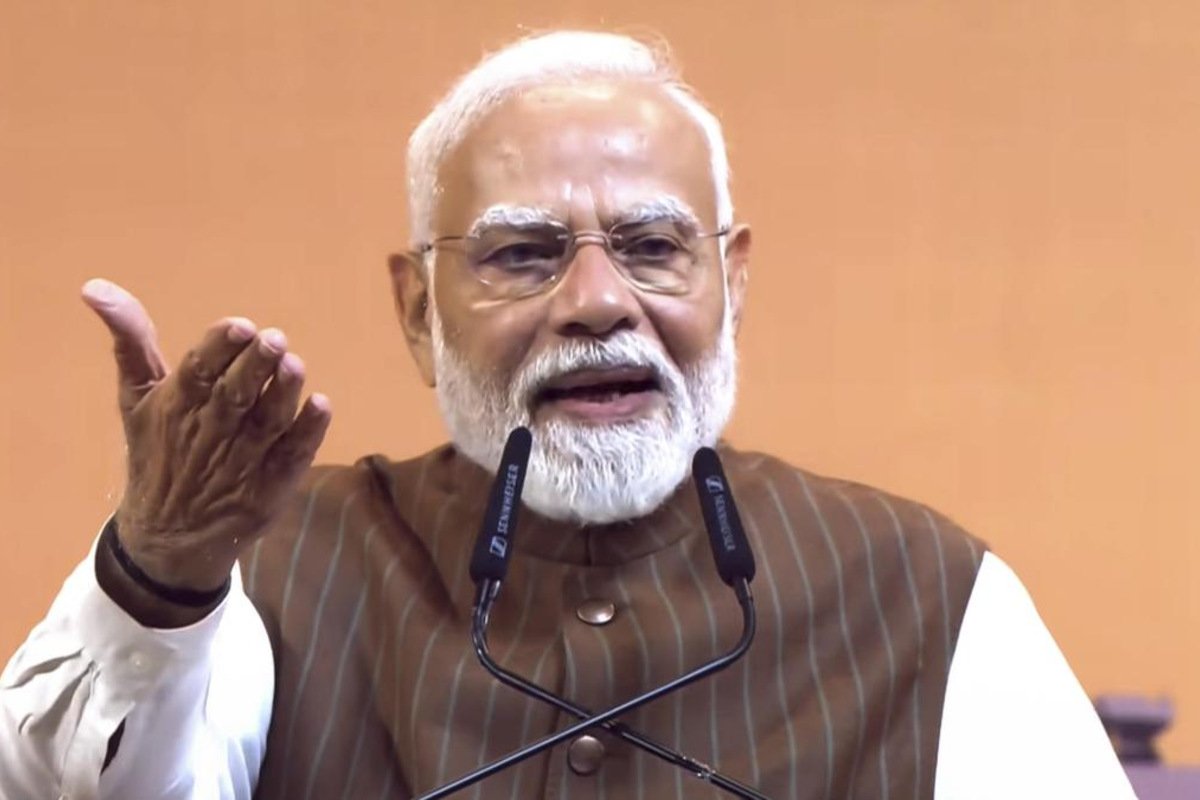
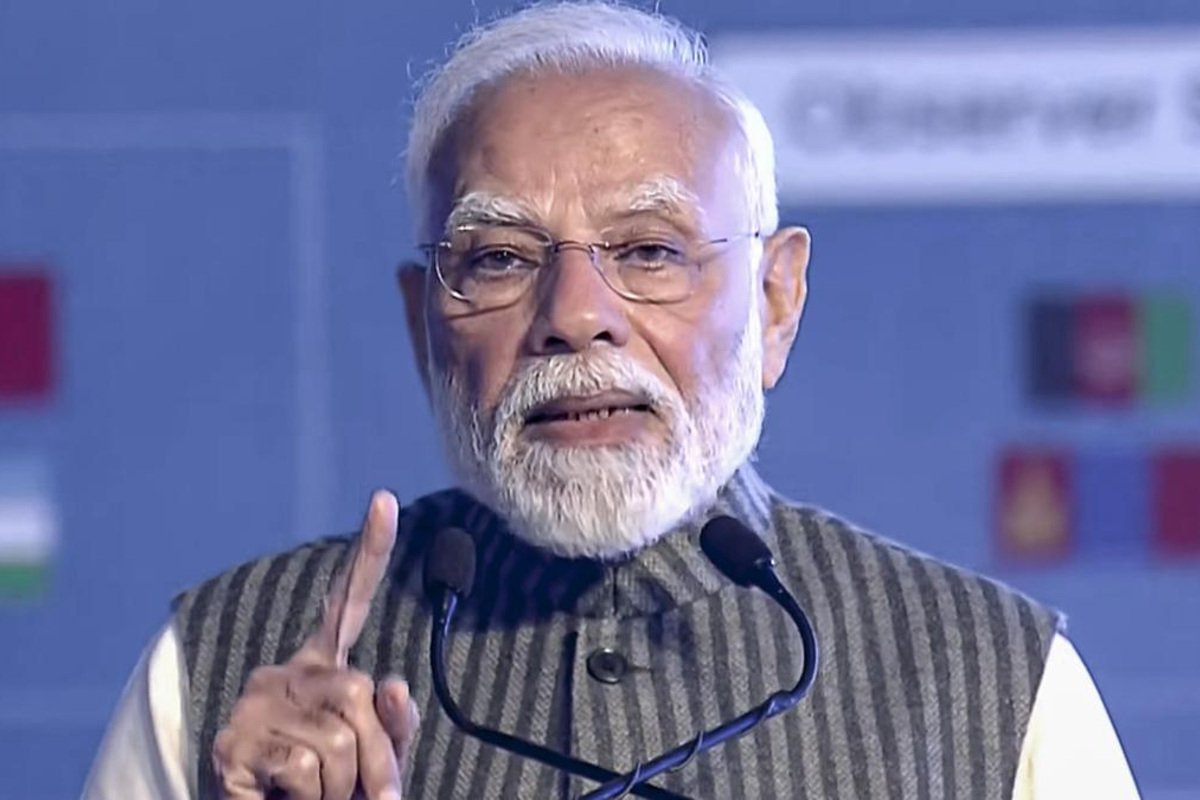
Prime Minister Narendra Modi addresses IIT Kharagpur’s platinum jubilee celebrations in Paschim Medinipur district, West Bengal, in a video released on 21 November 2026. (Video screengrab via @NarendraModi/YouTube)
Marking 75 years of India’s first IIT, the Prime Minister called on young engineers to turn research into new industries and put their skills to work on problems that matter to the country.
Key Highlights
- Prime Minister Narendra Modi addressed IIT Kharagpur’s platinum jubilee celebrations in West Bengal on 21 November 2026.
- He cited India’s semiconductor push as an example of entering a field despite doubts about whether the country had arrived too late.
- The institute was formally inaugurated by Maulana Abul Kalam Azad in 1951 and began teaching at the former Hijli Detention Camp.
Kharagpur: Prime Minister Narendra Modi urged students at IIT Kharagpur on Saturday to question the limits they place on their ambitions, using the platinum jubilee of India’s first Indian Institute of Technology to make a wider point about the country’s appetite for difficult technological work. Addressing students and alumni in West Bengal’s Paschim Medinipur district, he said the institute’s experience over 75 years would help shape India’s research, innovation and development in the years ahead.
“There are no limits to what young minds can achieve,” Modi said. He described limiting beliefs as assumptions that can narrow what people expect of their own abilities and what a country believes it can accomplish. To the students, his message was to look beyond familiar problems and career paths. To the institution, it was to apply decades of experience to fields in which India is still building its capabilities.
From chips to ships, a challenge for young engineers
Modi used semiconductors to illustrate the difference between entering a field late and deciding that it is already too late to enter. He recalled the doubts that greeted India’s Semiconductor Mission, including questions over whether the country should invest in an industry with established global players. He said India was now exporting chips and expanding manufacturing facilities. For the students listening to him, the example connected a national industrial policy with the kind of engineering and entrepreneurial decisions they could face in their own careers.
He described the range of opportunities as running “from chips to ships”. The phrase brought together industries that pose very different engineering problems. Chipmaking depends on precision at microscopic scales, while shipbuilding requires teams to integrate large structures, propulsion and other systems. Both demand the ability to carry a design through testing and into production, which gives technical institutes a role beyond training graduates for existing jobs.
Modi also urged students to adopt a “Nation First” outlook. He argued that working on problems with a public purpose could open career and business opportunities while benefiting the country. He linked that approach to the goal of Viksit Bharat, saying IIT Kharagpur’s contribution to national development would grow as India pursued new areas of research and industry.
How a former detention camp became India’s first IIT
The site of the celebrations has a history that predates the institute. The British administration used the Hijli Detention Camp to hold freedom fighters. After Independence, the building was adapted for classrooms, laboratories and offices. Maulana Abul Kalam Azad formally inaugurated the institute on 18 August 1951. Its first academic session began with 224 students and 42 teachers across ten departments.
The institute grew out of a plan for advanced technical education to serve India’s industrial development. The committee chaired by N.R. Sarkar had envisaged institutions that would train engineers while conducting research and preparing future researchers and teachers. In 1956, Parliament declared IIT Kharagpur an institution of national importance. What began in a repurposed building in Hijli provided the starting point for the IIT system.
That early emphasis on research gives the jubilee a practical question for the institute’s next generation. Its founders had to build a system for advanced technical education when India had few institutions equipped for such work. Today’s students enter a much larger system. The challenge Modi put before them was to use that capacity to solve problems that established industries and institutions have yet to address.
West Bengal Governor R.N. Ravi and Chief Minister Suvendu Adhikari were among those acknowledged at the event. Modi closed his address by invoking Swami Vivekananda’s call to persevere until the goal is reached.