Kumar Bahukhandi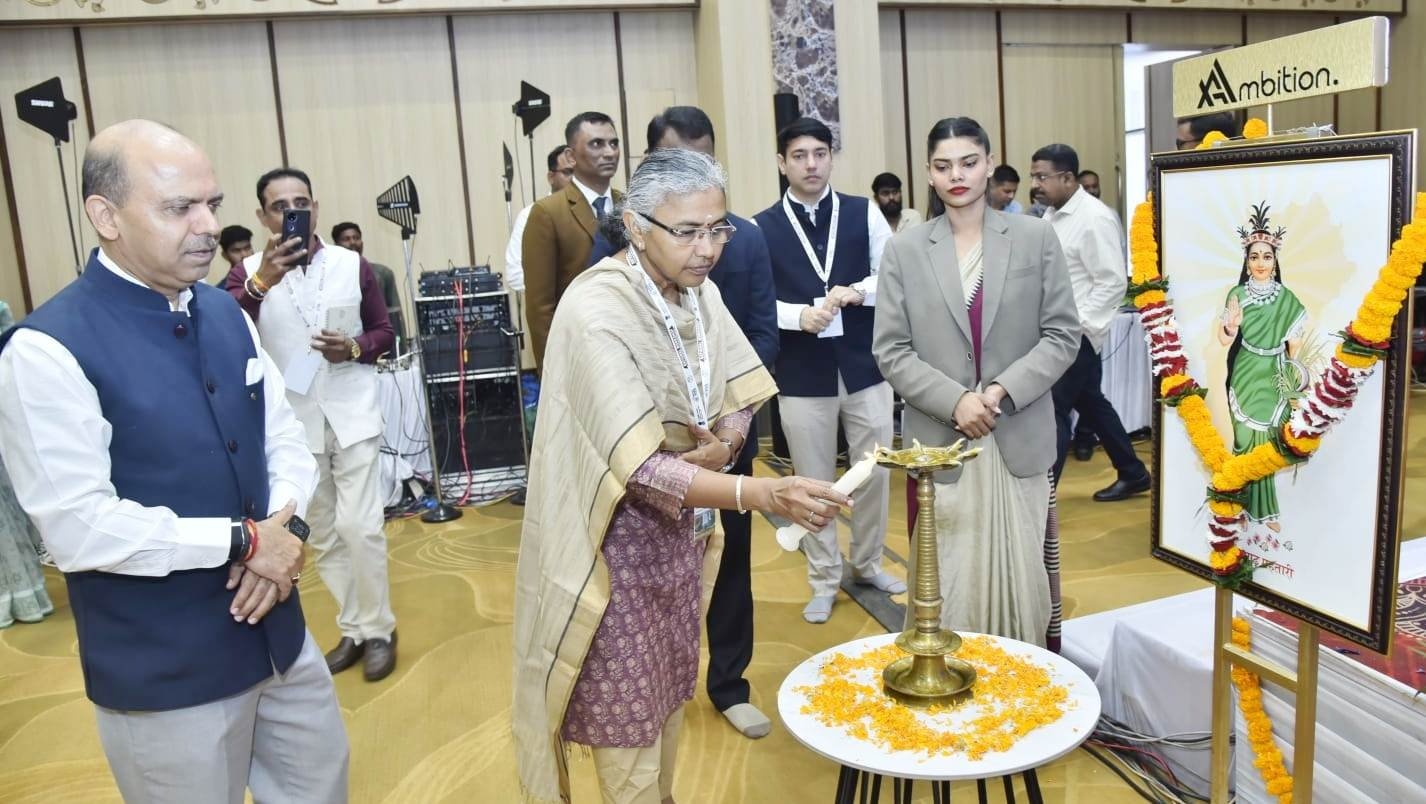
The National Review Conference on ‘Sahakar Se Samriddhi’ is inaugurated with the ceremonial lighting of the lamp in Jagdalpur, Bastar, on Thursday, October 8, 2026. Senior officials from the Centre and states are participating in the two-day conference on expanding the impact of cooperative transformation. Photo: channel24india.com via CG/DPR
Two-day national deliberation in Jagdalpur brings Centre, states and cooperative institutions together; Cooperation Secretary Ashish Kumar Bhutani says cooperative movement must deliver measurable benefits to people at the last mile
Key Highlights
- Two-day National Review Conference on ‘Sahakar Se Samriddhi’ begins in Jagdalpur on October 8.
- Conference focuses on expanding the impact of cooperative transformation to remote, aspirational and tribal regions.
- Union Cooperation Secretary Dr Ashish Kumar Bhutani stresses last-mile delivery as the true measure of cooperative success.
- Centre pushes expansion and diversification of multipurpose PACS, digitisation and decentralised grain storage.
- Chhattisgarh says more than 500 new multipurpose PACS have already been constituted.
- State outlines opportunities in dairy, fisheries, minor forest produce, processing and value addition.
- Tamil Nadu shares its one-, three- and five-year cooperative planning model.
- Conference is being held in Bastar shortly after severe flooding affected the region.
Jagdalpur: Bastar became the venue for a national conversation on the future of India’s cooperative movement on Thursday as senior officials from the Centre and states gathered in Jagdalpur for the two-day National Review Conference on ‘Sahakar Se Samriddhi’, with discussions centred on taking economic opportunities generated through cooperatives to remote, tribal and aspirational regions.
Organised by the Union Ministry of Cooperation on October 8-9, the conference is focusing on “The Road Ahead: Scaling Impact through Cooperative Transformation.”
The meeting assumes particular significance for Bastar, where a national-level deliberation of this scale by a Union ministry is being held against the backdrop of efforts to expand economic opportunities and institutional access in tribal and remote areas.
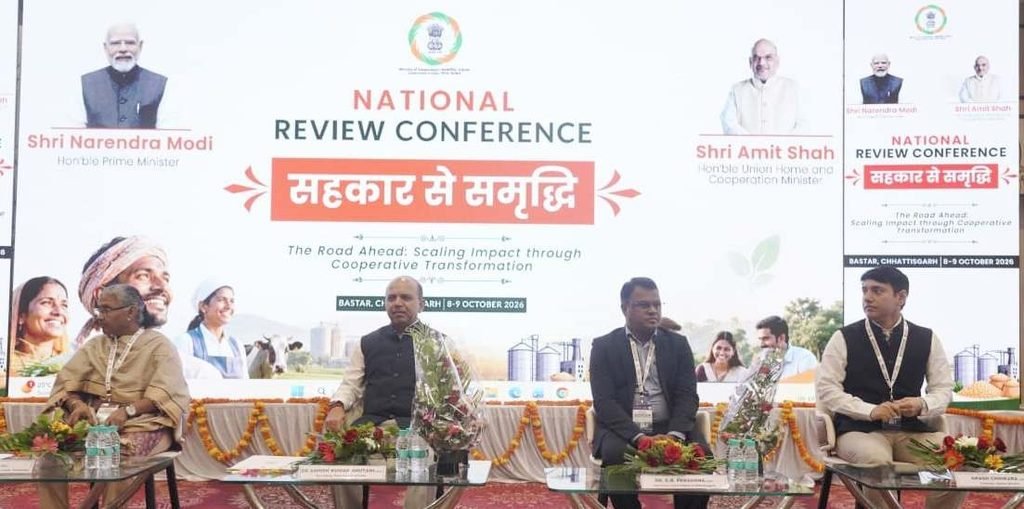
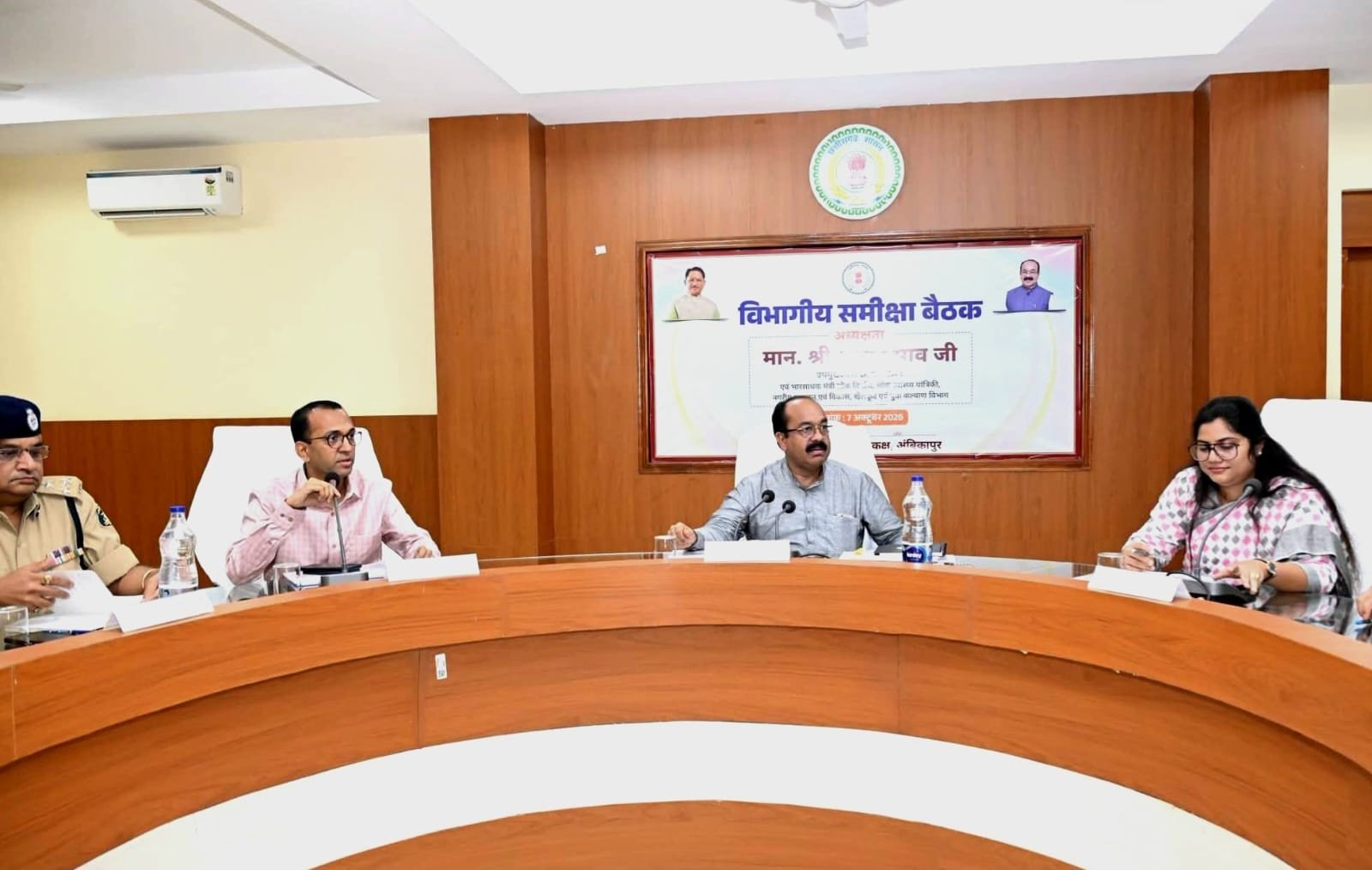
Senior officials participate in the National Review Conference on ‘Sahakar Se Samriddhi’ in Jagdalpur on Thursday, October 8, 2026 . The two-day deliberation is focused on scaling cooperative transformation and extending its economic benefits to remote and tribal regions. Photo: channel24india.com via CG/DPR
The conference is being organised under the broader cooperative policy framework led by Union Home and Cooperation Minister Amit Shah.
‘Last-Mile Benefit is the Real Test of Cooperation’
Addressing the conference, Union Cooperation Secretary Dr Ashish Kumar Bhutani said the cooperative movement would achieve its purpose only when its impact became visible at the grassroots and benefits reached people at the last mile.
Drawing a comparison with the development momentum witnessed in Assam following improvements in the security situation, Bhutani said a positive transformation was also becoming visible in Bastar.
He identified Primary Agricultural Credit Societies (PACS) as a critical component of the rural economy and emphasised the need to expand their functions beyond their conventional role.
🔴 “The relevance of cooperation will be established only when its impact is visible at the grassroots and its benefits reach people at the last mile,” Bhutani said.
The national strategy includes establishing two lakh new multipurpose PACS, accelerating their digitisation and enabling them to function as Common Service Centres.
Bhutani also stressed implementation of the world’s largest decentralised grain-storage programme and diversification of PACS with support from institutions including NABARD, the National Cooperative Development Corporation and the National Dairy Development Board.
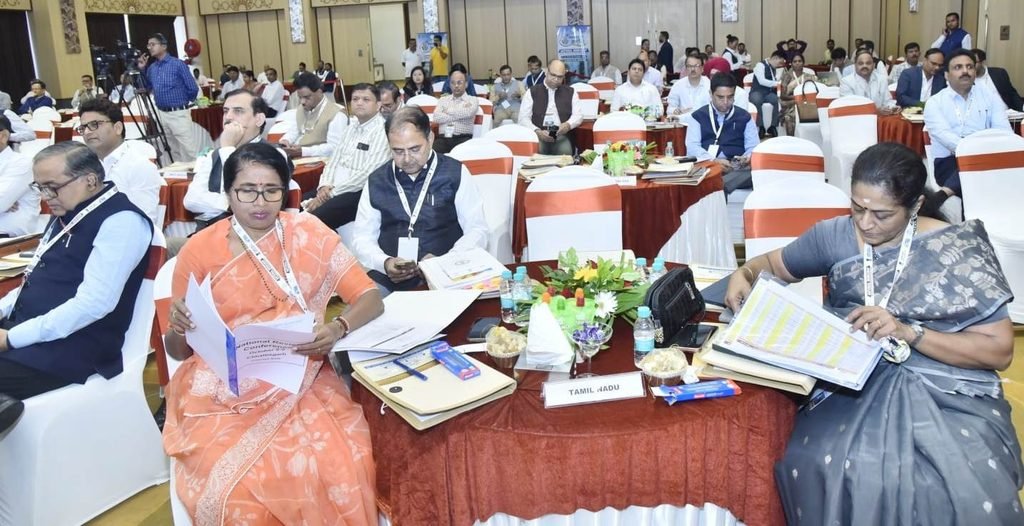
Delegates from different states attend the ‘Sahakar Se Samriddhi’ National Review Conference in Jagdalpur, Bastar, on October 8, 2026. Officials are sharing state experiences and strategies for strengthening grassroots cooperative institutions. Photo: channel24india.com via CG/DPR
He suggested that cooperatives should also explore emerging opportunities in sectors such as electric mobility while strengthening transparency and financial management in cooperative banking.
Chhattisgarh Looks Beyond Fertiliser and Credit
Joining the conference through video conferencing, Chhattisgarh Chief Secretary Vikas Sheel said cooperatives should no longer remain confined to their traditional functions of distributing fertilisers and providing agricultural credit.
Instead, he outlined a model in which cooperatives become instruments for diversification of the rural economy, processing and value addition.
According to the state government, more than 500 new multipurpose Primary Agricultural Credit Societies have been constituted in Chhattisgarh, while similar efforts are being extended to dairy, fisheries and minor forest produce.
The societies are also being equipped with digital services, including micro-ATMs and Common Service Centre facilities, enabling them to provide citizen services while creating additional sources of revenue.
The approach seeks to transform the local cooperative institution from primarily a credit-delivery mechanism into a broader rural service and economic centre.
Ethanol Plants Cited as Examples of Value Addition
Discussing industrial expansion linked with agriculture, the Chief Secretary referred to the maize-based ethanol plant in Kondagaon and the sugarcane-based ethanol plant in Kawardha.
He said supply chains were being strengthened with national cooperative institutions such as NAFED, NCCF and BBSSL, drawing upon cooperative models developed in states including Gujarat and Maharashtra.
The objective, according to the presentation, is to achieve greater economies of scale and ensure that farmers and primary producers participate in value addition rather than remaining confined to the first stage of production.
For a state such as Chhattisgarh—with a substantial rural and tribal population and significant forest produce—the diversification of cooperatives into processing and marketing could potentially create additional avenues for local livelihoods.
Tamil Nadu Shares Long-Term Cooperative Model
The national conference is also intended as a platform for states to exchange experiences rather than follow a single administrative model.
Tamil Nadu Additional Chief Secretary for Cooperation P. Amudha told participants that her state had developed one-year, three-year and five-year vision documents, along with detailed action plans based on the Centre’s guidelines.
She said Tamil Nadu’s cooperative network was coordinating with major national institutions to create stronger and more competitive markets for products originating from primary cooperative societies.
The presentation highlighted the importance of connecting grassroots cooperatives not only with government programmes but also with viable markets.
A Conference Held Days After Bastar Floods
There was another dimension to the choice of Jagdalpur as the venue.
Chhattisgarh Cooperation Secretary Dr C.R. Prasanna, speaking at the opening session, recalled that barely a fortnight earlier, parts of Bastar had been dealing with severe flooding and waterlogging.
According to Prasanna, even the conference venue had remained under water for several days.
He credited the district administration and other teams with restoring the premises within a short period and preparing it for a national-level conference.
For Prasanna, the rapid restoration reflected what he described as Bastar’s resilience and determination to move beyond the difficulties that have affected the region.
He expressed confidence that opportunities within the cooperative sector could contribute to strengthening local livelihoods as Bastar moves further into the development mainstream.
Cooperatives Display Products, Innovations
The conference began with a short film showcasing innovations being undertaken in India’s cooperative sector.
Cooperative societies and institutions have also established stalls at the venue to display their products and initiatives.
Over the two days, officials from different states are scheduled to share their experiences and discuss innovations, institutional reforms and methods of expanding cooperative activity.
The broader discussions are expected to examine how cooperatives can move beyond conventional credit and input distribution to participate in storage, processing, marketing, digital services, dairy, fisheries and other economic activities.
Bastar Commissioner Doman Singh, Collector Akash Chhikara, senior Union government officials, cooperation secretaries and registrars from different states and representatives of cooperative organisations are participating in the conference.
The choice of Bastar for the deliberations gives the conference a particular context. The larger test of ‘Sahakar Se Samriddhi’ will ultimately lie not merely in expanding the number of cooperative institutions but in whether those institutions can create sustainable income, services and economic opportunities in precisely the remote communities the conference has placed at the centre of its discussions.