Kumar Bahukhandi
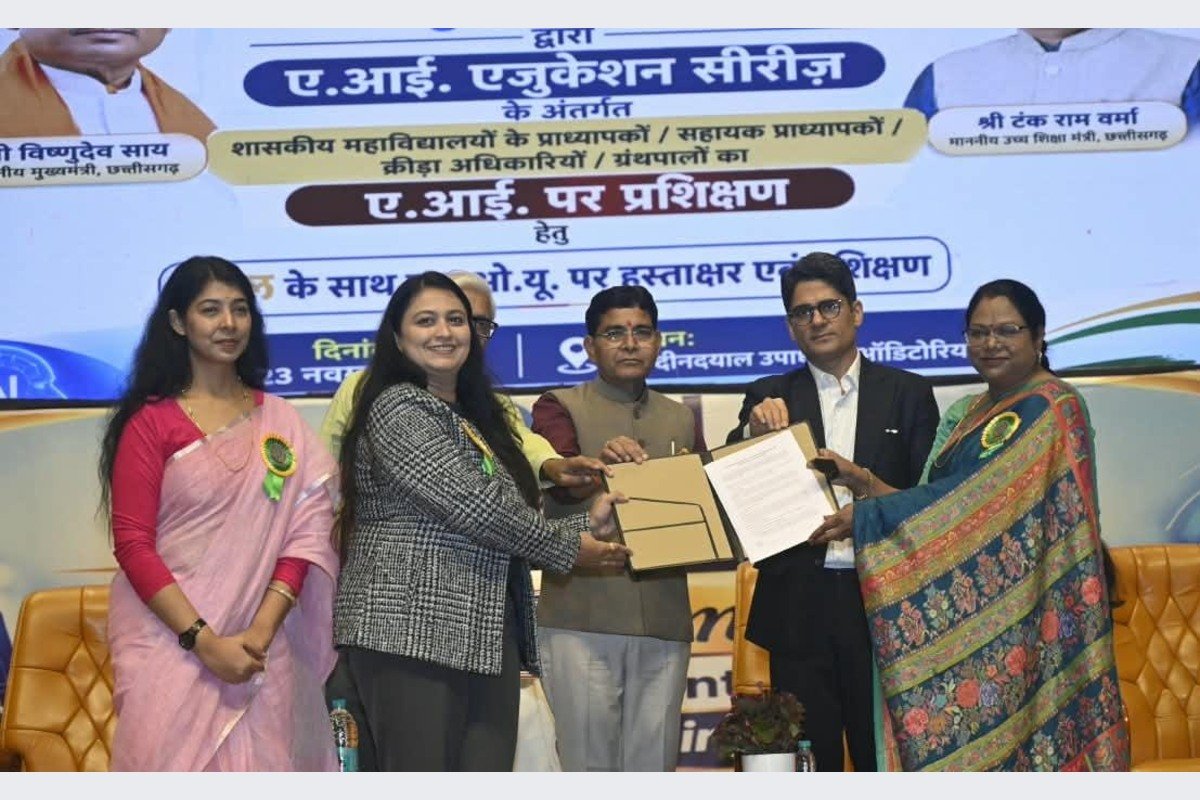
Higher Education Minister Tank Ram Verma (centre) joins representatives of Chhattisgarh’s Higher Education Department and Google for Education as they hold up the MoU documents at the Deen Dayal Upadhyay Auditorium in Raipur on 23 November 2026. Photo: channel34india.com via CG/PR.
Higher Education Minister Tank Ram Verma says AI can give teachers more ways to explain a difficult lesson, reach students in different languages and offer better feedback. The first workshop brings together more than 500 participants from 22 Raipur colleges.
Key Highlights
- Chhattisgarh’s Higher Education Department signed a memorandum of understanding with Google for Education to support teaching, research and administration.
- The initial workshop covers more than 500 teachers and officials from 22 colleges in Raipur district, along with more than 50 officers and staff from the Directorate of Higher Education.
- Ten in-person follow-up sessions are planned for departmental officers and staff, with online training available as needed.
- Verma urged teachers and staff to verify AI-generated information before using it in classrooms, research or official work.
Raipur: A teacher who finds another way to explain a difficult idea can give a student the confidence to ask the next question. That was the role Higher Education Minister Tank Ram Verma placed at the centre of Chhattisgarh’s partnership with Google for Education, announced at an MoU signing and AI training programme at the Deen Dayal Upadhyay Auditorium on 23 November 2026.
Verma said a good teacher helps students think, understand, question and find the confidence to move forward. “AI is not a substitute for teachers. It is a tool that can multiply their capacity, creativity and effectiveness in the classroom,” he said.
More ways to reach students
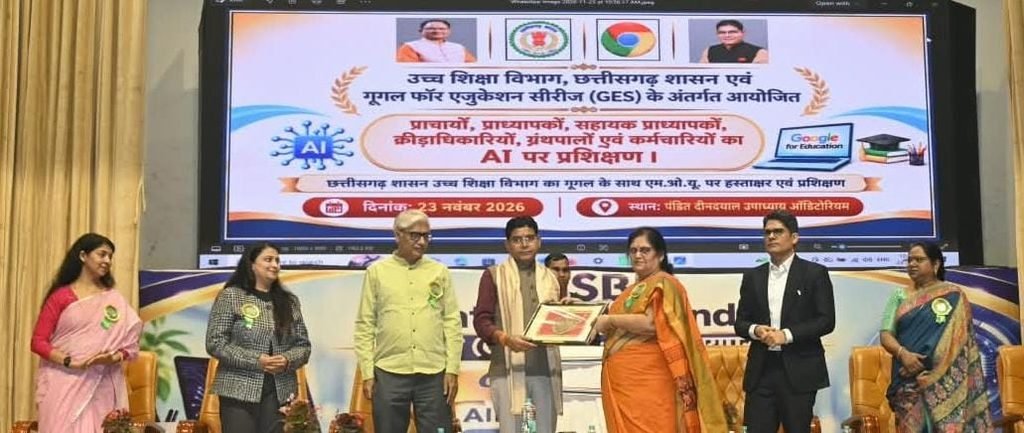
Higher Education Minister Tank Ram Verma (centre) stands with guests and organisers during a memento presentation at the AI training and MoU signing programme at the Deen Dayal Upadhyay Auditorium in Raipur on 23 November 2026. Photo: channel24india.com via CG/PR
Verma said AI could help faculty prepare multilingual study material, develop lesson plans and make complex subjects easier to understand. He also pointed to potential uses in assessment, feedback and research. In a state with varied linguistic, social and geographical conditions, he said, teaching resources in more languages could help colleges reach a wider range of students.
The initiative also covers non-teaching staff. Verma said AI could assist with correspondence, document preparation and information analysis, giving staff more time to attend to other work. He asked participants to apply what they learn to everyday academic and administrative tasks at their institutions.
Training to continue after the first workshop
The first workshop is training more than 500 teachers and officials from 22 colleges in Raipur district, as well as more than 50 officers and employees from the Directorate of Higher Education. The department plans 10 further in-person sessions for officers and staff, with online training available where needed.
Verma said the initiative, undertaken under Chief Minister Vishnu Deo Sai’s leadership, is in keeping with the National Education Policy 2020’s emphasis on using technology in education. He urged teachers and officials to help colleagues understand where AI can assist them and where its output needs closer scrutiny.
Teachers and officials urged to check AI output
The minister cautioned that AI-generated information can contain errors. He asked participants to check it before using it in teaching, research or official records. For teachers preparing study material or assessing student work, that means reviewing what the tool produces before passing it on to learners.
Higher Education Secretary Avinash Champawat, Higher Education Commissioner Rita Yadav, Rungta International Skills University Vice-Chancellor Dr Jawahar Surisetti and Google for Education’s India Digital Transformation Lead Esha Porwal Jain attended the programme, along with college principals, faculty members, librarians, sports officers and departmental staff.