Kumar Bahukhandi
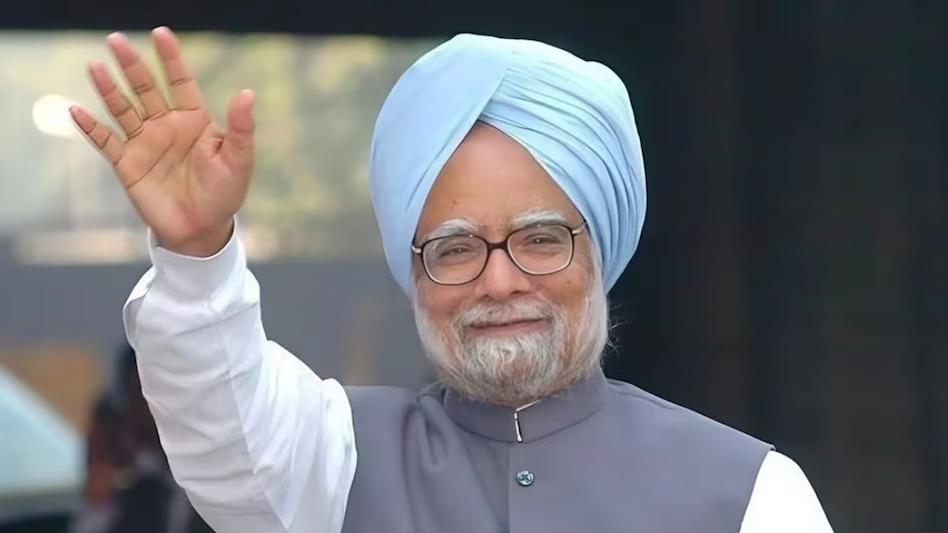
Former Prime Minister of India Dr. Manmohan Singh. (PTI Photo)
The farmer loan waiver done during the UPA-1 government led by Manmohan Singh also proved to be a game changer in the 2009 Lok Sabha elections. With the victory in the 2009 general elections, the Congress-led coalition formed the government for the second consecutive time and Manmohan Singh’s name was also recorded as the first Prime Minister after Pandit Jawaharlal Nehru to get the mandate to form the government for the second consecutive time after running the government for five years.
The country is mourning the death of former Prime Minister Dr. Manmohan Singh. There is a seven-day national mourning in the country and from the ruling Bharatiya Janata Party (BJP) to the opposition Congress and other parties, all the top leaders reached Dr. Singh’s residence and paid tribute. PM Modi has said in his condolence message that the country has lost a special leader. Leader of Opposition in Lok Sabha Rahul Gandhi has described Dr. Singh as his guru and said that I have lost my guide. From politicians to common citizens, everyone is paying tribute to the former Prime Minister by remembering his stories and his simplicity. Former PM Dr. Manmohan Singh is also being described as the father of economic liberalization, the architect of globalization. How was the journey of Dr. Manmohan Singh from an economist to the Finance Minister and the Prime Minister?
Manmohan Singh was a doctor of economy
Economics DPhil Doctor Manmohan Singh brought about radical changes from Assistant Secretary in the Planning Commission to Governor of the Reserve Bank, Deputy Chairman of the Planning Commission, Finance Minister and then as Prime Minister. Dr Singh took over as RBI Governor on 16 September 1982 and remained on this post till 14 January 1985. During Dr Singh’s tenure as RBI Governor, many legal reforms took place in the banking sector, the foundation of the Urban Bank Department was laid and a new chapter was added to the RBI Act. Dr Singh, who was in favour of autonomy of banks, had made the provision that banks will have to keep 36% of their total deposits with the government in the form of security bonds. This is called SLR (Statutory Liquidity Ratio ).
In the year 1985, the Rajiv Gandhi-led government appointed Dr. Manmohan Singh as the Deputy Chairman of the Planning Commission. Manmohan Singh, who was the Deputy Chairman of the Planning Commission till 1987, focused on rural economy and development. As RBI Governor and Deputy Chairman of the Planning Commission, Dr. Singh took reformist steps and when the country was in the vortex of economic crisis in the 1990s, as Finance Minister, he took such decisions that completely changed the picture of the Indian economy. Manmohan’s decisions contributed a lot in bringing the country out of the economic crisis and laid the foundation stone for the construction of a new India.
In his very first budget speech as Finance Minister, Dr. Singh announced the abolition of license raj and opening the economy for foreign investment. He started the era of liberalization, privatization and globalization which completely changed the fate and picture of the Indian economy. As Finance Minister, Manmohan Singh’s decisions proved successful in bringing the crashed and on the verge of bankruptcy Indian economy back on track. In a difficult time, Manmohan Singh proved to be a doctor for the Indian economy.
Game changer of politics
When Dr. Manmohan Singh entered politics, it was the era of Mandal and Kamandal politics. Dr. Singh also gave prominence to development amidst Mandal-Kamandal politics. This changing mode of game changer of politics, Dr. Singh, continued till he became the Prime Minister. When Manmohan Singh became the Prime Minister in 2004, coalition politics was in full swing. The government was considered to be dominated by the constituent parties more than the Prime Minister and the leading party. In such a period, Dr. Singh, instead of bowing to the pressure of opposition and withdrawal of support from allies and withdrawing the step on the civil nuclear agreement with America, chose the path of taking it to fruition by putting power at stake. During the tenure of Manmohan Singh’s government, laws like Mahatma Gandhi National Rural Employment Guarantee, Right to Education, Right to Information, Food Security came into force and Aadhar card came and the talk of direct cash benefit started.
The farmer loan waiver done during the UPA-1 government led by Manmohan Singh also proved to be a game changer in the 2009 Lok Sabha elections. With the victory in the 2009 general election, the Congress-led coalition formed the government for the second consecutive time and Manmohan Singh was also recorded as the first Prime Minister after Pandit Jawaharlal Nehru to get the mandate to form the government for the second consecutive time after running the government for five years.
Born in Pakistan
Dr. Manmohan Singh was born on 26 September 1932 in Gah village of Punjab province of undivided India, which is now a part of Pakistan. Dr. Singh did his early education from the primary school of Gah village. At the time of partition, Dr. Singh’s family settled in Amritsar. Manmohan Singh studied BA Honors and MA in Economics from Hindu College, Amritsar and after this went to Britain for further studies. Manmohan Singh studied Economics from St. John’s College of Cambridge University and did DPhil in Economics from Nuffield College of Oxford University.