Kumar Bahukhandi
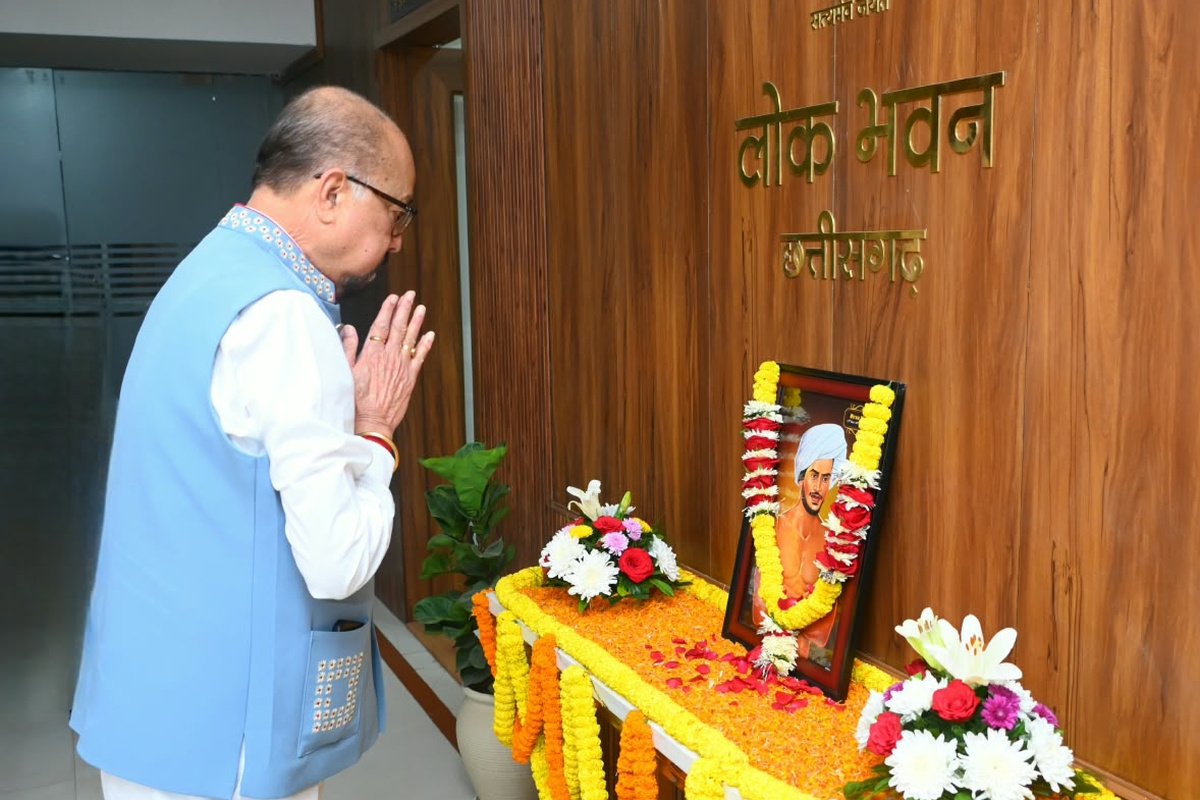
Governor Ramen Deka pays tribute with folded hands before the garlanded portrait of Bhagwan Birsa Munda on his 151st birth anniversary at Lok Bhavan, Raipur, on Sunday, 15 November 2026. Photo: channel24india.com via CG/DPR
Marking the freedom fighter’s 151st birth anniversary, Deka extended Janjatiya Gaurav Diwas greetings to people across Chhattisgarh and the country, with special wishes for tribal communities.
Key Highlights
- Governor Ramen Deka offered flowers at Bhagwan Birsa Munda’s portrait at Lok Bhavan in Raipur on Sunday, 15 November 2026.
- Deka extended Janjatiya Gaurav Diwas greetings to tribal communities across the country.
- The Governor’s Secretary, Dr C. R. Prasanna, and Lok Bhavan officials and staff attended the tribute.
Raipur: Governor Ramen Deka paid tribute to Bhagwan Birsa Munda on his 151st birth anniversary at Lok Bhavan on Sunday, 15 November 2026. He offered flowers at the freedom fighter’s garlanded portrait and stood before it with folded hands.
Deka extended Janjatiya Gaurav Diwas greetings to the people of Chhattisgarh and the country, conveying his special wishes to members of tribal communities. The Governor’s Secretary, Dr C. R. Prasanna, joined Lok Bhavan officials and staff at the ceremony.
Why Birsa Munda’s birth anniversary is observed
The Union government designated 15 November as Janjatiya Gaurav Diwas in 2021. It chose Birsa Munda’s birth anniversary to recognise the role of tribal freedom fighters in India’s struggle against colonial rule and the contributions of Adivasi communities to the country’s cultural heritage
Birsa Munda, revered as Dharti Aaba, led a movement in Chotanagpur at a time when Adivasi cultivators faced rising rents, forced labour and threats to their customary land rights. He argued that the land belonged to the people who had cleared and cultivated it. That demand was central to the Ulgulan, the uprising of 1899–1900. British authorities imprisoned Birsa, and he died in custody in June 1900.
In Chhattisgarh, the observance also calls attention to the state’s own history of resistance, from Shaheed Veer Narayan Singh’s struggle in 1857 to Bastar’s Bhumkal uprising in 1910. In Bastar, changes to forest management and rent collection affected how families made a living and challenged customary ways of life. These histories give local meaning to Birsa Munda’s defence of the land and livelihoods of Adivasi communities.