Kumar Bahukhandi
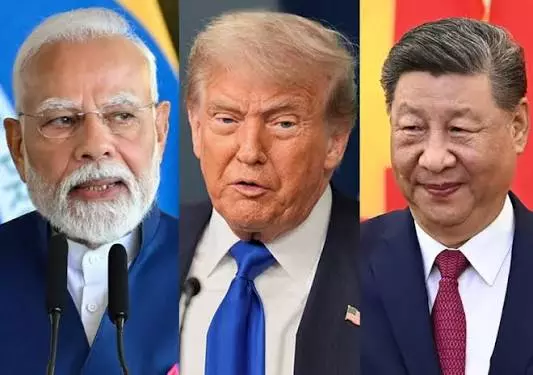
The FT has compared the emerging China-US Great Game to the British-Russian Great Game of the 19th century. The two big powers of the 19th century were engaged in a global campaign for influence in which colonial India was the prize. It was not the Russians who grabbed India away from the Brits but Indian nationalists led by Mahatma Gandhi. — Internet
Author
I have a chapter titled “Indians in MAGA” that makes this very point. That the Indian diaspora has contributed billions of dollars to the US economy and constitutes an important force in “making America great again” (MAGA). It is a pity that neither the government nor academic economists have estimated the total contribution of the Indian diaspora to the US economy
Merely because one is driving on a plateau does not mean that the road would not have its ups and downs. That’s what Indian and American officials are finding out as they manoeuvre their way around blind curves and potholes on a road described by none other than finance minister Nirmala Sitharaman as being on a “plateau”.
Three days after Piyush Goyal, Union minister for commerce, declared that an India-United States trade deal was all “done and dusted”, the US trade representative, Jamieson Greer said the deal was “not imminent”.
Before the dust on that kick up had settled US vice-president J.D. Vance declared that American workers in the information technology industries would not be allowed to yield their jobs to “indentured servants”. The external affairs ministry was quick to reject these words as “unwarranted”.
Making a point that my recent book, Secession of the Successful: The Flight Out of New India, underscores on Indian diaspora in the US, the MEA spokesman drew attention to the contribution of “highly educated and skilled” Indians to the US economy and innovation ecosystem.
I have a chapter titled “Indians in MAGA” that makes this very point. That the Indian diaspora has contributed billions of dollars to the US economy and constitutes an important force in “making America great again” (MAGA).
It is a pity that neither the government nor academic economists have estimated the total contribution of the Indian diaspora to the US economy. In response to President Donald Trump’s continued criticism of the trade surplus that India enjoys in its bilateral trade with the US, the point ought to be made that this is more than compensated by the contribution that Indian Americans have made to the US economy.
There is little point in a foreign ministry spokesperson decrying “unwarranted” the comments of a US politician. Much more effective would have been an exercise that shows how many trillion dollars Indian Americans have contributed to MAGA. The US is a nation built by immigrants and even today its most advanced industries are being driven by immigrant talent. So playing the anti-immigrant card for short term political gain is not going to help. But that is America’s problem.
As for us in India, we need to free ourselves from the dependency syndrome that many among our policy elites and aspirational middle classes have imprisoned themselves in, believing that the US would help us deal with adversaries, with China’s growing power and with high technology, and offer us a free ride to Viksit Bharat.
Ain’t gonna happen. President Trump is focused purely on the American interest. That is entirely understandable. After all he was returned to office to “Make America Great Again”. Prime Minister Narendra Modi wrongly imagined that MAGA and MIGA (make India great again) were two hands of the same body.
Sure, that view was what underwrote the India-US civil nuclear energy deal and the India-US strategic partnership under President George Bush. But that movie is over. Over the past decade successive US administrations have sent us invoices for partnership. We paid up on some, buying defence equipment, reducing tariffs on some products, cutting off oil purchases from Iran and Venezuela, and so on.
Each time a subservient Indian elite fed the ego of a greedy and powerful US elite, they asked for more. Funnily, though, the turning point came when Mr Trump mocked India with a poke in the eye — inviting a Pakistani general for lunch at the White House. Nothing wakes up the Hindutva leadership like a Pakistani.
Things have gone downhill since then. Some in Delhi’s policy circles still hope that after the mid-term elections we will meet a friendlier Trump. Some imagine that after Mr Trump’s term is over a new American leadership will revert to the old script. It is now clear that at least some in the policy making circles do not think so.
The sober views expressed by external affairs minister S. Jaishankar at the Asia Society in New York suggest there is some rethinking. Perhaps the rethinking has been prompted by an assessment of where the US-China relationship is headed. Going forward it would seem that India will continue to buy some defence equipment or other to make sure that the US share of India’s defence imports does not go below the 10 per cent level where it is now at.
India is unlikely to buy any major platform. No fighter jets please. But, for a few dollars more Pentagon and Mr Trump’s billionaire friends will be kept happy. That allows some retired Indian diplomats and policy analysts to remain in play as lobbyists for American arms exporters. The US may even play along with India to keep the four-nation Quad alive. The US secretary of state, Marc Rubio, is expected to be in New Delhi. He may announce that on the sidelines of the G-20 summit in the US this December there would be a Quad summit.
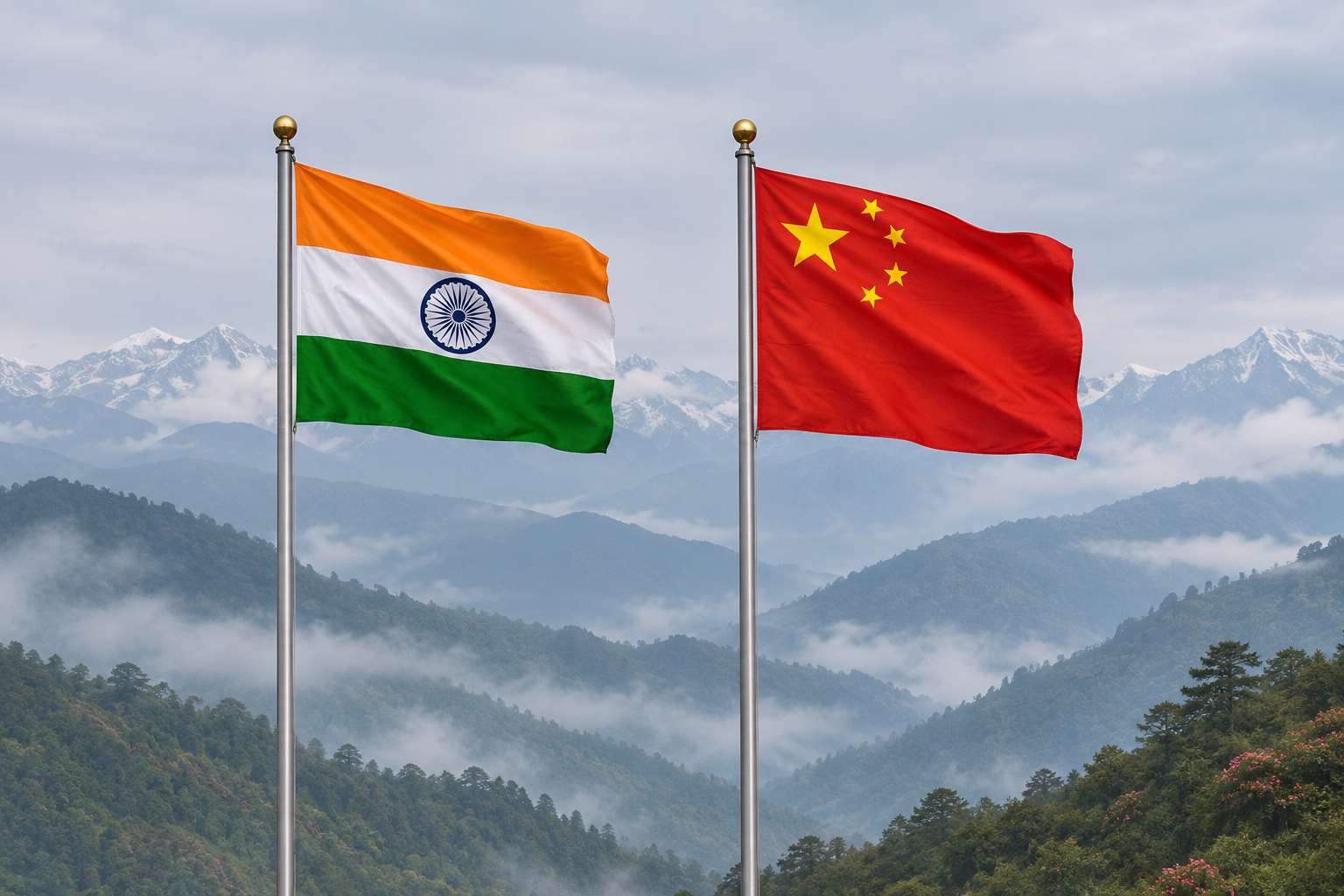
That will keep some America enthusiasts busy. But the new “Great Game”, as London’s Financial Times (FT) recently termed it, is the emerging relationship between China and US. After two meetings this year Presidents Trump and Xi Jinping are scheduled to meet two more times. The FT has compared the emerging China-US Great Game to the British-Russian Great Game of the 19th century.
The two big powers of the 19th century were engaged in a global campaign for influence in which colonial India was the prize. It was not the Russians who grabbed India away from the Brits but Indian nationalists led by Mahatma Gandhi. Going forward, says FT, China and the US will continue to seek global influence but without ever coming into direct conflict.
The US has seized Venezuela. It wants to seize Cuba, too, and, if the pro-US Bolsanaro wins in Brazil, then only Canada will remain outside American control. China seeks Taiwan but is in no hurry.
Its focus would be to win friends and influence people so that the US is unable to make gains in Asia and Africa. After successive military defeats over the past half century — Vietnam, Afghanistan and Iran — the US is a wounded tiger in Asia. China has picked each one of these and added them to its list of friendly nations. How India thinks and behaves will matter for both the Big Two.
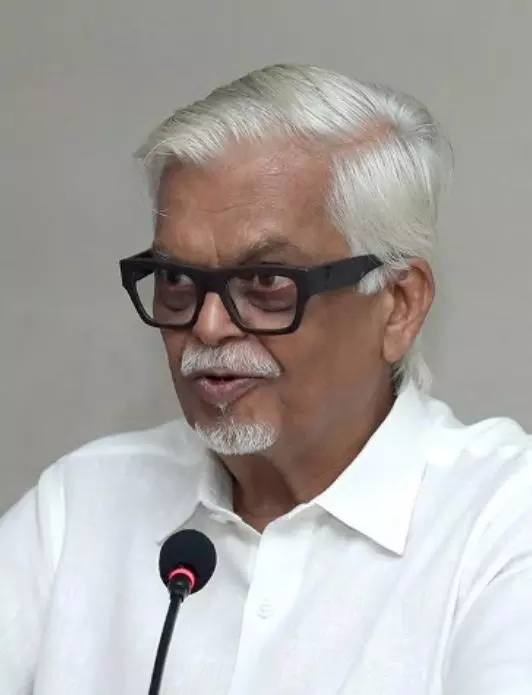
The writer is an economist, a former newspaper editor, a best-selling author, and former adviser to Prime Minister Manmohan Singh