Kumar Bahukhandi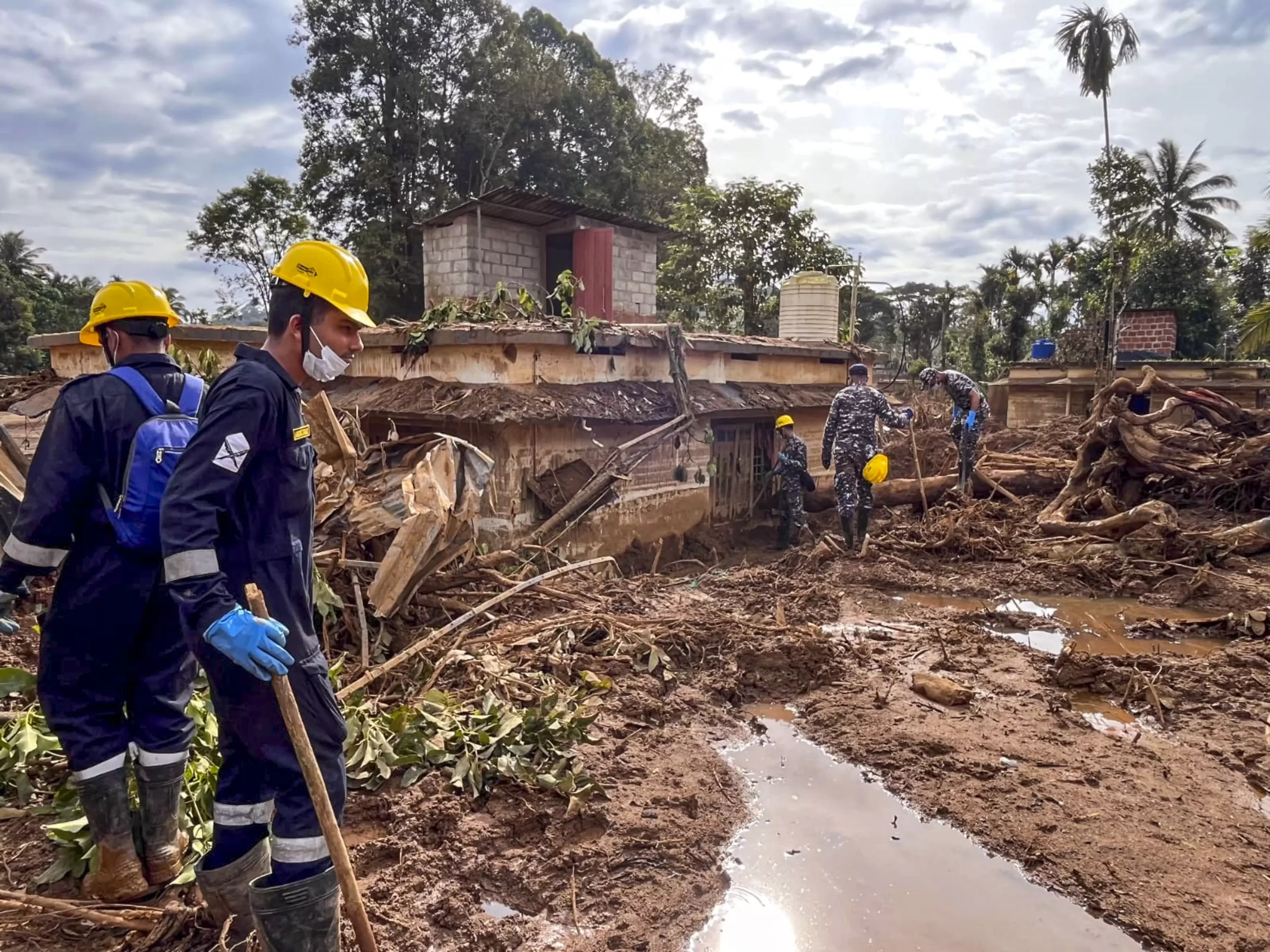
When a nation has legitimate aspirations such as the goal of becoming a $5 trillion economy in the very near future, with the $10 trillion mark seemingly not very far away, it’s also good to be aware of the impact of that progressive achievement on society, the environment and infrastructure. While India could uplift a couple of million people from poverty and enhance the quality of life of the middle class with its development agenda, there are also adverse effects in the form of the impact of such development on society. This is so especially if it is unplanned and uncoordinated. Nowhere is the impact felt more than in the domain of disaster risk.
Three major disasters which cost us a cumulative 30,000 lives were the Odisha super-cyclone in 1999, the Kutch earthquake of 2001 and the Indian Ocean tsunami in 2004. They triggered the pathbreaking National Disaster Management Act of December 2005, which is now up for review in the legislature. Under it, the National Disaster Management Authority (NDMA) was set up along with similar bodies at the state and district levels. The Prime Minister became the NDMA’s chairman. Since then, the handling of disaster management (DM) in a professional way has been an ongoing process. The big change that occurred was that the concept of DM, which was all along response-centric, has adopted a proactive approach of prevention, mitigation and preparedness. It’s an unfortunate observation that despite the government’s clear focus on ensuring awareness about disaster risks, there is hardly any big shift towards better learning and knowledge management among the public for better mitigation.
Efforts have gone on in a transformational way to sensitise the public with revolutionary programmes like the National School Safety Programme, which covers 8,600 schools in 43 districts spread over 22 states falling in seismic zone IV & V with the aim to sensitise children and the school community on disaster preparedness and safety measures.
A marked impetus from 2014 onwards witnessed the current government making some brief structural changes at the NDMA. Yet, what is still elusive is widespread knowledge about disaster risk reduction (DRR). In the era of climate change, this should actually become a mantra for human existence. In this context, one of the most transformational measures undertaken by the leadership has been the codifying of major DM concerns through what is called the Prime Minister’s Ten-Point Agenda for DRR. Projected for the first time at the Asian Ministerial Conference on DRR (AMCDRR) 2016 by Prime Minister Narendra Modi, the code spells out core concerns and acts as a checklist reminder for disaster managers while remaining an instrument for the education of all stakeholders and communities likely to be most affected by disasters. The code’s simplicity makes it extremely intelligible even to lay persons; hence the need to use this as a prime source of knowledge management to make DM and DRR the subjects of general knowledge for the next generation.
The first point highlights that every development sector must imbibe DRR, implying that if a road, bridge or railway line is constructed, the potential disaster risks must be identified and steps to neutralise these must be taken. The intention becomes universal in the second point, which directs that from a simple household to an MNC or even a nation state, risk coverage must be for all. This includes the use of technology, deployment of human resources or measures of mitigation.
The agenda scores heavily with the third point, which accords significance to gender sensitivity as it is women and children who suffer the travails of disasters more than males. The PM focused a lot on science and technology in evolving the agenda. Risk mapping, which can then be available in presentable form, needs to be done for all areas, especially those prone to urban flooding, a phenomenon which is fast dwelling on even the smaller cities. The agenda implores the adoption of technologies. The NDMA keeps itself open at all times for SMEs and startups with niche technologies, who can help enhance the effectiveness of DRR. In the Wayanad tragedy, for example, drones with capability for surface surveillance for survivors and deep search by sensors for mortal remains was attempted for the first time.
The government must be complimented for taking forward the eighth point on the agenda: “building local capacity”, essentially implying community readiness for response. The “Aapda Mitra” (Friends in Disaster) scheme has trained 100,000 able-bodied volunteers in 350 districts, all equipped with basic skills and equipment to enable exploitation of the “golden hour” principle of early response.
The ninth point demands the need for ensuring documentation of the lessons from each disaster and acting upon them. The repetition of mistakes is sacrilege because lives remain at stake. Once again, public awareness will also lead to administrative pressure for effective implementation.
The tenth and last issue in the mantra is the necessity for global cooperation. India is continually displaying this through its readiness at all times to launch specialised forces like NDRF. The Japan, Nepal and Turkey disasters are all recent examples which have enhanced India’s international image.
The common refrain is that disasters are for others, but not for “us”. The day anyone is caught in the middle of a devastating disaster is the day when he or she will rue why people could not act on early warnings that the authorities regularly give. The time for alertness to disaster risk is upon us, and much depends on how seriously you take it; for your sake and for the sake of your family and loved ones.
Syed Ata Hasnain, a retired lieutenant-general, is a former commander of the Srinagar-based 15 Corps. He is also associated with the Vivekananda International Foundation and the Institute of Peace and Conflict Studies.