Kumar Bahukhandi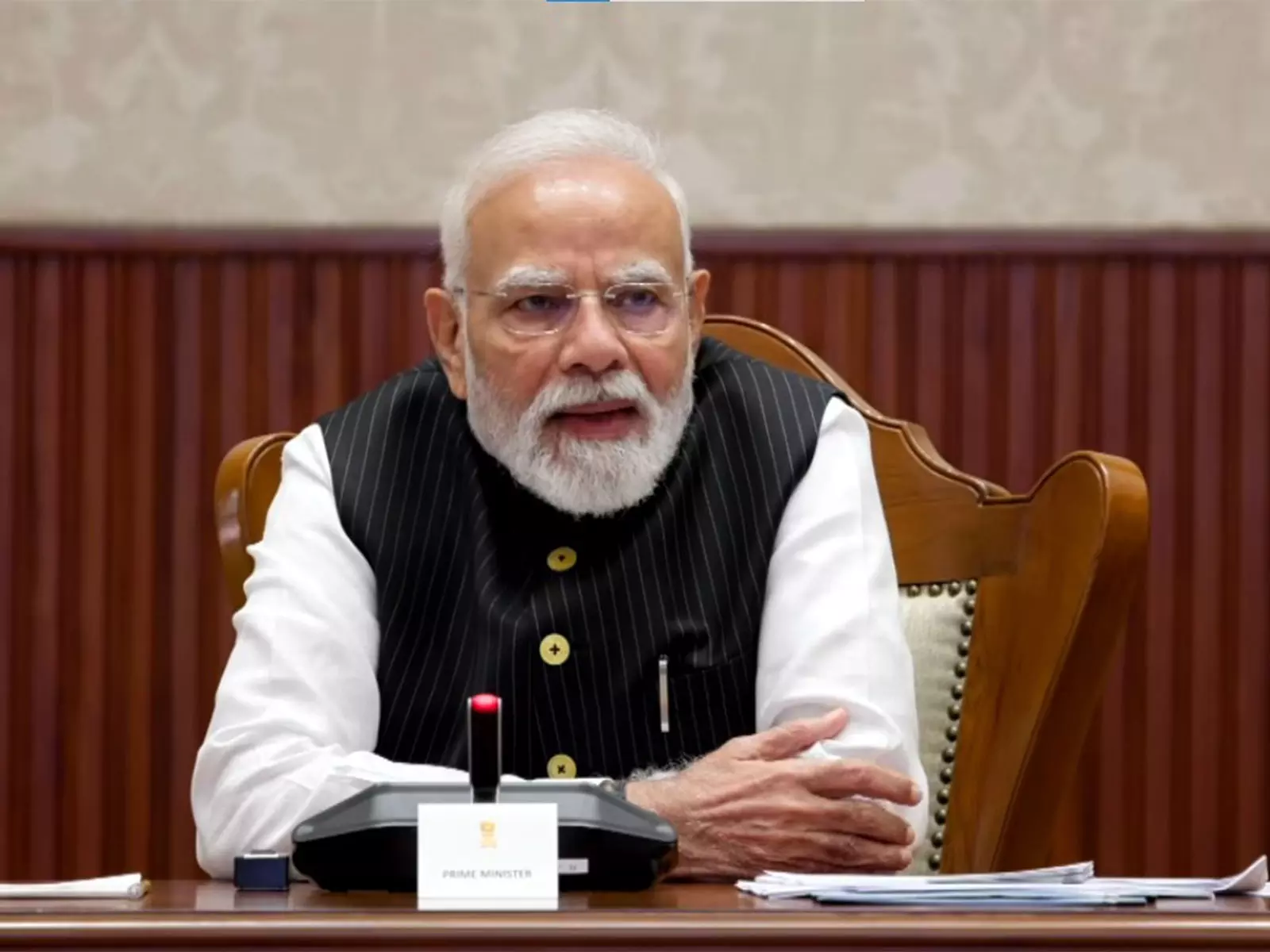
Prime Minister Narendra Modi interacts with founders and CEOs of Indian space startups, calling for policy stability, greater innovation and an ecosystem capable of attracting global space talent to India. (Photo: PMO)
Prime Minister says India’s combination of talent, risk-taking ability and cost competitiveness can help the country carve out a major position in the global space economy
Key Highlights
- Prime Minister Narendra Modi says policy consistency is crucial to giving entrepreneurs the confidence to take risks.
- India should create an ecosystem capable of attracting space professionals and innovators from across the world, he says.
- Modi identifies India’s cost advantage, talent and appetite for risk as important competitive strengths.
- He urges space startups to take their technologies beyond the space sector into agriculture, environmental protection and other everyday applications.
- Founders and CEOs of 20 Indian space startups participated in the interaction.
New Delhi: Prime Minister Narendra Modi has set out an ambitious proposition for India’s rapidly expanding private space industry: build an ecosystem strong enough to make talented people from across the world look towards India when they think about a career in space.
Interacting with CEOs and founders of Indian space startups, Modi praised entrepreneurs for having the courage to enter a relatively new private-sector domain and stressed that consistency in government policy was essential for giving risk-takers confidence.
In a post on X accompanying a video of the interaction, the Prime Minister on Sunday August 23, 2026 said he had met some of India’s brightest space startups and was impressed by their “energy and ambition”, while inviting people to share what excited them most about India’s space journey.
From Indian Startups to a Global Space Hub
During the interaction, Modi told entrepreneurs that entering the emerging sector itself demonstrated courage.
He said entrepreneurs had also placed their trust in the government and argued that governments must reciprocate that confidence by ensuring stability in policy.
The underlying message was significant for a sector in which investments can be large, development cycles long and commercial returns uncertain: entrepreneurs should be able to take business and technological risks without fearing unpredictable shifts in the policy environment.
Modi then turned from India’s domestic startup ecosystem to global talent.
He said India should create an environment in which professionals anywhere in the world considering a future in the space sector would think of coming to India—whether to work with an Indian startup or with the country’s space establishment.
The Prime Minister expressed confidence that India could attract this international talent pool “like a magnet”.
India’s advantage, he argued, rests on more than ambition.
The country is highly cost-competitive, possesses strong technical talent and has people with a natural capacity for taking risks. Together, he suggested, these strengths could allow India to establish its own niche rapidly in the international space economy.
Modi also urged space entrepreneurs not to view their technologies as confined to rockets, satellites or conventional space operations.
He encouraged startups to identify applications capable of solving problems in other sectors and improving people’s everyday lives.
Companies developing solutions for space debris, for example, could explore collaboration with environmental organisations. Space technology businesses working in agriculture could partner with agricultural universities and government departments to provide farmers with better information and help improve productivity.
The approach points towards a potentially much larger market for India’s space startups: using technologies originally developed for space to solve terrestrial problems.
The Prime Minister also advocated closer engagement between space companies and Atal Tinkering Labs, arguing that exposing children to space technology at an early age could generate curiosity and encourage future participation in the sector.
The interaction brought together founders and CEOs from 20 startups operating across different parts of India’s emerging space economy, including launch vehicles, satellite manufacturing, earth observation, propulsion, space situational awareness and downstream applications.
The expansion of private participation follows the Indian Space Policy 2023, which opened the space value chain more widely to non-government entities and created opportunities for private companies in satellite manufacturing, launch services, applications and related businesses.
India’s private space story is consequently moving beyond the question of whether startups should participate in a field historically dominated by the state.
The larger question now is whether India can turn its combination of engineering talent, relatively low costs, entrepreneurial risk-taking and policy support into a globally competitive space industry.
Modi’s message to the entrepreneurs suggests that the government’s ambition extends beyond building successful Indian space companies.
The objective is increasingly to create an ecosystem in which, when the world thinks about building the next generation of space technology, India is among the first places it looks.