Kumar Bahukhandi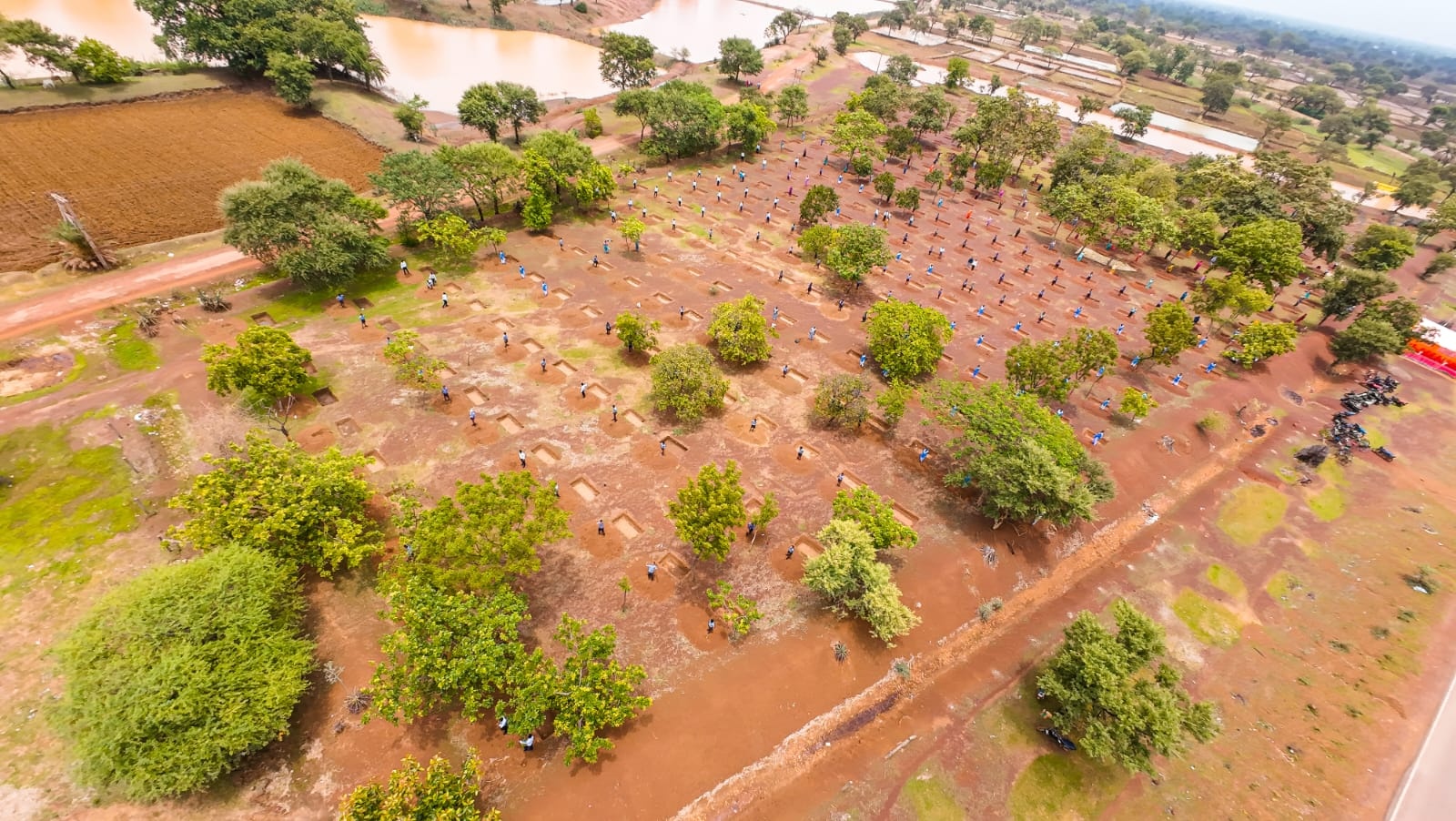
Aerial view of the ‘Mor Gaon–Mor Pani’ campaign in Balod district, where large-scale community participation is driving the creation of water conservation structures to strengthen groundwater recharge and ensure long-term water security-Photo Credit-channel24india.com via CG/PR
IN Short
- ‘Mor Gaon–Mor Pani’ campaign is evolving into a statewide people’s movement for water conservation.
- 285,000 water conservation structures have been created in Balod district.
- 1.923 million cubic metres of additional water storage capacity has been developed.
- Large-scale construction of rooftop rainwater harvesting systems, ponds, farm ponds (dabris), recharge shafts, and check dams.
- Significant focus on groundwater recharge and sustainable natural resource management.
- More than 300,000 seed balls dispersed in July; target of planting 200,000 saplings.
- The campaign is generating rural employment while improving irrigation and boosting farmers’ incomes.
- Strong participation from public representatives, self-help groups, Green Army volunteers, and students has made the initiative a true community movement.
Under Chief Minister Vishnu Deo Sai’s Leadership, Water Conservation Gains Momentum; 1.923 Million Cubic Metres of Additional Water Storage Capacity Created
Raipur: Under the leadership of Chief Minister Vishnu Deo Sai and the guidance of Deputy Chief Minister and Panchayat & Rural Development Minister Vijay Sharma, the ‘Mor Gaon–Mor Pani’ Mega Campaign is transforming water conservation into a mass movement across Chhattisgarh. Implemented under the Viksit Bharat–Guarantee for Employment and Livelihood Mission (Rural), the initiative is accelerating water conservation, groundwater recharge, natural resource management, and sustainable green development throughout the state.
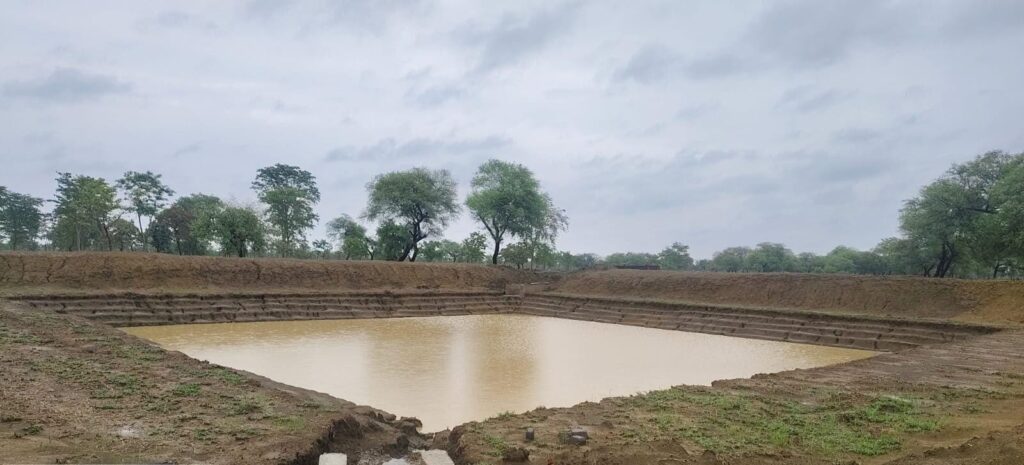
A newly developed water harvesting pond under the ‘Mor Gaon–Mor Pani’ campaign in Balod district, enhancing rainwater storage capacity and supporting sustainable irrigation and groundwater recharge-Photo Credit-channel24india.com via CG/PR
In Balod district, the administration, with active participation from Gram Panchayats, government offices, educational institutions, industrial establishments, self-help groups, and social organizations, has undertaken extensive water conservation activities. The campaign is driven by the principle of “Harvest rainwater where it falls, when it falls.”
As part of the initiative, rooftop rainwater harvesting systems have been installed in government buildings, while recharge shafts, farm ponds (dabris), ponds, and trenches have been developed to capture surface runoff. The campaign also promotes soak pits and rainwater harvesting systems in hand pumps and Pradhan Mantri Awas houses.
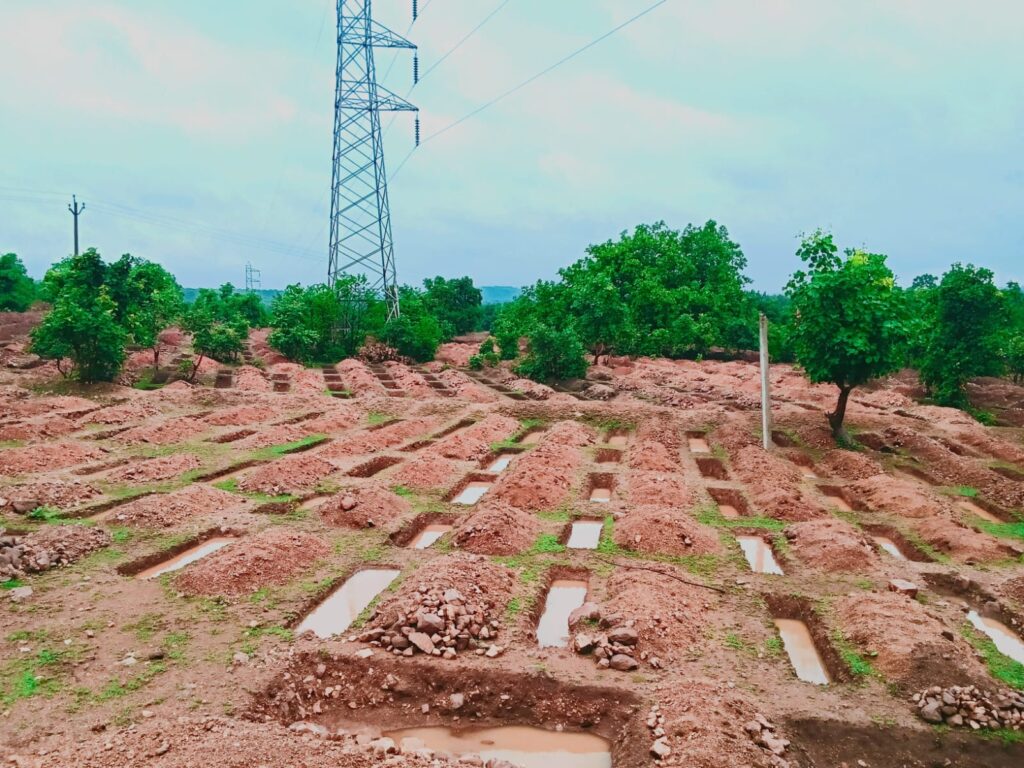
Recharge trenches and water conservation structures developed under the ‘Mor Gaon–Mor Pani’ campaign in Balod district, promoting rainwater harvesting, groundwater replenishment, and climate-resilient rural development-Photo Credit-channel24india.com via CG/PR
To enhance groundwater resources, the district has developed recharge pits, injection wells, recharge systems for defunct borewells, renovated and deepened ponds, constructed check dams, and created water-absorbing trenches, significantly improving groundwater replenishment.
Through the VBG–Ram Ji Scheme (MGNREGA), the Forest Department, District Mineral Foundation (DMF), various incentive schemes, and strong public participation, 285,000 water conservation structures have been created across Balod district. These interventions have generated an additional water storage capacity of 1.923 million cubic metres, which is expected to improve groundwater levels, retain soil moisture, strengthen irrigation facilities for both Kharif and Rabi crops, and contribute to higher farm incomes.
The campaign’s greatest strength has been its widespread community participation. Public representatives, women self-help groups, village development committees, Mahila Commandos, Green Army volunteers, and students from schools and colleges have actively participated in cleaning ponds, promoting household water conservation, plantation drives, and seed-ball campaigns. During July alone, more than 300,000 seed balls have already been dispersed, while a target of planting 200,000 saplings has been set.
The State Government continues to prioritize water conservation, natural resource management, green development, and rural livelihood enhancement through the VBG–Ram Ji Scheme across all districts. Guided by the vision of “Water Conservation through People’s Participation for Water Prosperity,” Balod district is steadily emerging as a model for water-secure, environmentally sustainable, and prosperous rural development.