Kumar Bahukhandi
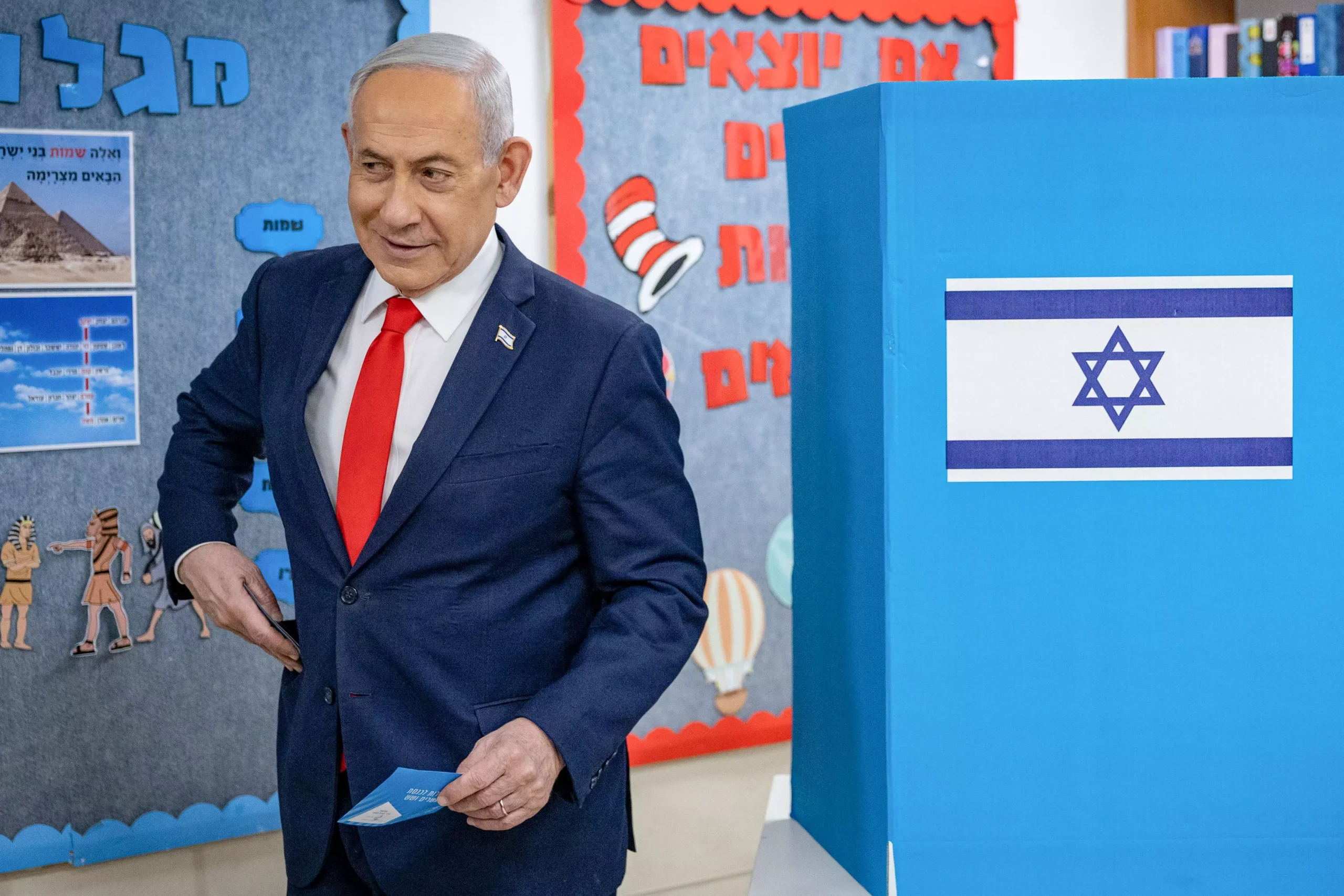
Israeli Prime Minister Benjamin Netanyahu at a polling station in Jerusalem during voting in Israel’s parliamentary election on Tuesday, October 27, 2026. (Photo: AFP)
Exit polls leave both blocs short of a parliamentary majority, setting the stage for difficult coalition negotiations
Key Highlights
- Benjamin Netanyahu and rival Gadi Eisenkot each signalled their intention to form Israel’s next government.
- Early exit polls placed the two blocs close together, with some projections showing approximately 51 seats each.
- Neither bloc appeared to reach the 61-seat majority in the 120-member Knesset.
- Arab-led parties could play an important role in determining the next government.
- Exit-poll projections remain provisional as official vote counting continues.
Jerusalem: Israeli Prime Minister Benjamin Netanyahu and challenger Gadi Eisenkot staked competing claims to lead the country on Wednesday, October 28, after exit polls suggested that neither political bloc had secured a parliamentary majority in Tuesday’s election.
Early television projections placed the blocs almost level, including estimates of approximately 51 seats each. Revised projections varied between broadcasters, but continued to indicate that both sides were short of the 61 seats needed for a majority in Israel’s 120-member parliament, the Knesset
The inconclusive projections raised the prospect of prolonged coalition negotiations. Official results were still being counted, and the final allocation of seats could differ from the exit polls.
Rival claims to form government
Netanyahu emphasised the projected strength of his Likud party and called for the formation of a right-wing government. Eisenkot, a former military chief, said voters had chosen change and presented the outcome as a rejection of Netanyahu’s leadership.
Likud appeared likely to remain the largest individual party, although that alone would not guarantee Netanyahu sufficient parliamentary support to form a government.
Arab-led parties could influence outcome
Exit polls projected significant gains for Arab-led parties, potentially giving them an important role in negotiations over the next government.
However, campaign commitments by opposition leaders against partnering with Arab-majority parties complicated Eisenkot’s route to office. Possible arrangements could include parliamentary support for a minority government, although no agreement had been announced.
The distinction between winning more seats and assembling a workable governing alliance remained central to the uncertainty.
First election since October 7 attack
Tuesday’s vote was Israel’s first national election since the Hamas-led attack of October 7, 2023, and the subsequent wars that reshaped the country’s security and political debate.
Security, accountability and Netanyahu’s leadership featured prominently in the campaign. Voter participation exceeded 77 per cent, according to election reporting, marking the highest turnout in more than two decades.
Coalition talks lie ahead
Once the results are established, attention will turn to negotiations among parties and the process of selecting a leader capable of forming a government.
If no viable coalition emerges, Israel could face another election. For now, the exit polls indicate uncertainty rather than a decisive mandate for either camp.