Kumar Bahukhandi
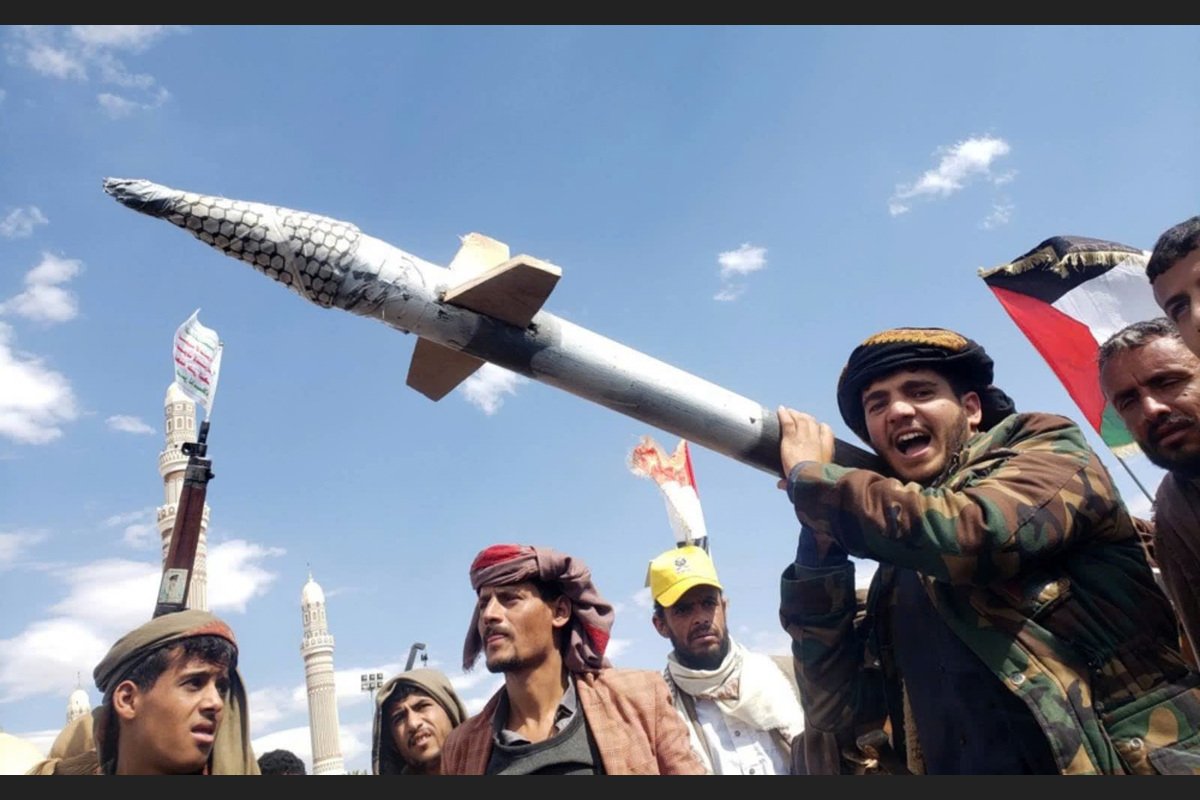
A Houthi supporter carries a mock missile at a gathering in Yemen. File photo (AFP)
The Saudi-led coalition reported the interceptions early on 26 November, two days after Saudi civil defence said a strike on a tower in Riyadh’s financial district wounded 11 people.
Key Highlights
- The Saudi-led coalition said it intercepted two ballistic missiles aimed at Riyadh and, separately, two drones over the Eastern Province.
- AFP reported an explosion in Riyadh around midnight after authorities issued an aerial threat warning that was lifted shortly afterwards.
- The Houthis claimed attacks on two Saudi Red Sea ports, saying they were responding to coalition strikes on Yemen’s port of Hodeidah.
Riyadh: The Saudi-led military coalition said early Thursday, 26 November, that its air defences intercepted and destroyed two ballistic missiles launched by Yemen’s Houthis towards Riyadh. Coalition spokesperson Turki al-Maliki later reported that two drones had been intercepted over Saudi Arabia’s Eastern Province. His initial statement on the missiles gave no details on casualties or damage.
An AFP journalist and residents heard an explosion in the capital around midnight local time, shortly after authorities warned of a “hostile aerial threat”. The warning was lifted soon afterwards. Residents in northern and eastern Riyadh also reported hearing the blast.
Riyadh’s financial district comes under renewed pressure
The interceptions followed a strike on 24 November that Saudi civil defence said wounded 11 people in Riyadh’s financial district. The strike hit the tower that houses the Public Investment Fund, Saudi Arabia’s sovereign wealth fund. The building, the tallest in the capital, had also been hit on 19 November, when it sustained damage and no injuries were reported.
The Houthis claimed responsibility for attacks on the financial district and the Ras Tanura refinery. Saudi defence officials said four drones had been brought down at Ras Tanura. The Houthi claim and the Saudi account described different outcomes at the refinery, with the extent of any damage unclear.
Red Sea ports drawn into the cross-border strikes
On Wednesday, the coalition said it shot down a drone near Jeddah Islamic Port and intercepted a cruise missile headed towards western Saudi Arabia. It said a projectile struck Jazan Port in the south-west, causing minor damage without injuring civilians. The Houthis claimed attacks on both ports and said they were retaliating for Saudi-led strikes on Hodeidah, a port on Yemen’s Red Sea coast.
The exchanges have widened beyond Riyadh. Saudi airports, oil facilities and ports have come under attack in recent weeks, while the coalition has intensified strikes on Houthi-held areas in Yemen. The renewed fighting along Yemen’s Red Sea coast has also drawn attention to the Bab el-Mandeb Strait, a major shipping route for Gulf oil exports.
The toll inside Yemen
The Houthis seized Yemen’s capital, Sanaa, in 2014. Saudi Arabia began leading a coalition in support of Yemen’s internationally recognised government in March 2015. A truce reached in 2022 reduced hostilities for several years, but fighting intensified again in July 2026. In November, government-aligned forces retreated towards Aden, the southern port city that serves as the government’s temporary capital.
For families inside Yemen, the renewed fighting has meant further displacement in a country already facing a prolonged humanitarian crisis. The UN migration agency reported in mid-November that more than 340,000 people had been displaced since August. It has called for safe access for aid workers and protection for civilians and the facilities needed to deliver assistance