Kumar Bahukhandi

Supreme Court agrees to consider urgent listing of multiple petitions challenging the Waqf Amendment Act over concerns of religious freedom and discrimination.
Petitions by Owaisi, Jamiat Ulama-i-Hind, others call Act discriminatory and unconstitutional; urgent hearing likely
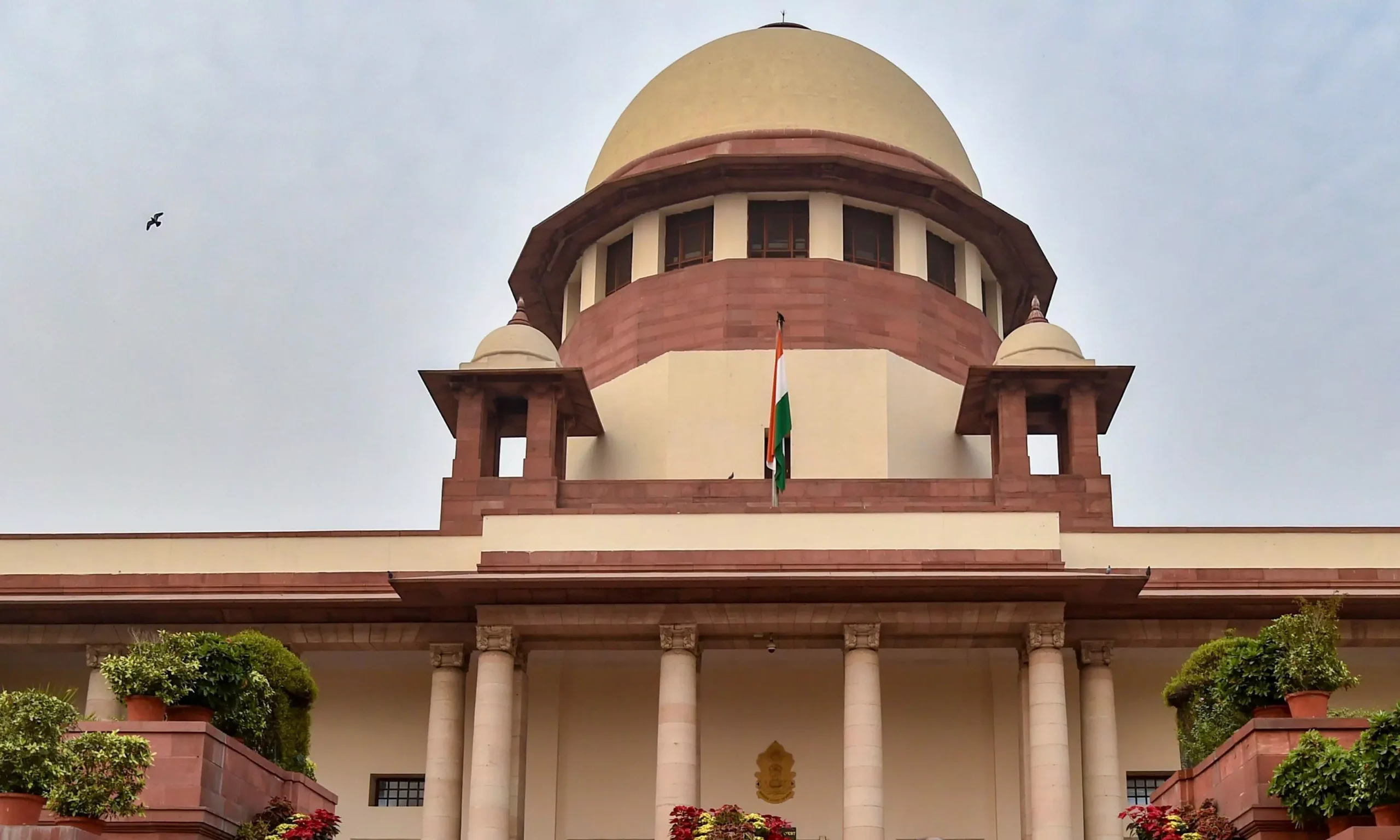
New Delhi: The Supreme Court on Monday April 7, 2025 agreed to consider listing for urgent hearing the petitions challenging the constitutional validity of the Waqf (Amendment) Act, 2025.A bench comprising Chief Justice Sanjiv Khanna and justices Sanjay Kumar and KV Viswanathan took note of the submissions of senior advocate Kapil Sibal, appearing for Jamiat Ulama-i-Hind, that there were several petitions on the issue and they needed to be listed for urgent hearing.
Besides Sibal, senior advocate Abhishek Singhvi and lawyer Nizam Pasha mentioned other petitions for urgent listing. The CJI, who has done away with the practice of oral mentioning of cases for urgent listing, asked the lawyers to file letters or send mails for getting the matters listed before a bench.
When Sibal said the same has already been done, the CJI said, “I will see the mentioning letter in the afternoon and take a call. We will list it.” Pasha mentioned the petition filed by Lok Sabha MP Asaduddin Owaisi. President Droupadi Murmu on Saturday gave her assent to the Waqf (Amendment) Bill, 2025, which was earlier passed by Parliament after heated debates in both Houses.
Several pleas, including those by Congress MP Mohammad Jawed, AIMIM president Asaduddin Owaisi and AAP MLA Amanatullah Khan, were filed in the top court challenging the validity of the Act. In its petition, the Jamiat Ulama-i-Hind has said that this law was a “direct attack on the country’s Constitution, which not only provides equal rights to its citizens but also grants them complete religious freedom”. It claimed the Act was a “dangerous conspiracy” to strip Muslims of their religious freedom.
“This bill is a dangerous conspiracy to strip Muslims of their religious freedom. Therefore, we have challenged the Waqf (Amendment) Act, 2025, in the Supreme Court, and the state units of Jamiat Ulama-i-Hind will also challenge the constitutional validity of this law in the high courts of their respective states,” the Jamiat stated.
“President of Jamiat Ulama-i-Hind, Maulana Arshad Madani, has not only challenged various provisions of the Waqf (Amendment) Act but has also filed an interim petition in court to prevent the law from coming into effect,” it said.
“President of Jamiat Ulama-i-Hind, Maulana Arshad Madani, has not only challenged various provisions of the Waqf (Amendment) Act but has also filed an interim petition in court to prevent the law from coming into effect,” it said.
In its separate plea filed in the top court, Samastha Kerala Jamiathul Ulema, a religious organization of Sunni Muslim scholars and clerics in Kerala, has claimed the Act was a “blatant intrusion” into the rights of a religious denomination to manage its own affairs in the matter of religion. The plea, filed through advocate Zulfiker Ali P S, said these amendments would “distort” the religious character of Waqfs while also irreversibly damaging the democratic process in the administration of Waqf and Waqf Boards.
“Hence, it is submitted that the 2025 Act is a blatant intrusion into the rights of a religious denomination to manage its own affairs in the matter of religion which is protected under Article 26 of the Constitution of India,” the plea by Samastha Kerala Jamiathul Ulema submitted.
It alleged that the 2025 Act was against the federal principles of the Constitution as it takes away all powers of the state governments and State Waqf Boards in connection with Waqfs and accumulates all powers into the hands of the Central government.
“The cumulative effect of these provisions will be highly detrimental to Waqfs at large and the Muslim community will be deprived of large tract of Waqf properties on account of operation of these provisions,” the plea submitted. Besides them, an NGO — Association for the Protection of Civil Rights — has also filed a petition in the apex court challenging the constitutional validity of the Act.
Jawed’s plea alleged the Act imposed “arbitrary restrictions” on Waqf properties and their management, undermining the Muslim community’s religious autonomy. The petition, filed through advocate Anas Tanwir, said the law discriminated against the Muslim community by “imposing restrictions that are not present in the governance of other religious endowments”.
In his separate plea, Owaisi said the Bill takes away from Waqfs various protection which are accorded to Waqfs and Hindus, Jain and Sikh religious and charitable endowments alike. “This diminishing of the protection given to Waqfs while retaining them for religious and charitable endowments of other religions constitutes hostile discrimination against Muslims and is violative of Articles 14 and 15 of the Constitution, which prohibit discrimination on the grounds of religion,” Owaisi’s plea, filed by advocate Lzafeer Ahmad, stated.
The plea argued the amendments “irreversibly dilute” the statutory protection afforded to Waqfs and their regulatory framework while giving “undue advantage” to other stakeholders and interest groups, undermining years of progress and pushing back Waqf management by several decades. In his separate plea, Amanatullah Khan has sought that the Waqf (Amendment) Bill be declared as “unconstitutional and being violative of Articles 14, 15, 21, 25, 26, 29, 30 and 300-A of the Constitution”.
(Source: PTI)