Kumar Bahukhandi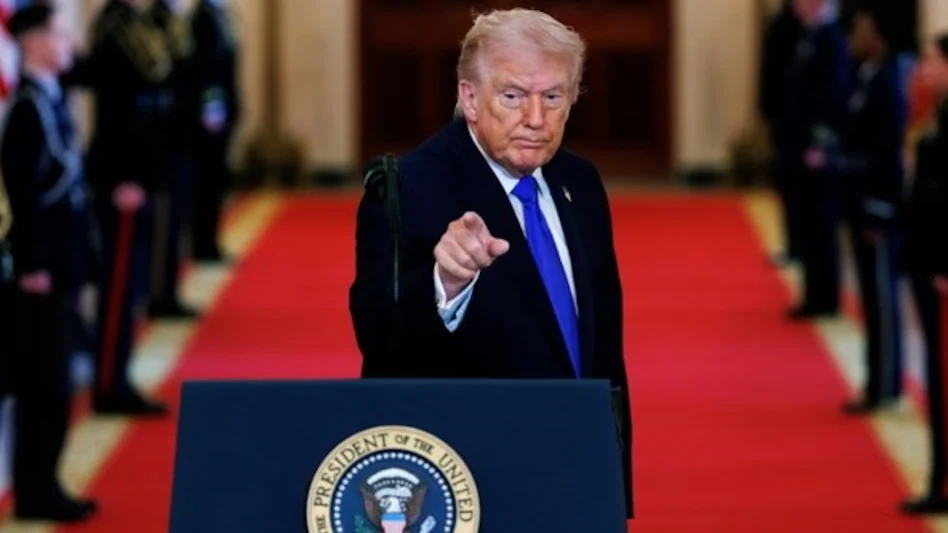
The US and Israel have opened a front against Iran. (Photo: AP)
When the US and Israel attacked Iran on Saturday February 28, 2026 , it felt like someone was rereading the script of the 12-Day War of June 2025. It was reported that the US and Iran were close to an agreement in Geneva. But the truth emerged in the form of a joint US-Israeli operation inside Iran. Last June, Trump was also “close” to a deal with Iran. The world witnessed what happened next.
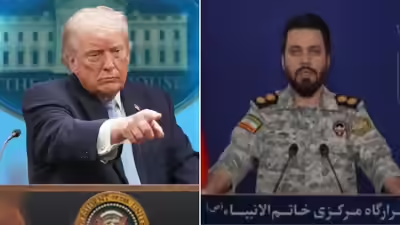
Plumes of smoke rose in Tehran on Saturday morning. Sirens blared. Initially, reports emerged that Israel had carried out a preemptive strike. However, US President Donald Trump released a video message stating that this was his attack on Iran’s barbaric Islamic regime and its army, the IRGC. Missile attacks struck a dozen Iranian cities. The difference between Trump’s statement in June 2025 and the latest attack is that Trump then stated that the attack was aimed at Iran’s nuclear sites to prevent it from developing nuclear weapons. This time, Trump is saying he wants regime change in Iran and the immediate surrender of the IRGC. In essence, everything is unfolding as it did in June 2025. A repeat telecast of that 12-day war. No difference. Only the date has changed. On one hand, the sham of a peace deal, on the other, missile and bomb explosions.
Remember June 2025. Talks of a nuclear deal between the US and Iran were underway in Oman. Everyone was saying that an agreement had been reached. Only the paperwork remained to be signed. Then Israel attacked. Suddenly, without waiting. Now, the same scene has been repeated in Geneva. Talks were ongoing between the US and Iran. Iran’s Foreign Minister, Abbas Araghchi, himself told India Today’s Geeta Mohan that they were ready to discuss all issues related to nuclear weapons and nuclear energy, but that they would respond if attacked. However, unconcerned by Iran’s words, the US and Israel fired missiles at a dozen of its cities, including Tehran. Speaking to CBS News last night, Oman’s Foreign Minister, Badr bin Hamad al-Busaidi, said that the two countries were close to a peace deal. The Omani Foreign Minister was mediating between Iran and the US.
Is the same game being played as in June 2025? On one hand, peace talks with Iran, on the other, preparations for war. The US had already sent two aircraft carriers to the region. Currently, the USS Gerald Ford is deployed in the Mediterranean, and the USS Abraham Lincoln is deployed in the Arabian Sea near Oman. No change. Trump had expressed his involvement after the attack in June. This time too, he released a video saying, “We have launched a major operation.”
After the Israeli attack in June 2025, US Secretary of State Marco Rubio said that Trump was unhappy with the attack. However, this time, Trump first appeared before the media and reported the attack. Netanyahu then appeared on TV and said, “America and Israel have attacked Iran’s terrorist regime, which wants to wipe out our existence. For 47 years, Iran has been chanting ‘Death to Israel’ and ‘Death to America,’ shedding the blood of our people. Now, the regime must go.” Strategic expert Michael Knights of the Washington Institute says, Israel is a frontline state for the United States. America guards its interests as if they were its own. And this time, Netanyahu has found a very trusted partner in Trump in the White House.
Iran is clear about its targets.
As Iran has stated, it is prepared for both war and peace. If attacked, US bases in the region would become legitimate targets. In June 2025, the world witnessed Israel and the US launch arbitrary airstrikes. Iran responded. Missiles reached Tel Aviv. The threat was heard at a US base in Qatar. Trump was forced to declare a sudden ceasefire. The war ended within 12 days. However, the accuracy of Iran’s missiles had increased. Following Saturday’s attack, Iran immediately fired missiles at US military and air bases in Israel, Qatar, Bahrain, Kuwait, and the UAE.
Iran would also like Hezbollah in Lebanon and Iraq and the Houthis in Yemen to join it and help regionalize this war if the US and Israel do not cease their attacks.
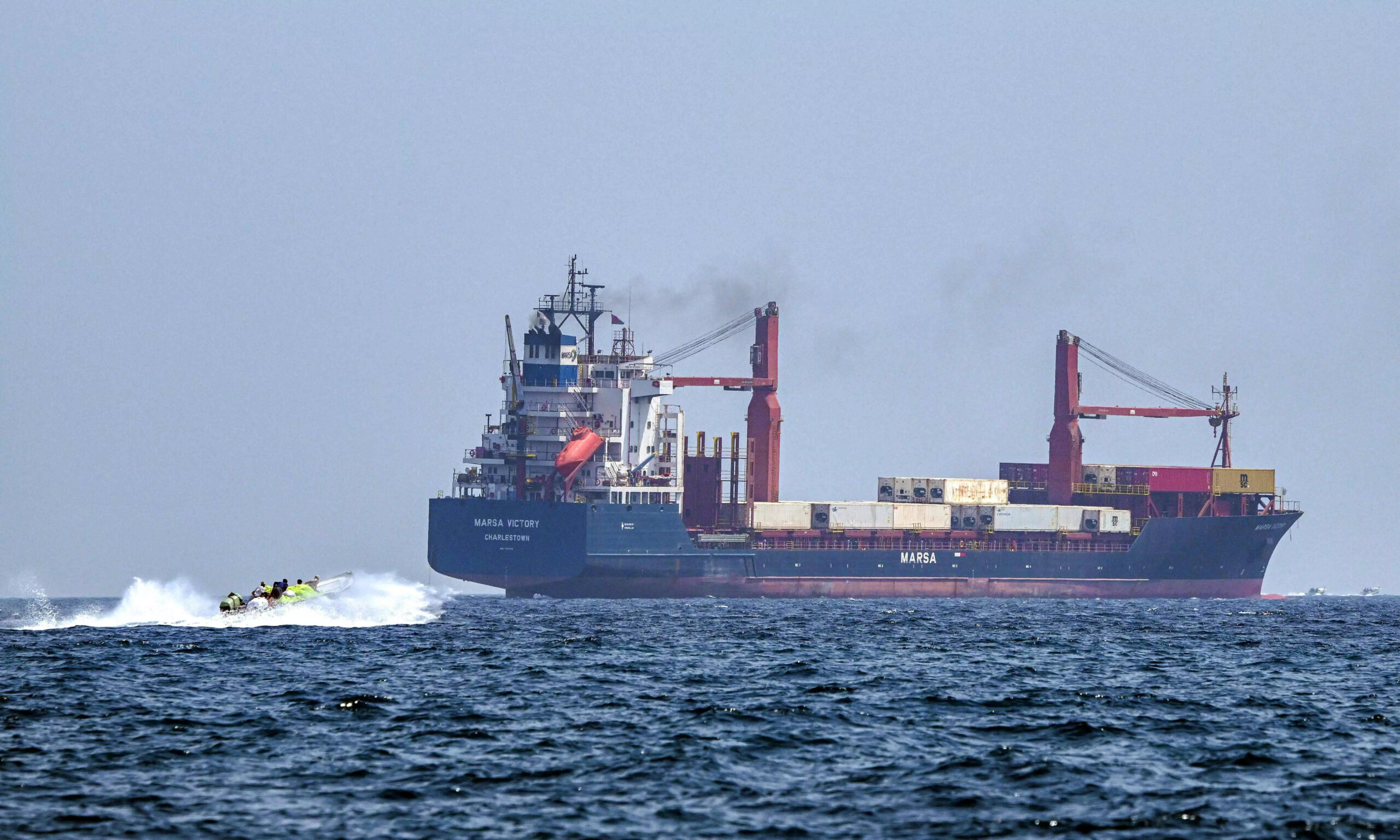
In June 2025, Iran demonstrated the accuracy of its missiles. It has now developed new drones and missile systems. Exercises are underway in the Strait of Hormuz. A prolonged war will devastate Iran’s economy, but the United States will also be entangled.
The Dilemma of Arab Countries…
The Arab countries face a major dilemma. They fear Iran, but also Israel’s unpredictable behavior. The Saudi Crown Prince stated, “Our land will not be used.” The UAE reiterated the same. But now that Iran has launched retaliatory attacks, these countries are caught in the middle. Oman was trying to act as a mediator, but its scope is limited. Kuwait, Iraq, and Jordan are silent spectators.
Speaking of the strategic game, it’s not just Israel and Iran. The entire Middle East is at stake: oil supplies, the global economy. Russia and China may stand with Iran, providing weapons and diplomatic support. The United States will have to fight on two fronts.
William Wechsler of the Atlantic Council says Israel is in an election year. It wants to prevent Iran from reaching the nuclear threshold. But what will be the cost? Meanwhile, by making the attack on Iran decisive, Trump wants to prove that he has removed the thorn that had been plaguing the US leadership since the 1979 Islamic Revolution.
Three possibilities are emerging for the latest war.
The big question is whether this war will be over in 12 days or whether Part 2 will prove more devastating. This time, America’s preparations are more aggressive. Two carrier strike groups, hundreds of fighter jets, and air defense systems are deployed in the Middle East. A large number of troops have also been deployed. Currently, there are no indications that the US will land its troops on Iranian soil. Therefore, three possibilities emerge after the attack.
First, limited strikes. Only nuclear sites and missile factories will be targeted. Similar to June 2025. Iran will respond, but with limited force. Diplomacy will then begin.
Second, a prolonged war. Iran will activate its proxies. Hezbollah, Houthis, Iraqi militias. The Strait of Hormuz will be closed. Oil prices will skyrocket. Attacks on US bases. Cyber warfare. Iran’s missiles have a range of over 2,000 km, covering the entire Middle East.
Third, an attempt at regime change. Trump has already warned about this. But this will be dangerous. Iran’s military is not weak. Trump is calling for the IRGC to surrender, which will never happen. Iran’s air defenses are certainly weak. But it has learned a lot in June. It can maintain strategic patience. Protests are also ongoing internally, but the regime remains strong.
An attack on Iran, a crisis for the entire world
Now the scene is clear. Saturday’s attack is a remake of the June 2025 attack, or rather, a Part 2 of the same. But this time the scale is bigger. America is more prepared. Iran is more vigilant. Arab countries are more fearful. Experts predict that if a ceasefire isn’t reached soon, it will last more than 12 days. It will be devastating. A barrage of missiles. A proxy war. A cyberattack. This oil crisis is a test for Trump. He wanted a deal but is also facing pressure from Israel. The Pentagon probably doesn’t want to play the long game. But politics is different.
Overall, if this war escalates, it could change the map of the Middle East. Iran may be weakened, but it won’t be completely destroyed, because it’s neither Iraq nor Venezuela. America’s image will be tarnished. Israel will feel secure but isolated. Arab countries will suffer.
The world is watching. From Tel Aviv to Tehran, from Washington to Riyadh. This isn’t just a war between two countries or two powers. It’s determining the future of the entire region, and in many ways, the entire world. And like in June 2025, a ceasefire is expected this time too, but the cost will be very high.
(Source-AP)