Kumar Bahukhandi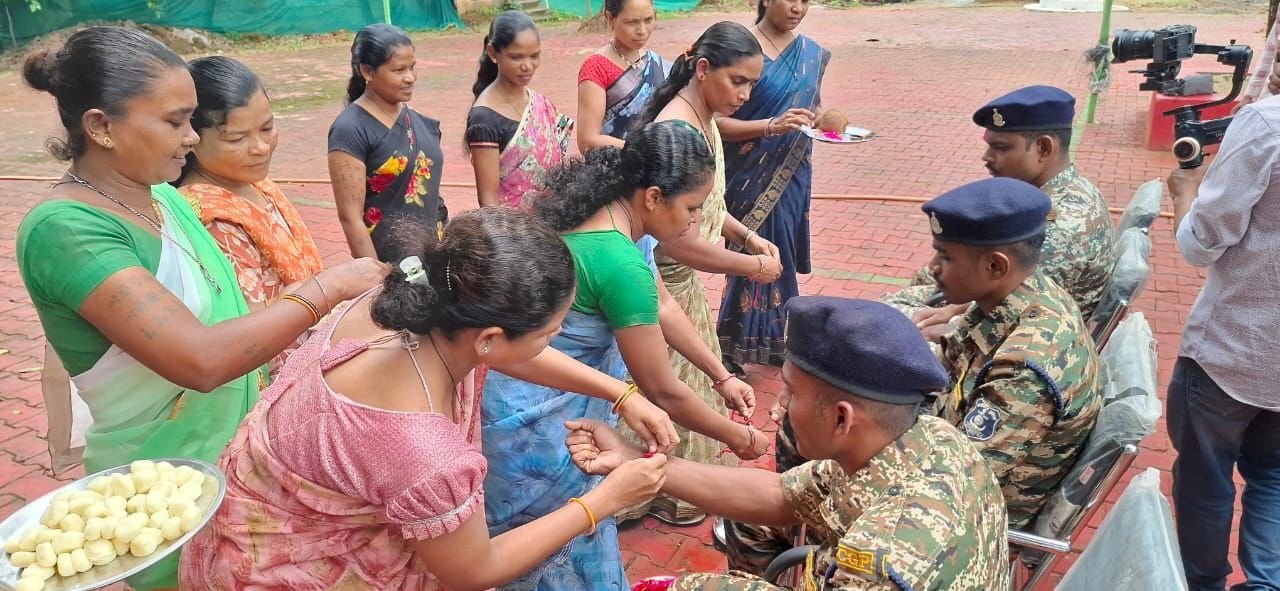
Former Maoist women tie Rakhis to security personnel during a Raksha Bandhan programme at a security forces camp in Bhanupratappur, Kanker district, Chhattisgarh. The initiative sought to strengthen trust between those who have returned to the mainstream and security personnel-Photo Credit:channel24india.com via CG/DPR
Former Maoist Meena, who spent nearly 25 years with the outlawed organisation, ties Rakhi to security personnel at Bhanupratappur camp, turning an old line of conflict into a gesture of trust
Key Highlights
- Former Maoist women tie Rakhi to security personnel at Bhanupratappur camp
- Meena had spent nearly 25 years with the Maoist organisation before returning to the mainstream
- Security personnel accepted the women as sisters, offered shagun and sweets
- Women police personnel also joined the Raksha Bandhan initiative
- Kanker SP Nikhil Rakhecha calls the gesture symbolic of efforts to restore normal relationships
- Initiative reflects the attempt to replace years of mistrust in Bastar with dialogue and social acceptance
A hand stretched forward and, for a few moments, the past seemed to stand still.
On one side was a security man in uniform. Facing him was a woman holding a Rakhi — a woman who had spent nearly 25 years of her life amid forests, Maoist organisation and conflict.
There was a time when that uniform represented confrontation and mistrust. This time, she tied a Rakhi around the wrist of the man wearing it.
He accepted her as a sister, offered her shagun and sweets.
The scene at a security forces camp in Bhanupratappur was more than a Raksha Bandhan celebration. It represented an attempt to bridge a divide created by years of violence and distrust between Maoists and security forces in Bastar.
From Weapons to a Thread of Trust
For Meena and other former Maoist women who participated in the programme, the occasion carried a significance beyond the festival itself.
Weapons and conflict had once been part of their lives in the forests. Now, those same hands were tying threads symbolising a very different relationship.
The former Maoist women tied Rakhis to security personnel, who in turn welcomed them as sisters, offered shagun and sweets and acknowledged the new relationship.
Women police personnel also participated, adding another dimension to an occasion where people who had once stood on opposite sides of Bastar’s prolonged conflict came together without the divisions of the past.
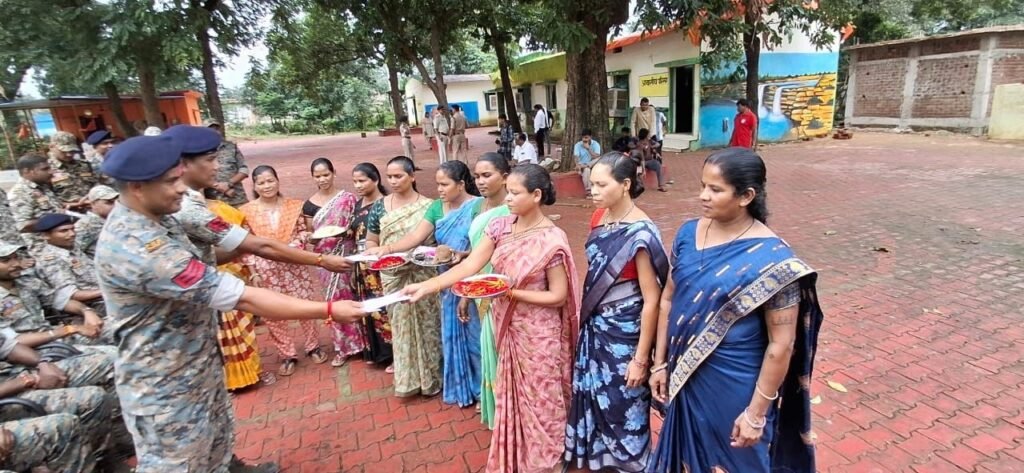
Security personnel exchange Raksha Bandhan greetings with former Maoist women at the Bhanupratappur camp in Kanker district, symbolising an effort to replace years of conflict and mistrust with acceptance and social reconciliation-Photo Credit:channel24india.com via CG/DPR
The symbolism was particularly striking in a region where security forces and Maoists have confronted each other for decades amid gunfire, landmines, deaths and fear.
This time, there were no weapons in those hands. There were Rakhis.
Kanker Superintendent of Police Nikhil Rakhecha described the initiative as a distinctive step towards addressing the Maoist problem and restoring normal relationships.
“This is a unique effort. Raksha Bandhan symbolises the steps we are taking towards resolving the problem of Naxalism. Through this thread of relationship, relations will become normal,” Rakhecha said.
According to the SP, such initiatives are not confined merely to celebrating a festival. They are also intended to rebuild social trust and strengthen the process through which those who have left Maoism can reconnect with mainstream society.
For Meena, the Rakhi carried the weight of a much longer personal journey.
Spending nearly two-and-a-half decades inside a Maoist organisation inevitably leaves a deep imprint on a person’s life. Years in the forests, the ideology of the organisation and an existence shaped by conflict cannot simply disappear when someone decides to return to mainstream society.
Against that background, tying a Rakhi to a member of the very security establishment from which she once remained distant became a powerful indication of an attempt to leave the bitterness of the past behind.
Bastar’s story has for decades been told through Maoist violence, encounters, fallen security personnel and fear. The presence of guns affected ordinary life in villages, while development frequently had to negotiate its way through an atmosphere of violence.
That story is gradually acquiring other chapters.
People abandoning weapons and returning to mainstream society, roads reaching previously inaccessible areas, schools and health facilities expanding and efforts to restore social confidence are increasingly becoming part of the region’s changing narrative.
The Raksha Bandhan gathering at Bhanupratappur offered a particularly human picture of that transition.
A Rakhi is only a thread. In this setting, however, it carried several messages.
For those who once followed the path of violence, it represented the possibility of return. For society, it underlined the importance of accepting those who have chosen to return to the mainstream. And for the security establishment, it demonstrated that alongside maintaining law and order, rebuilding human relationships can also contribute to lasting peace.
That makes Raksha Bandhan particularly significant in a Maoist-affected region: the Rakhi was tied not merely around a wrist, but around a fragile new bond of trust.
The Chhattisgarh government’s stated goal of a Maoist-free Bastar under Chief Minister Vishnu Deo Sai has placed peace, development and confidence-building alongside intensified action against Maoism. At the national level, the Narendra Modi government has also repeatedly emphasised eliminating Left-Wing Extremism.
Yet the scene at the camp offered a reminder that the end of a prolonged conflict cannot be measured through security operations alone. Lasting peace also requires trust to return between people.
Perhaps the most telling change came after the Rakhis had been tied.
For those few moments, what somebody had been yesterday appeared less important than who stood before them today — a brother, a sister, and members of a society trying to move beyond its violent past.
In Bastar, where guns once stood between relationships, this Raksha Bandhan placed something else in their stead:
a thread — of relationship, trust and a new Bastar.