Kumar Bahukhandi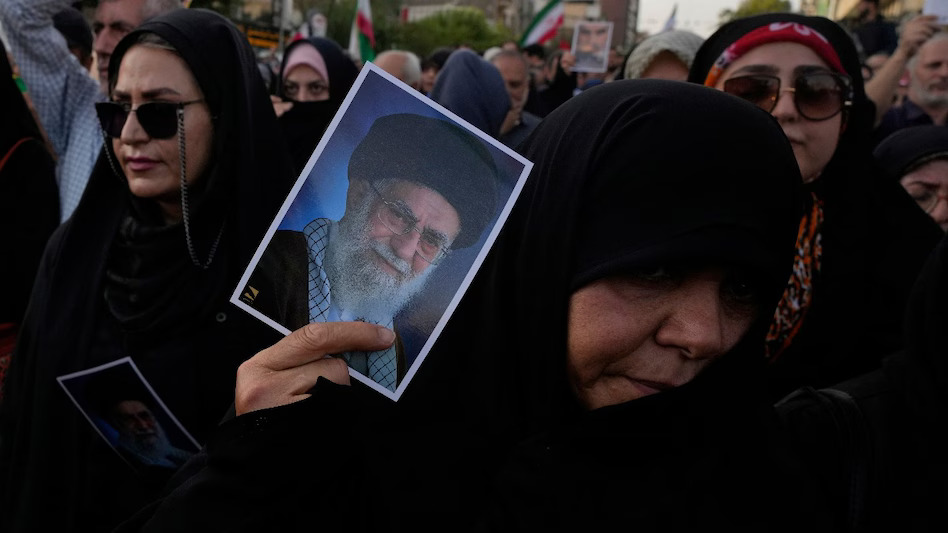
Protest in Tehran against US attacks -Photo-Reuters
While rulers in Saudi Arabia and the United Arab Emirates have sought to modernise their conservative societies, in the Islamic Republic of Iran, the logic of religious rule at home and confrontation abroad persists.
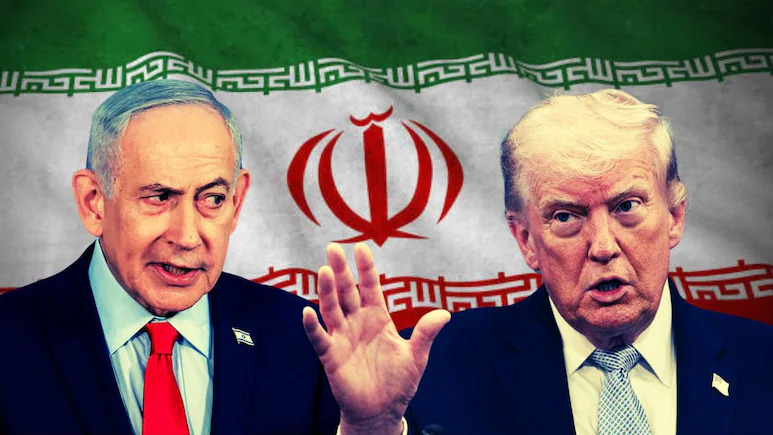
The 12-day war between Israel and Iran has now come to an end. US President Donald Trump declared a ceasefire between the two countries on Tuesday. But the Israeli attack and US bombing on Iran have given the Islamic Republic the biggest challenge in its 50-year history. Even in the midst of this war, Washington and Tel Aviv have openly hinted at the assassination of Supreme Leader Ayatollah Khamenei.
What will be the future of Iran?
According to Iranian media reports, this shocking incident has forced Iranians to look at the rapidly changing situation with disbelief. With decades of stagnation and broken hopes, Iranian citizens try to look at the country’s future with both ambition and fear. Many people tremble at the prospect of a disintegrated country, some worry that after the war, Iran could turn into a failed state for decades, which neighboring countries Iraq and Afghanistan may warn of.
If the theocracy in Iran ends after a war with Israel, three scenarios could play out.
- A faction within the military could seize power and press for fundamental changes
- Exiled opposition groups could gain a key role with or without Western support
- A coalition of domestic opponents could be dominate
The fourth scenario, the emergence of a state more radical than Khamenei’s, is less likely, but not impossible. It will likely be short-lived,
as it would immediately trigger a severe crackdown from the US and Israel. It would be a shock to a population already fed up with the aging leader’s hardline rule.
What policies would make the country grow?
For all their differences, these three potential scenarios have many similarities. They would be more secular and pro-development. It is almost certain that they would avoid the anti-Western stance of the Islamic Republic. The system established by Ayatollah Ruhollah Khomeini and his successors is defined by theocratic rule, violent repression, corruption and mismanagement.
Very few governments in Iran’s history have contained so many flaws in a single system. Whichever of the three scenarios emerges, it is highly unlikely that any will be able to match the Islamic Republic in such failings. Even the least democratic scenario, the rise of a military government, can potentially bring social freedom and economic growth.
Will Iran become the next Syria, Iraq?
In recent years, many opponents of the Islamic Republic resisted calls for major change, fearing Iran could descend into chaos like war-torn Syria. Yet Syria’s rehabilitation in recent months, at least in the international scenario, has raised hopes for some.
Despite its past ties to radical Islamist militant groups, new Syrian leader Ahmed al-Shara has realigned the country with the West and put it on a path of potential development. US sanctions have been lifted and Syria is now on the verge of rejoining the global SWIFT banking system. US companies have taken steps to quickly enter the country’s market. However, the situation is still fragile and US Secretary of State Marco Rubio said last month that Syria could soon erupt into civil war.
The US model of development
By welcoming Syria, the US wants to send a message that countries that abandon their hostility to the West can quickly reenter the global arena and have a chance at prosperity. A version of this model was tried on the Korean Peninsula in the 20th century, with US support for South Korea against North Korea. After the Korean War, South Korea adopted Western alliances and democratic institutions, transforming a poor, authoritarian state into a modern, prosperous democracy.
Washington and its allies could adopt a similar approach to free Iran from Chinese and Russian control. With Western support, Iran’s path to progress may be much easier than the long and stifling five decades under the Islamic Republic.
This model of development is also deeply connected to the aspirations of many Iranians. Tired of ideological conflicts, they want prosperity and respect as well as equality. The principle of normal life was reiterated again and again in the demonstrations for women, life and freedom that took place across the country in 2022.
The responsibility lies on the shoulders of the younger generation
Iran’s young generation, which is the key force behind this movement, is a big part of this potential. Since 1979, it has been the only group that has forced the regime to make concessions in the hijab law, thereby failing one of the main social agendas of the system. It is this generation that is unlikely to bow down to any other dictatorship that seeks to replace the Islamic Republic.
Some Iranians worry about potential instability in Iran’s future, citing the turmoil in Iraq after the US invasion in 2003. Yet Iran itself instigated much of that conflict. It is unclear who would have an interest in weakening future Iranian society. In recent decades, some of Iran’s neighbors in the Persian Gulf have prioritized development over ideology.
Shunning conservatism and seeking development
While rulers in Saudi Arabia and the United Arab Emirates have sought to modernize their conservative societies, in the Islamic Republic of Iran, the logic of religious rule at home and confrontation abroad persists. The 1979 Islamic Revolution marked a defining moment in the region, turning many countries toward Islamism and religious extremism, a wave that passed through Saudi Arabia to other countries.
Saudi Arabia’s Crown Prince Mohammed bin Salman pushed modernization efforts in 2017, saying, “What happened in the last 30 years is not Saudi Arabia.” What has happened in the region over the last 30 years is not the Middle East.’ A democratic Iran could serve as a powerful new model for the region, inspiring other countries to move toward more open and accountable governance.