Kumar Bahukhandi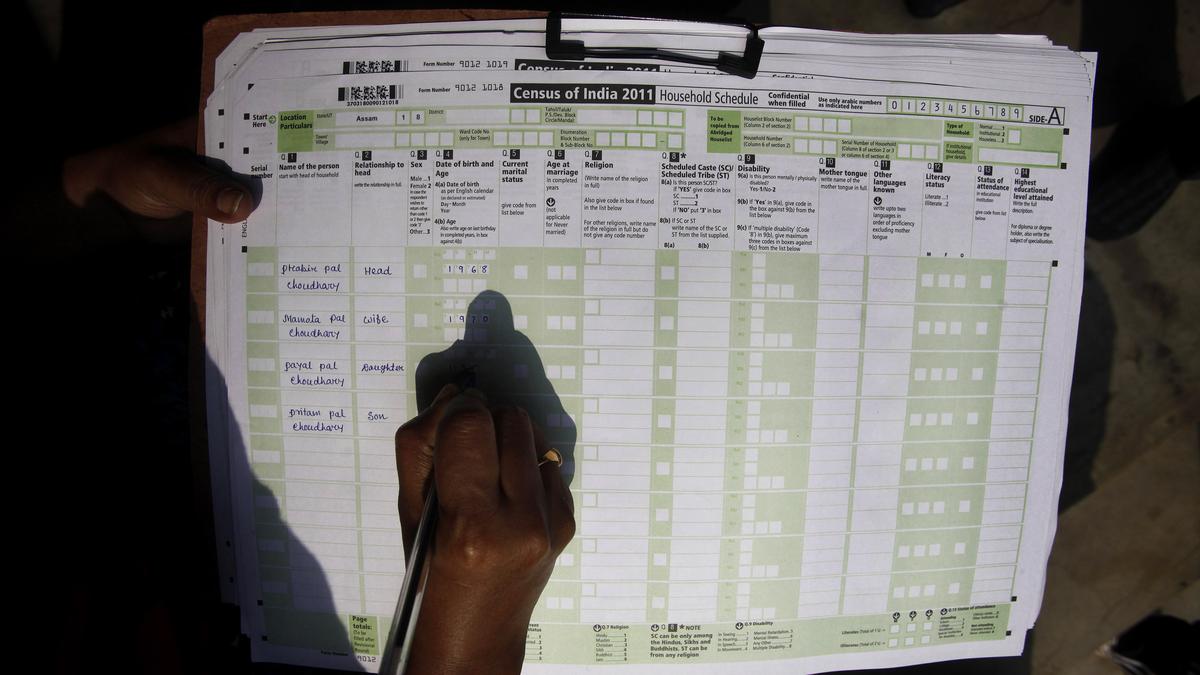
The last Census of India was conducted in 2011 in two phases. The 2027 exercise will be the first digital Census. – Photo Credit: AP
India will count its population by March 1, 2027, in a census to be held after an unprecedented 16-year gap, the Union Ministry of Home Affairs announced on Wednesday June 4, 2025 . This will be the country’s first digital census, and the first in independent India to include an enumeration of castes as well.
New Delhi : What will happen next after the census notification is issued? How different will the process of counting the population be this time? How different is the caste census from the general census? What has been the history of this kind of census in India? Apart from this, when has there been a demand for caste census in the country? Let’s know…
The central government has issued a notification for the census. With this, the way for caste census has been cleared for the first time after independence. Now caste census will be conducted across the country with a reference date of March 2027. However, five months before this, in October 2026, the program of caste census will be completed in the hill states. That is, whatever data related to the population in these states in October 2026, only that will be recorded in the record.
What will happen next after the notification of the census is issued? How different will the process of counting the population be this time? How different is the caste census from the general census? What has been the history of such a census in India? Apart from this, when has there been a demand for caste census in the country?
Now know- what will be the process after the notification is issued?
After the census notification is issued, the central government has to proceed with the process under the Census Act of 1948. It proceeds in three stages…
What kind of questions will the census officers ask?
The census program is not as easy as it appears, because it is not just a count of people living in India. On a broad scale, it also becomes an opportunity to know many aspects of India. For example, what is the population of the country, what is the proportion of men and women in it? What is the literacy rate? How many people of which religion live in India? What is the fertility rate in India? What is the economic condition of different classes, etc. That is, the census is not just a count of people, but also a means to understand the basic structure of society.
In such a situation, the central government prepares a set of questions for different stages after much deliberation.
The first stage is to list the houses. In this, priority is given to questions related to the houses and their condition. Talking about the 2011 census, it included 35 questions. Like-
*What kind of houses are there and in what condition?
*What is the arrangement for drinking water in the house?
*Is there a toilet or not and if yes, then what kind of toilet is present?
*What kind of kitchen is there and what fuel is used for cooking food in it?
*What kind of vehicle is used in the house?
*Is there a phone, television, computer etc. facilities in the house or not?
*Is there an internet facility or not, how many and who has smartphones?
*What kind of food do they eat, which grain is used the most?
Similarly, a separate set of questions is also prepared for counting the population. If we take the questions of 2011, then people are asked questions about their name, gender, age, religion, caste (SC or ST), mother tongue, educational level, job, etc. The entire data of the census conducted last decade was released by the end of March. Its last report, which gave demographics, religious background, linguistic basis and other complex information, was released two years later in April 2013.
How different and important will the census be this time?
Since the census started in 1881, it continued without any interruption till 2011. However, due to the coronavirus pandemic, the census to be released in 2021 was postponed.
Since 2021, the government has taken many decisions in the country, due to which the census of 2027 has become different from all the previous censuses.
When was the last caste census conducted in the country?
The census in the country started in 1881. In the first census, caste census data was released. After this, census was conducted every ten years. In the census till 1931, caste-wise data was also released every time. In the 1941 census, caste-wise data was collected, but it was not released. In every census since independence, the government has released caste-based data of only Scheduled Castes and Scheduled Tribes. Caste-wise data of other castes was never published after 1931.
What is the need for caste census?
*The country became independent in 1947. The first census in independent India was conducted in 1951. In all the 7 censuses conducted from 1951 to 2011, caste census of SC and ST was done, but caste based census of backward and other castes was never done. In 1990, the then VP Singh government implemented the recommendations of the Mandal Commission and gave reservation to the backward classes. At that time also, the limit of reservation was decided on the basis of the 1931 census. In 1931, backward castes in the country were 52 percent of the total population.
*Many experts believe that it is difficult to estimate the exact number of backward castes in the total population of the country at present. Experts say that the basis of reservation for SC and ST category is their population, but the basis of OBC reservation is the 90-year-old census. Which is no longer relevant. If caste based census is conducted, it will have a solid basis. After the census, reservation will have to be increased or decreased depending on the number.
Those demanding caste census claim that after this, the educational, social, political and economic status of the backward and extremely backward class people will be known. Appropriate policy can be determined for their betterment. Only after knowing the correct number and situation, it will help in making real programs for them. On the other hand, those opposing it say that such a census will increase caste division in the society. Due to this, bitterness will increase among the people.