Kumar Bahukhandi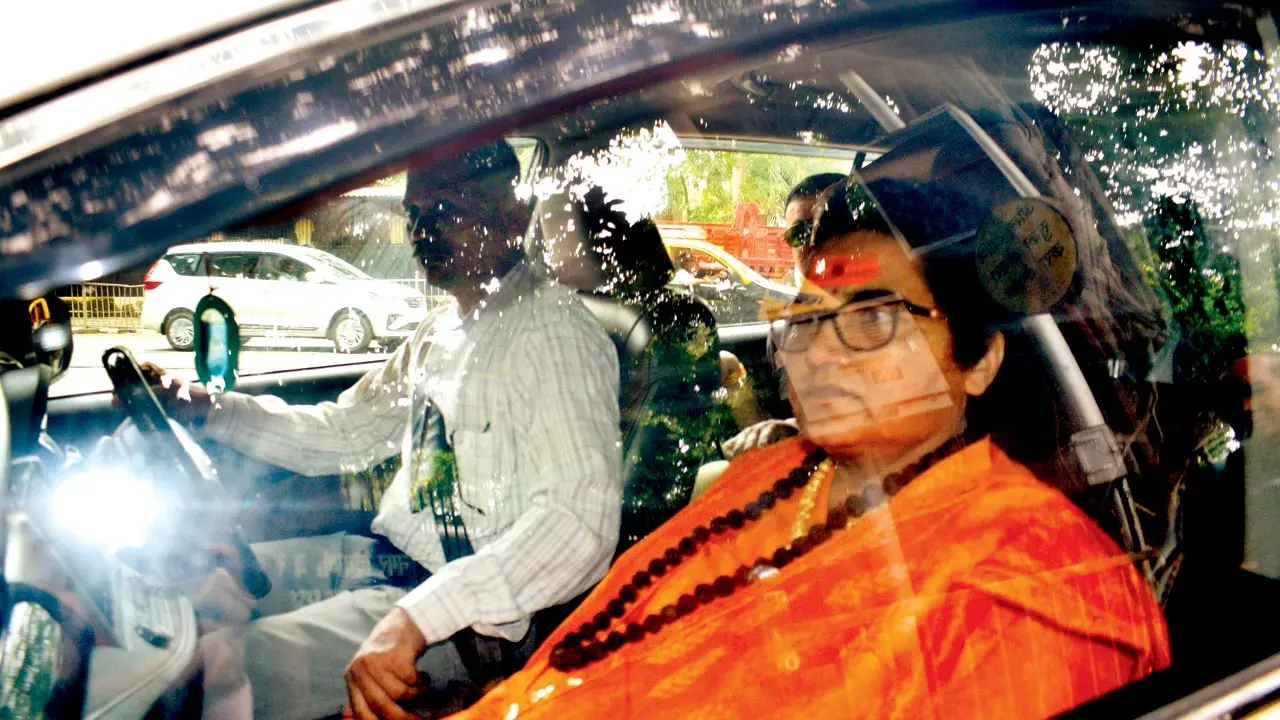
Sadhvi Pragya Singh Thakur, one of the seven accused in the Malegaon blast case who were aquitted by a special NIA court on Thursday. Pic/Sayyed Sameer Abedi

Author
Political parties are increasingly giving terrorism a communal face, and exploiting the issue during elections, while ignoring the problem they need to be strongly united against — extremism in all its forms
Acquittals and convictions are part of the legal process, but fighting terrorism needs more than arrests and headlines. It needs a strong united voice from all political parties, keeping human lives and national security above political interests. Not just politicians, even human rights activists must adopt a more practical and evidence-based approach. Only then will the goal to dismantle those with ‘Na Pak intentions’ and ensure stringent punishment for culprits and militants be achieved.
The 2006 train blasts were a shocking terror attack on Mumbai’s lifeline. Similarly, the 2008 Malegaon blast in a minority-dominated area created tension and division between communities. In the last fortnight, both significant terror cases have seen similar courtroom outcomes — the acquittal of all those arrested.
Within hours of the acquittal in the Malegaon blast case, the BJP and Congress were seen locked in a fresh political slugfest. Both parties, using veiled references, accused each other of politicising terrorism, defying the usual lines from our political leaders who insist that terror has no religion. In fact, post-verdict, most political reactions reveal how communal lines still shape the national political discourse.
The Mumbai train blast was linked to terror groups allegedly linked to a particular community and termed by many as “Islamic terror’. On the other hand, in the Malegaon blast case, the incident was linked to Hindu extremism and called ‘saffron terror’, a term allegedly coined during the time of the United Progressive Alliance (UPA) regime, led by the Congress.
The term saffron terror turned into a big political controversy and even became a point for election campaigns for parties claiming to be champions of Hindutva. Chief Minister Devendra Fadnavis, reacting to the Malegaon blast case verdict, claimed that it is not the police’s fault. Fadnavis, who is also the state home minister, demanded an apology from the Congress for using the term “saffron terror” to malign the community. The Congress immediately hit back. Former Chief Minister Prithviraj Chavan blamed the National Investigation Agency (NIA) for a shoddy investigation. The NIA reports to the Union home ministry, currently headed by BJP leader Amit Shah. In fact, state Congress president Harshwardhan Sakpal questioned whether the state government would now appeal against the Malegaon acquittals in the Supreme Court, just as it did in the 2006 train blast. Sakpal’s pointed remark drew attention to the fact that most of those acquitted in the train blast case were from the minority community, while those acquitted in the Malegaon case were from the Hindu community.
As both political parties dig into their respective positions and reinforce their narrative, two crucial points seem to be missing from the debate and reactions. One is what happens to the lives of those who have spent several years in prison and have now been acquitted. Secondly, when will the actual perpetrators be arrested and punished, as expected by all Indians and especially families who suffered huge losses due to these incidents?
In the serial train blast case, the trial court convicted all the accused arrested in the case. But the Bombay High Court overturned the conviction and acquitted them. In the Malegaon blast case, it was the trial court that acquitted all seven arrested in the case.
On Thursday, one of those acquitted in the Malegaon serial blast case after being cleared by the court, emotionally remarked to the media, “Yeh faisla hai, nyaay nahin [this is another order, not justice].”
Acquittals reflect the court’s judgment based on evidence, but be it any government or political party, they should ensure that the investigation proceeds further to ensure punishment of the culprits involved in the heinous crimes and take cases to their logical end.
In many cases, it is not just political interference; at times, media reports suggest that activists, too, have created hurdles for investigating agencies and the government. Activists need to wait for facts to come to the fore and avoid knee-jerk reactions to arrests and investigations, especially involving terror cases. A good example of this is the Batla House encounter case in 2008 in Delhi’s Jamia Nagar, where two people, suspected to be part of the Indian Mujahideen terror group, were shot dead.
The encounter led to a huge political storm with some political leaders, including one or two senior Congress leaders and a few rights activists questioning the shootout. But, the then Prime Minister Manmohan Singh, who was heading the UPA government and Union Home Minister P Chidambaram, stood by the police and dismissed all doubts. Later, investigations, too, proved the police were right. In fact, as per media reports, the Supreme Court, which had acquitted those sentenced to death in the 2002 Akshardham temple attack and sought compensation, declined to hear the case, fearing it would open the “floodgates” to similar claims.
So, mere apologies from political parties are not enough. What is needed is a systemic overhaul aimed at strengthening investigation, keeping probes out of political bias and lens (if this is true as alleged over the years at different stages by many political leaders). Besides, this administration needs to develop a mechanism to compensate those wrongfully jailed, as it exists in many foreign countries.
As terrorism targets nations and not any particular political party, it reminds one of the words of the late Prime Minister Atal Bihari Vajpayee, who once said, “Terrorism has become a festering wound. It is an enemy of humanity.” The veteran BJP leader’s words remain relevant as political posturing takes precedence over national security.
The response to terrorist activities needs to be unified. The current gap has been exploited by those wanting to disturb the nation’s communal harmony, and secular and democratic character.
Sanjeev Shivadekar is political editor of a English Daily published from Mumbai