Kumar Bahukhandi
In Vietnam, EVs have quietly moved from fringe to mainstream. At the center is VinFast, building not just vehicles but the full system that makes electric mobility practical, affordable, and increasingly hard to ignore.
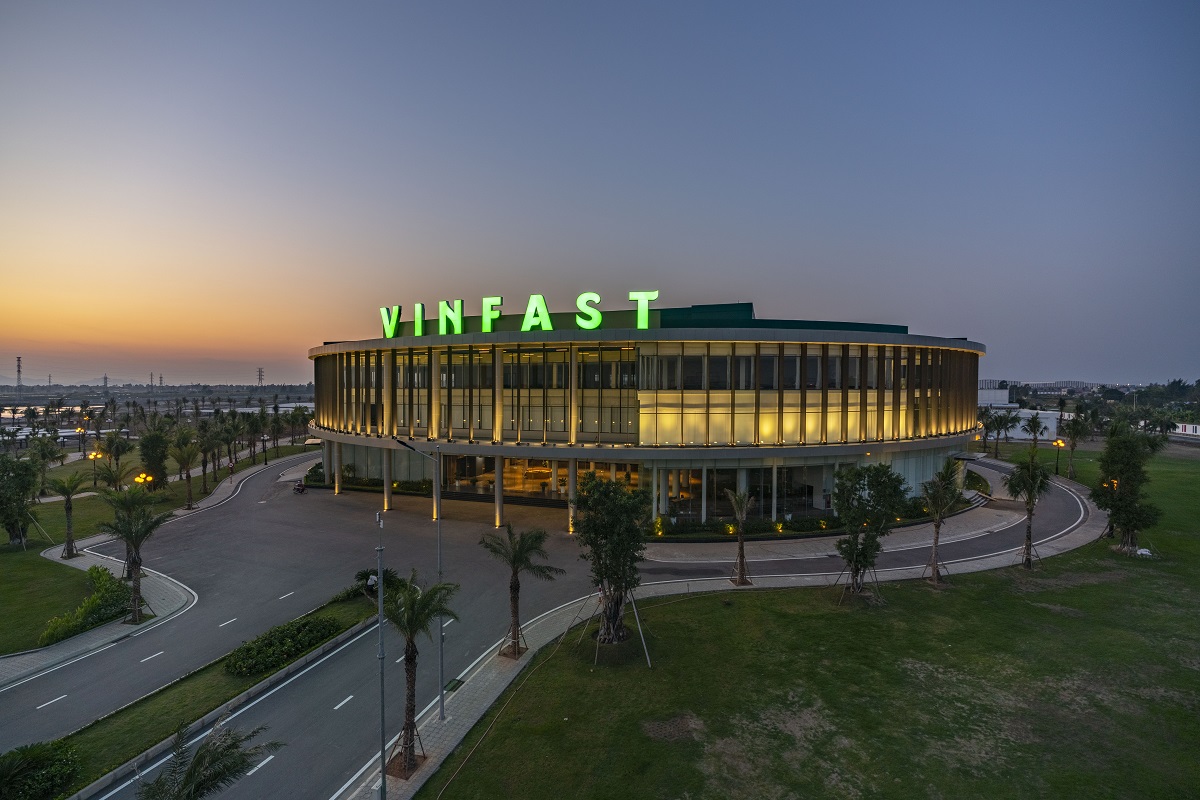 |
Thanks to its ecosystem-led logic, VinFast has been the number one brand in Vietnam for over a year
There was a point in time when electric vehicles weren’t just a relative novelty, but were actually a preferred choice, at least in the U.S., where they first gained traction. Even back in the 1990s, people were already aware of the benefits of EVs, being quieter, easier to operate, and well-suited for city trips.
That momentum did not last. Oil became abundant and inexpensive. Fuel stations spread rapidly, stitching together cities and highways into a seamless network. Electricity infrastructure, by contrast, remained uneven and limited in reach. Without reliable ways to recharge, electric vehicles slowly slipped out of daily use, replaced by engines that could refuel almost anywhere. For decades, the balance tipped decisively in favor of gasoline.
What this historical tidbit shows is that EVs didn’t lose because they were inferior, but because the system around them never fully materialized. The companies pushing electrification today are working with that lesson in mind, building not only vehicles but the conditions that allow them to function at scale.
Vietnam offers a clear before-and-after view of this shift. Not long ago, electric vehicles were rare enough to draw attention. Conversations with drivers often circled back to the same concerns, how far the car could go, and where it could be charged. For most people, home charging was the only realistic option, which excluded a large share of urban dwellers living in older buildings or dense inner-city neighborhoods.
Fast forward to the current day, and almost everywhere you go, you will see EVs big and small, four-wheel and two-wheel, blending in with the local traffic landscape. It may very well be that we are witnessing something akin to a second golden age of EVs, now taking shape in Vietnam.
And it’s not an overstatement to say that much of that renaissance owes itself to VinFast, the country’s first and leading domestic EV manufacturer. Many, if not the majority, of EVs currently running on Vietnamese roads are made by them. Days before the end of March, they set a new record with more than 3,520 orders completed in a single day, equivalent to the monthly sales of some internal combustion engine automakers in the country.
The foundation of that success is not laid overnight but over several years of intensive effort.
The one brand that builds it all
To understand VinFast, it helps to go through a little bit about its history. VinFast was founded in 2017 with the backing of billionaire founder Phạm Nhật Vượng, the richest man in Southeast Asia as of early April. To Vuong, whose view of national rise matters deeply, VinFast is not just a financial project but “a devotion project”.
And VinFast, true to its name, was fast. In just a few years from its conception, it has, in quick succession, launched a wide range of vehicles. From compact city cars to larger SUVs, from personal vehicles to fleet-focused models, the range now spans multiple segments, all in just under nine years. More recently, that portfolio has been structured into three distinct lines, the VF series for personal users, the Green lineup for transport services, and the Lạc Hồng line at the top end.
“There’s always something that fits you at your price range. If not for me, then for someone in the family,” said a VinFast sales rep in Hanoi.
But once again, the variety of products is not the only thing that VinFast focuses on to sell EVs, not if it wanted to avoid the same mistake of the EV OEMs of the past. Through a partnership with V-Green, a global charging provider that shares the same founder with VinFast, the young company is developing a charging network planned to reach around 150,000 ports nationwide, with an additional 99 superchargers in planning. Now Vietnam has one of the most extensive charging networks in the world, with one charging station every around 3.5 km in urban areas and about 65 km along highways, making it even denser than the US federal guideline of one every 80 km. Chargers appear in apartment basements, shopping centers, roadside stops, even residential compounds.
Once the charging network is dense enough, it’s only natural for drivers to realize they can top up their electric vehicle at a far better rate than their gasoline bill, a fact driven home further by the free charging policy offered at V-Green stations until March 2029. For some households, that translated into savings of several hundred dollars a year, a non-insignificant amount that can turn into a new financial cushion for the family.
“Honestly, I stopped thinking about fuel,” said a ride-hailing driver waiting at a charging point in Hanoi. “Now I think about how many trips I can take instead.”
So charging is covered. What about when your EV breaks down (which actually happens less for EVs than ICE vehicles, according to a recent report by a university in Vietnam, aligning with global trends)?
For that, as of November 2025, VinFast has 350 service centers covering the whole country, giving the company one of the largest aftersales networks nationwide. You would think that number is already sufficient, but not quite. The company aims to expand to 400 service workshops nationwide by the end of the year, to meet the rising demand for EV maintenance and repair.
Combined with the charging infrastructure, everything seems to close the loop. Drivers know where to charge, where to fix, and how much it will cost. Around this core, additional pieces have been added. VinFast vehicles often come with segment-leading warranties, up to 10 years/200,000 km. Ride-hailing through an all-electric platform, public buses running on battery power, driver-training programs designed specifically for EVs, even battery swapping networks for two-wheelers. Each element reduces friction for a different group of users, from daily commuters to commercial operators. All of them make electric mobility feel less like a transition and more like a normal, desirable part of daily life for consumers.
Exporting the model
Thanks to its ecosystem-led logic and a lot of elbow grease, VinFast has been the number one brand in Vietnam for over a year—not the top EV brand, but the top car brand overall. And it’s now looking to other markets for growth. It’s exporting the same model, with India as the most visible test case.
The anchor sits in Tamil Nadu, where VinFast’s four hundred-acre facility, with potential for further expansion, has begun churning out the VF 6 and VF 7 for Indian users. Phase one capacity stands at fifty thousand vehicles annually, with room to expand threefold.
The same type of network that helped VinFast address the concerns of early Vietnamese consumers is now being built in parallel across India. 51 dealerships have already opened, stretching from northern cities like Delhi and Gurugram to southern hubs such as Chennai and Bengaluru. The number is set to rise steadily, with the goal of reaching 75 by the end of the year.
Supporting this footprint is a web of partnerships that is unusually explicit in its structure. Charging infrastructure is being rolled out through V-Green, which has already begun deploying stations across dealerships, workshops, and third-party locations, alongside discussions with fuel retailers such as HPCL to integrate EV charging into existing petrol station networks. Maintenance and workshop coverage are handled through a combination of in-house dealer facilities and third-party service providers, most notably myTVS, which brings an established nationwide service backbone. Roadside assistance is supported by Global Assure, enabling 24/7 emergency response and towing coverage across major corridors.
Financing, often the final hurdle, has been addressed with equal specificity. VinFast has signed agreements with multiple banks, including YES BANK, HDFC Bank, Axis Bank, the State Bank of India, and the Central Bank of India. These partnerships are structured to cover both sides of the market. On the dealer side, they provide inventory financing to help partners scale operations without heavy upfront capital. On the customer side, they enable full on-road financing, flexible repayment tenures, and preferential interest rates, often with in-showroom loan processing to reduce friction at the point of purchase.
All of these form the foundation for the brand to expands its product portfolio. Alongside the premium and award-winning VF 6 and VF 7, the upcoming VF MPV 7 targets family buyers with a focus on space and practicality rather than excessive features. And it seems like VinFast also plans to introduce electric two-wheelers and buses. Each addition is meant to reinforce the others, creating a system rather than a collection of products.
The era of EV in Vietnam may well be in its golden age, while such an era in India is only beginning. But with ecosystem-thinking companies like VinFast, both appear determined to avoid the same fate that once held EVs back. Not by moving faster, but by building more completely.