Kumar Bahukhandi
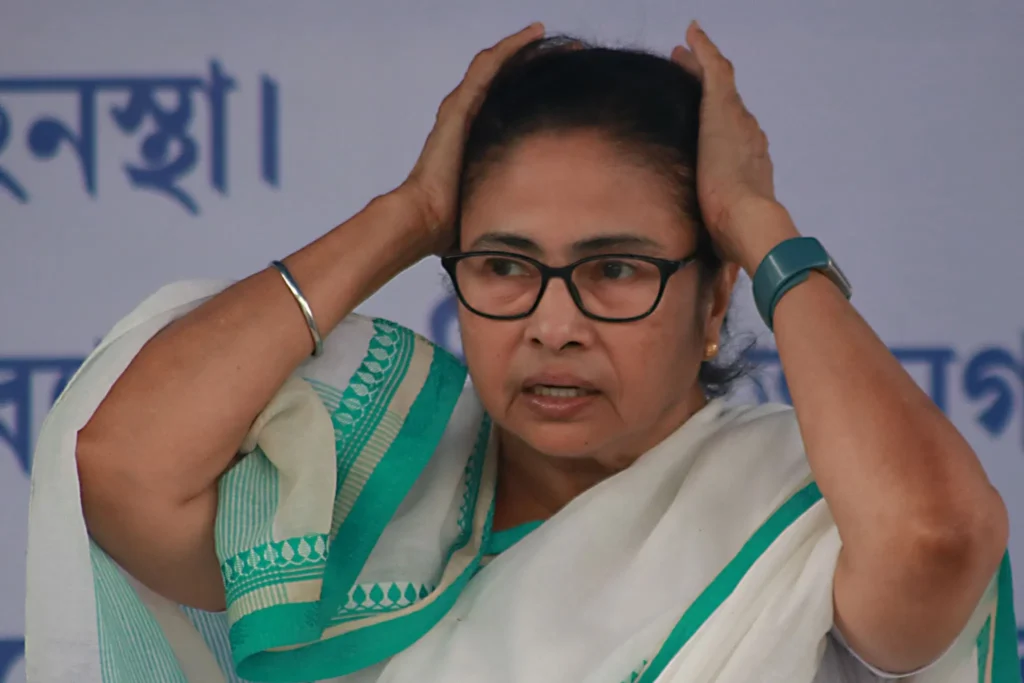
Mamata Banerjee Ousted from Power After 15 Years (Photo File )
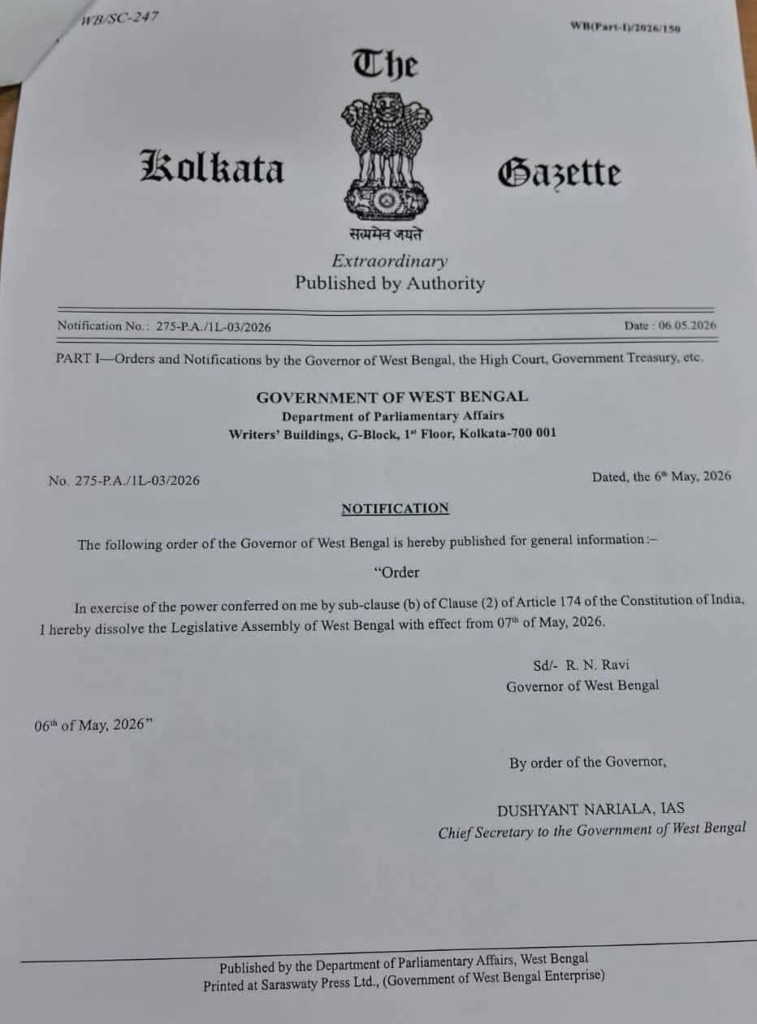
West Bengal Governor R.N. Ravi issued an official order on Thursday, dissolving the State Legislative Assembly. Following the publication of this notification in the Kolkata Gazette, Mamata Banerjee’s government has constitutionally ceased to exist, and she is no longer the Chief Minister.
A major political upheaval occurred in West Bengal today. As soon as the Assembly’s tenure concluded, the Governor dissolved the entire Cabinet; consequently, Mamata Banerjee is no longer the Chief Minister. Significantly, amidst the ongoing political tussle regarding her resignation, this decision was executed strictly in accordance with constitutional procedure, thereby abruptly bringing to a close a 15-year-old chapter of governance in Bengal.
According to the notification published in the Kolkata Gazette, Governor R.N. Ravi has dissolved the Legislative Assembly, and this decision came into effect on May 7, 2026. This directly implies that neither does a Cabinet currently exist in the state, nor does Mamata Banerjee continue to hold the office of Chief Minister. Amidst the ongoing political maneuvering regarding the issue of resignation, this transition was implemented in strict adherence to constitutional protocol.
As per the Gazette notification, the Governor exercised the powers vested in him under Article 174(2)(b) of the Constitution of India. The notification also bears the signature of Bengal’s Chief Secretary, Dushyant Nariyala. With the dissolution of the Assembly, the Trinamool Congress’s rule—which had prevailed in Bengal for the past 15 years—has now come to an end.
What is Article 174(2)(b)—the provision that ended Mamata’s rule?
You may now be wondering: what exactly is Article 174(2)(b), the provision empowering the Governor to take such a momentous decision? In essence, this Article of the Indian Constitution grants the Governor the supreme authority to dissolve the State Legislative Assembly. Under this provision, the Governor—acting either upon the advice of the Chief Minister or in a situation where the government has lost its legislative majority—may dissolve the Assembly prematurely, thereby paving the way for fresh elections or the formation of a new government. Furthermore, this Article also vests the Governor with the power of ‘prorogation’—that is, the authority to formally terminate a legislative session. However, the Governor is mandated to ensure that the gap between two sessions of the Legislative Assembly does not exceed six months. In practical terms, this implies that whenever a political party fails to demonstrate a majority in the House—or when the electoral mandate undergoes a shift—the Governor invokes the authority vested in this very article to dissolve the existing order, as was witnessed today in Bengal.
The Governor’s Order Amidst a Standoff Over Power
The Governor’s decision comes at a juncture when Mamata Banerjee remained unwilling to acknowledge the crushing defeat suffered in the elections and had, in fact, refused to tender her resignation. Furthermore, she had even raised questions regarding the conduct of the Election Commission. However, such a stance could not hold ground for long in the face of constitutional protocol. The moment the Legislative Assembly was dissolved, her tenure as Chief Minister automatically came to an end. Now, until a new government is sworn in, the administration of the state will remain under the supervision of the Raj Bhavan.
Amidst the ongoing political turmoil in Bengal, Home Minister Amit Shah is scheduled to arrive at the Kolkata Airport on Thursday at 10:30 PM. This visit of his is being regarded as highly significant. It is anticipated that he will review the process of forming the new government as well as the preparations for the swearing-in ceremony tentatively scheduled for May 9.